
Commentary|Podcasts|April 30, 2026
NeuroOp Guru: When eye and brain strokes point to antiphospholipid syndrome
Author(s)Andrew G. Lee, MD, Andrew Carey, MD
Fact checked by: Sheryl Stevenson

Andrew G. Lee, MD, and Drew Carey, MD, discuss how eye and brain vascular events such as retinal vein occlusion and stroke can signal antiphospholipid syndrome and require further evaluation.
Advertisement
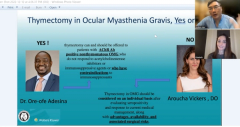
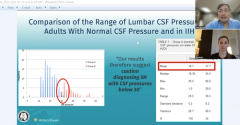
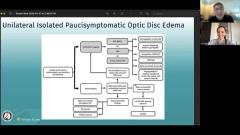
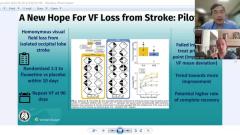
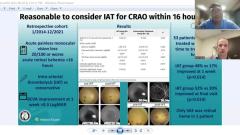
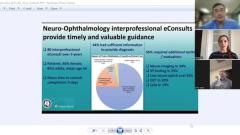
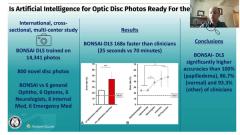
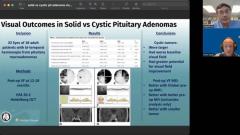
In this latest episode of the
Lee is the chair of the Blanton Eye Institute at Houston Methodist Hospital and a professor of ophthalmology, neurology, and neurosurgery at the Weill Cornell Medical College. Carey is the Neil R. Miller Rising Professor of Ophthalmology in the division of neuro-ophthalmology with the
Carey outlined the
Concurrent arterial and venous events should raise suspicion for systemic disease
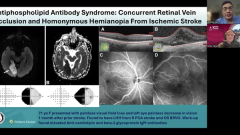
The discussion centered on a 71-year-old patient who presented with a homonymous hemianopsia from a posterior cerebral artery stroke and later developed a retinal vein occlusion with decreased visual acuity. Carey emphasized that this combination—visual field loss localizing to the brain alongside monocular vision loss—signals involvement of both central nervous system and ocular processes, prompting consideration of a unifying systemic cause.
Although common vascular risk factors such as hypertension can contribute to both stroke and retinal vein occlusion, the temporal proximity and involvement of both arterial and venous systems should raise concern for an underlying hypercoagulable state. Antiphospholipid antibody syndrome is high on the differential diagnosis in such cases, particularly when events occur across different vascular beds.
The conversation also addressed multidisciplinary management. Depending on associated systemic features, patients may require evaluation by hematology for anticoagulation and by rheumatology if an underlying autoimmune condition, such as systemic lupus erythematosus, is suspected. Additional therapies, including hydroxychloroquine, may be considered in patients with autoimmune disease to reduce thrombotic risk.
Carey concluded with a key clinical takeaway: when patients present with both arterial and venous occlusions, clinicians should look beyond typical vascular risk factors and pursue further workup for hypercoagulability or cardiac sources. Early recognition is essential, as appropriate treatment can reduce the risk of recurrent thrombotic events, including stroke.
Reference
Yu HJ, Karimaghaei C, Nguyen TA, et al. Antiphospholipid antibody syndrome: concurrent retinal vein occlusion and homonymous hemianopia from ischemic stroke. J Neuroophthalmol. 2025;45(4):e275-e277. doi:10.1097/WNO.0000000000002289
Advertisement
Related to this article
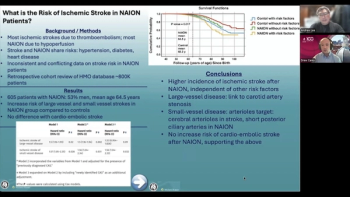
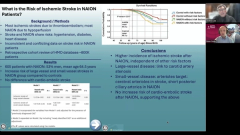
Andrew G. Lee, MD, and Drew Carey, MD, discuss findings from a retrospective study examining ischemic stroke risk in patients with non-arteritic anterior ischemic optic neuropathy and the implications for vascular risk factor management.

Their conversation covers a holistic, cross-specialty approach to ocular surface disease and the unmet need driving a new model of dry eye care in Ireland.
Douglas D. Koch, MD, and Karolinne Maia Rocha, MD, PhD, discuss the optics behind enhanced monofocal lenses, patient selection, and how to set expectations.

In this Q&A, Ping Moore, OD, covers emerging dry eye therapies, from selenium sulfide to next-gen cyclosporine, and how subtype-guided care shapes treatment choices.
Ophthalmology is projected to face one of the steepest physician shortages of any subspecialty by 2038.

Two investigational pipeline therapies take aim at the root causes of dry eye disease
Cataract surgery becomes refractive: learn how IOL choices and preop counseling across distance, intermediate and near turn 20/20 into 20/happy.

Dry eye cases rise with heavy screen use and younger patients; learn modern workups spotlighting MGD, etiology-driven treatments, and collaborative care reshaping outcomes.
Advertisement
Advertisement
Trending on Eye Care Network - Ophthalmology Times
1
Alvotech files first known aflibercept 8 mg biosimilar with EMA
2
AAO 2026: How to become an ocular pain detective in dry eye
3
AAO 2026: Tinlarebant in Stargardt disease: Jacque Duncan, MD, on DRAGON results
4
AAO 2026: Vamikibart shows sustained gains in uveitic macular edema as FDA accepts BLA
5