
Commentary|Podcasts|June 2, 2026
NeuroOp Guru: Stopping GLP-1 therapy may trigger recurrent papilledema in IIH cases
Author(s)Andrew G. Lee, MD, Andrew Carey, MD
Fact checked by: Sheryl Stevenson

Andrew G. Lee, MD, and Drew Carey, MD, discuss recurrence of papilledema after discontinuation of GLP-1 receptor agonists and the implications for monitoring patients with idiopathic intracranial hypertension.
Advertisement





In this episode of
Lee is the chair of the Blanton Eye Institute at Houston Methodist Hospital and a professor of ophthalmology, neurology, and neurosurgery at the Weill Cornell Medical College. Carey is the Neil R. Miller Rising Professor of Ophthalmology in the division of neuro-ophthalmology with the
Carey reviewed the growing evidence supporting GLP-1 receptor agonists in IIH, noting that these
Stopping GLP-1 therapy may increase the risk of recurrent papilledema
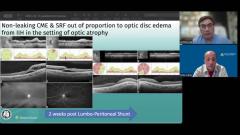
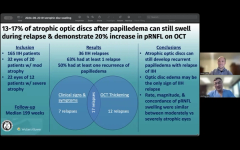
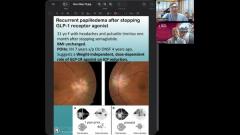
The discussion centered on a 31-year-old woman with longstanding severe IIH and prior optic nerve sheath fenestration who developed recurrent headaches, pulsatile tinnitus, and worsening papilledema approximately 1 month after discontinuing semaglutide.1 Although visual field loss remained stable in one eye, progression of central and nasal scotomas in the fellow eye raised concern for worsening vision loss related to recurrent papilledema.
Carey emphasized that recurrence after stopping GLP-1 therapy remains a newly recognized phenomenon, and clinicians currently lack standardized monitoring protocols for patients discontinuing these medications. Although not all patients experience recurrence after treatment cessation, individuals with advanced baseline vision loss or optic disc pallor may be particularly vulnerable to further visual decline.
The conversation also highlighted the importance of counseling patients about symptom recurrence after medication discontinuation, including worsening headaches and pulsatile tinnitus, which may signal rising ICP. Carey suggested that closer follow-up after stopping GLP-1 therapy—particularly within the first 1 to 2 months—may help identify recurrent papilledema before significant visual deterioration occurs.
The discussion reinforces the emerging role of GLP-1 receptor agonists in IIH management while underscoring the need for structured monitoring strategies when these medications are discontinued, especially in patients at high risk for vision loss.
Reference
Phillips MJ, Gokoffski KK. Recurrent idiopathic intracranial hypertension-related papilledema after abrupt discontinuation of semaglutide. J Neuroophthalmol. 2025;45(4):e283-e284. doi:10.1097/WNO.0000000000002293
Advertisement
Related to this article
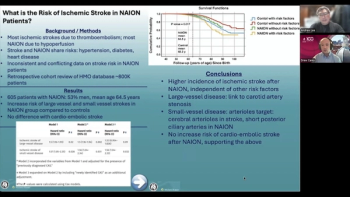
Andrew G. Lee, MD, and Drew Carey, MD, discuss findings from a retrospective study examining ischemic stroke risk in patients with non-arteritic anterior ischemic optic neuropathy and the implications for vascular risk factor management.

Their conversation covers a holistic, cross-specialty approach to ocular surface disease and the unmet need driving a new model of dry eye care in Ireland.

Douglas D. Koch, MD, and Karolinne Maia Rocha, MD, PhD, discuss the optics behind enhanced monofocal lenses, patient selection, and how to set expectations.

In this Q&A, Ping Moore, OD, covers emerging dry eye therapies, from selenium sulfide to next-gen cyclosporine, and how subtype-guided care shapes treatment choices.

Ophthalmology is projected to face one of the steepest physician shortages of any subspecialty by 2038.

Two investigational pipeline therapies take aim at the root causes of dry eye disease

Cataract surgery becomes refractive: learn how IOL choices and preop counseling across distance, intermediate and near turn 20/20 into 20/happy.

Dry eye cases rise with heavy screen use and younger patients; learn modern workups spotlighting MGD, etiology-driven treatments, and collaborative care reshaping outcomes.
Advertisement
Advertisement
Trending on Eye Care Network - Ophthalmology Times
1
Brepocitinib meets all Phase 3 end points in noninfectious uveitis
2
Demodex blepharitis: Diagnosis, treatment response, and recurrence
3
Myopia control using spectacle lenses with highly aspherical lenslets
4
SpyGlass Pharma's BIM-IOL System holds 37% IOP reduction at 4 years in first-in-human trial
5