


Dry Eye
Latest News

Advertisement
Video Series






Shorts
1:03
Approaching ocular pain like a detective
5 days ago
by
Anat Galor, MD, MSPH(+1 more)

1:09
ESCRS 2026: Fitting light therapy into the cataract surgery workflow
a month ago
by
Giuseppe Giannaccare, MD, PhD, FEBOphth(+1 more)

0:55
Stop ignoring your eyelids: the hidden risk of dry eyes
a month ago
by
Alice Epitropoulos, MD

1:02
Why TBUT results vary
a month ago
by
Ashraf F. Ahmad, MD(+1 more)
0:33
Fast ocular surface stabilization with dry eye lubricating drop: Piotr Wozniak, MD
2 months ago
by
Piotr A. Woźniak, MD, PhD(+2 more)
CME Content












Advertisement
Aldeyra Therapeutics will submit a FDRR to the FDA for reproxalap, an investigational drug or dry eye disease.

Coats, OD, FAAO, explains how neurotrophic keratitis, demodex, cosmetic habits and mucus fishing complicate dry eye disease.

NESTS survey reveals patients often normalize dry eye symptoms, delaying care despite major impacts on daily life.

In patients reporting chronic ocular pain, dry eye may not be the entire diagnosis.

Ahead of the 44th ESCRS Congress in London, a look at the presbyopia-correcting IOL, glaucoma and dry eye disease research on this year's scientific programme.

Startup S5G Therapeutics aims to move ubiquinol technology from the laboratory toward treatments for dry eye, Fuchs dystrophy, and other corneal conditions.
Survey reveals most women don't recognize dry eye as a symptom of perimenopause or menopause.

Esen Akpek, MD, weighs in on lifitegrast-perfluorohexyloctane phase 2 data and what it means for the drop's path to phase 3.

This article discusses the evolution of the body of information about Demodex blepharitis over the years, from the convening of a consensus panel to the realization that a new drug provides rapid relief to the ocular surface.

Bausch + Lomb advances dual-action dry eye drop to phase 3 and reports positive phase 1b data for TRPV1 antagonist BL1332

Preparing the ocular surface for surgery in the presence of Demodex blepharitis
Published: | Updated:
Alice Epitropoulos, MD, shares cases of Demodex blepharitis and reflects on how lotilaner has changed treatment before ocular surgery.

Two investigational pipeline therapies take aim at the root causes of dry eye disease
In this Q&A from EDES 2026 in Milan, Piotr A. Woźniak, MD, PhD, discusses his real-world evidence study on a dry eye lubricating drop, including its effects on tear film stability.
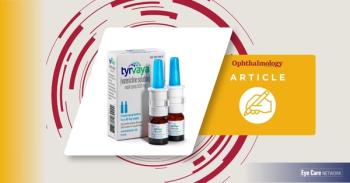
Harrow will acquire Tyrvaya, the only FDA-approved nasal spray for dry eye disease, from Viatris for up to $100 million, complementing its cyclosporine product Vevye.

This article discusses the current treatments being investigated during the first half of 2026.

Emerging dry eye therapies and co-managing MGD: Ping Moore, OD
Published: | Updated:
In this Q&A, Ping Moore, OD, covers emerging dry eye therapies, from selenium sulfide to next-gen cyclosporine, and how subtype-guided care shapes treatment choices.

Dry eye care pivots to root-cause diagnosis and personalized biologics/devices,
Esen Akpek, MD, on dry eye's emotional and vision-related toll, its hidden autoimmune links, and when to move patients beyond artificial tears.

Findings from the third annual State of Dry Eye survey link symptom management to quality of life gains, including lower anxiety and improved self-confidence.

Patients with polyendocrine metabolic ovarian syndrome have higher ocular disease prevalence.

Their conversation covers a holistic, cross-specialty approach to ocular surface disease and the unmet need driving a new model of dry eye care in Ireland.

Three-year gene therapy data, an FDA reversal in wet AMD, light-powered dry eye treatment, a new macular supplement, and progress in childhood glaucoma—our review breaks down the 5 May 2026 stories that matter.

Knowing pregnancy-related risks enhances patient safety.

NUS researchers report that plant-based photosynthetic nanoparticles restored corneal NADPH levels and reversed damage within 5 days in preclinical dry eye.

Investigators noted the patient's symptoms "reliably abated when she played the oboe or when she sang, only to return immediately after stopping.”
Advertisement
Advertisement
Trending on Eye Care Network - Ophthalmology Times
1
Alvotech files first known aflibercept 8 mg biosimilar with EMA
2
FDA approves phentolamine ophthalmic solution 0.75% (Ryzumvi) for presbyopia
3
FDA approves subcutaneous Enspryng for TED
4
OT Roundup: Optogenetics Nobel Prize, BRUNELLO, DRAGON, eye transplant
5