

Commentary|Podcasts|April 2, 2026
NeuroOp Guru: Predicting which patients regain vision after optic nerve sheath meningioma treatment
Author(s)Andrew G. Lee, MD, Andrew Carey, MD
Fact checked by: Sheryl Stevenson
Andrew G. Lee, MD, and Drew Carey, MD, review how clinical and imaging findings relate to vision recovery after radiotherapy for optic nerve sheath meningioma.
Advertisement
In this episode of the
Lee is the chair of the Blanton Eye Institute at Houston Methodist Hospital in Texas and a professor of ophthalmology, neurology, and neurosurgery at the Weill Cornell Medical College. Carey is the Neil R. Miller Rising Professor of Ophthalmology in the division of neuro-ophthalmology with the
Carey introduced the clinical challenge: patients with optic nerve sheath meningioma often present with slowly progressive vision loss, and treatment decisions frequently center on whether to observe or proceed with radiotherapy. Because biopsy and surgical removal carry significant risk to the optic nerve, diagnosis is typically based on imaging findings, including MRI features and, in some cases, CT evidence of calcification.
Better baseline vision predicts stronger visual recovery
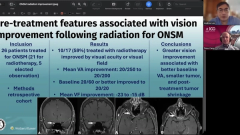
The discussion focused on a recent single-center retrospective study evaluating visual outcomes after fractionated radiotherapy in patients with presumed optic nerve sheath meningioma.1 Over a 10-year period, investigators identified 26 patients, with 17 ultimately receiving treatment. Carey noted that 59% of treated patients experienced improvement in either visual acuity or visual field outcomes following radiotherapy.
Baseline vision emerged as a key predictor of recovery. Patients who began treatment with better visual acuity—particularly 20/60 or better—were substantially more likely to improve, with many recovering to 20/20 vision. Even among patients without marked central acuity gains, meaningful improvement in visual field defects was observed, including improvement in dense scotomas and mean deviation scores.
Additional factors associated with better outcomes included smaller tumor size and more recent progression, particularly when MRI demonstrated interval shrinkage after treatment. Carey emphasized the practical implication for clinic counseling: delaying treatment until vision has significantly deteriorated may reduce the likelihood of meaningful visual recovery.
The conversation also addressed how these data may help patients who are hesitant about radiotherapy weigh the risks and benefits of intervention. For patients with longstanding severe vision loss, the findings support more tempered expectations for recovery, while reinforcing the importance of earlier treatment in patients with progressive but still salvageable vision.
The discussion reinforces that earlier intervention and stronger baseline visual function are important predictors of visual improvement after radiotherapy for optic nerve sheath meningioma, providing useful guidance for patient counseling and treatment timing in neuro-ophthalmic practice.
Reference
Tien MC, McDonald HM, Wei E, Micieli JA, Margolin EA. Optic nerve sheath meningiomas: a retrospective cohort study comparing outcomes in treated versus observed patients. J Neuroophthalmol. 2025;45(4):466-472. doi:10.1097/WNO.0000000000002309
Advertisement
Related to this article
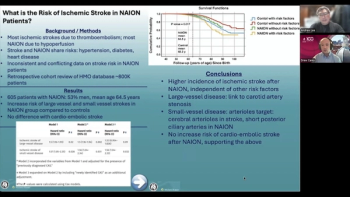
Andrew G. Lee, MD, and Drew Carey, MD, discuss findings from a retrospective study examining ischemic stroke risk in patients with non-arteritic anterior ischemic optic neuropathy and the implications for vascular risk factor management.
Length and width, not thickness, emerge as key drivers of higher-order aberrations.

In a preference study, Csaky and colleagues found that lesion growth rate reduction was the primary driver of GA treatment decisions among US retina specialists, with greater risk tolerance for foveal-threatening lesions.

A large real-world cohort study finds OSA is associated with elevated glaucoma risk, though whether positive airway pressure therapy itself plays a role remains unclear.

Their conversation covers a holistic, cross-specialty approach to ocular surface disease and the unmet need driving a new model of dry eye care in Ireland.

A retrospective study finds that direct selective laser trabeculoplasty significantly lowers intraocular pressure, with the greatest benefit seen in treatment-naive eyes.

A prospective pilot series finds Keraring implantation cuts refractive cylinder by 61% in non-ectatic corneas, opening a new conversation about ICRS indications.

Douglas D. Koch, MD, and Karolinne Maia Rocha, MD, PhD, discuss the optics behind enhanced monofocal lenses, patient selection, and how to set expectations.
Advertisement
Advertisement
Trending on Eye Care Network - Ophthalmology Times
1
AAO 2026: Optogenetic gene therapy heads to phase 2 trial in geographic atrophy
2
Slowing Stargardt: What a 36% reduction in lesion growth could mean for adolescent patients
3
2026 Nobel Prize in Physiology or Medicine awarded for optogenetics discovery
4
Oku Digital Health launches from Topcon to link eye care, primary care
5