




Clinical Diagnosis
Latest News
Advertisement
Video Series







Shorts


CME Content












Advertisement

Inherited metabolic diseases affect the retina even before the systemic diagnosis is established.

Atrial fibrillation appears to cause thinning of the macular ganglion cell and inner plexiform layer.

In patients reporting chronic ocular pain, dry eye may not be the entire diagnosis.

Women's Health: Giant cell arteritis and the sex gap: What every eye care clinician should know
Published: | Updated:
Women are more often affected than men, and the disease manifests differently between the sexes.

FDA clears OMNI Ultra Surgical System, adding single-pass canaloplasty to implant-free MIGS platform
Sight Sciences' newest MIGS device gains FDA clearance for single-pass canaloplasty and trabeculotomy in open-angle glaucoma.

This article discusses the current treatments being investigated during the first half of 2026.

Patients with polyendocrine metabolic ovarian syndrome have higher ocular disease prevalence.

Ophthalmology Times® On Air

Optical coherence tomography angiography found distinctive microvascular signatures in the retinal layers associated with various stages of decline in cognition.
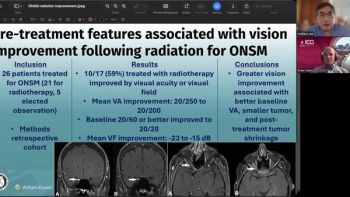
Andrew G. Lee, MD, and Drew Carey, MD, review how clinical and imaging findings relate to vision recovery after radiotherapy for optic nerve sheath meningioma.

The University of Rochester’s Flaum Eye Institute is embedding behavioral health into ophthalmology to improve patient care and clinician support.

Immediate flushing of the eye can significantly reduce long-term damage after chemical exposure.

Chiesi Global Rare Diseases said the agency declined to approve its application and requested additional information for the proposed treatment of Leber hereditary optic neuropathy.

The clinical study will evaluate a noninvasive corneal strengthening procedure designed to reshape the cornea and correct refractive errors in-office without tissue removal.

Clinicians emphasize screening, individualized care, and recognition of sex-based differences to prevent vision-threatening complications

Clear counseling and tailored lens choice reduce postoperative dissatisfaction

Large study links specific retinal findings to leukemia subtype, predicting remission risk and visual prognosis—prompt eye exams can flag relapse early.
Retina experts unpack MacTel type 2—spot subtle signs, understand anti-VEGF limits, and explore emerging neuroprotective treatments.

Tenpoint Therapeutics’ YUVEZZI, expected in the US in Q2 2026, is the first fixed-dose combination drop designed to improve near vision via pupil modulation with once-daily dosing.

As Glaucoma Awareness Month highlights evolving practice, specialists describe how artificial intelligence, sustained drug delivery, laser therapy, and workflow integration are reshaping earlier, more individualized glaucoma care.

Their conversation focuses on anatomy-driven, individualized approaches and multidisciplinary decision-making for patients with neovascular glaucoma.

Harvard researchers used data to shed light on pediatric neurotrophic keratopathy, revealing key insights into prevalence, vision outcomes, and treatment approaches.
Advertisement
Advertisement
Trending on Eye Care Network - Ophthalmology Times
1
Alvotech files first known aflibercept 8 mg biosimilar with EMA
2
FDA approves phentolamine ophthalmic solution 0.75% (Ryzumvi) for presbyopia
3
FDA approves subcutaneous Enspryng for TED
4
OT Roundup: Optogenetics Nobel Prize, BRUNELLO, DRAGON, eye transplant
5