
Nicholas J. Volpe, MD, explains the history and examination clues that set LEMS apart from myasthenia gravis.

Nicholas J. Volpe, MD, explains the history and examination clues that set LEMS apart from myasthenia gravis.
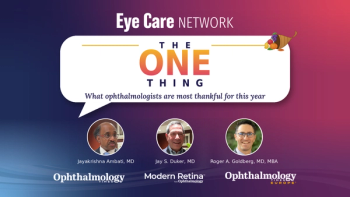
Jay S. Duker, MD, Jayakrishna Ambati, MD, and Roger A. Goldberg, MD, MBA, give thanks for decades of advances, a path to phase 3, and the specialty itself.
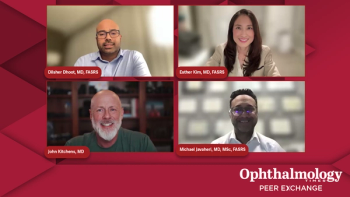
Patient hesitancy toward intravitreal injection can delay treatment of neovascular AMD, and engaging families, normalizing the procedure, and injecting on the day of diagnosis may reduce the risk of avoidable vision loss.
An expanding anti-VEGF armamentarium, including higher-dose and bispecific agents alongside biosimilars, offers mechanistic options in neovascular AMD that warrant deliberate selection and clear patient counseling.
Ahead of FLORetina 2026, Darius Moshfeghi, MD, discusses lifelong retinal risk after ROP, scalable telemedicine screening, and his approach to anti-VEGF follow-up and peripheral avascular retina.
NYU Langone’s Casey Zhang, MD, and Andrea Blitzer, MD, host Iowa’s Mark A. Greiner, MD, on corneas from donors with diabetes.
Eric Schlumpf discusses why Stuart Therapeutics is taking vezocolmitide beyond dry eye disease and into corneal wound healing.
Patricio G. Schlottmann, MD, Nicholas J. Volpe, MD, and Hunter Cherwek, MD, point to retinopathy follow-up, missed diagnoses, and low-resource care.
Step-therapy mandates, formulary restrictions, and gaps in copay assistance continue to constrain first-line anti-VEGF selection in neovascular AMD, making practice-level access strategies essential to individualized care.
Second-generation anti-VEGF agents have expanded achievable dosing intervals in neovascular AMD, yet clinicians must weigh durability claims against monocular status, hemorrhage at presentation, and the realities of patient follow-up.
Alfredo A. Sadun, MD, PhD, explains how LEMS mimics myasthenia gravis around the eyes and why its cancer link matters.
The FDA adds a NAION warning to GLP-1 drugs, plus LEMS clues, Eyedaptic's new Eva AI assistant and a retinal imaging link to AFib.
R. Ross Lakhanpal, MD, FACS, Anu Patel, MD, and Yasha S. Modi, MD, MHS, point to cell replacement in geographic atrophy, care burden, and glycemic control.
Rapid early disease control may establish the trajectory for long-term outcomes in neovascular AMD, supporting first-line use of second-generation anti-VEGF agents in patients with high-risk anatomic or functional features.
A new diagnosis of neovascular age-related macular degeneration carries consequences well beyond visual acuity, and early treatment goals must balance anatomic disease control with patient confidence and long-term adherence.
Isa S. K. Mohammed, MD, on training refractive surgeons and why lasers make global access harder than for cataract surgery.
Hunter Cherwek, MD, of Orbis discusses summit commitments, eye care workforce training, and AI in low-resource settings.
Uday Devgan, MD, FACS, Jordana G. Fein, MD, MS, and Carl D. Regillo, MD, FASRS, point to IOL education, emerging retina therapies, and treatment burden.
Andrew G. Lee, MD, and Drew Carey, MD, break down the visual safety of flow-diverting stents for carotid-ophthalmic aneurysms.
Veeral Sheth, MD, breaks down the LUCIA wet AMD data, plus new AAO findings on GLP-1 agents and anti-VEGF treatment burden in DME.
Isa S. K. Mohammed, MD, explains how he matches patients to PRK, LASIK, SMILE, or phakic IOLs and how prior surgery affects IOLs.
Christina Y. Weng, MD, MBA, FASRS; Michael A. Singer, MD, and Isa S. K. Mohammed, MD, point to early retinal care, corticosteroid training, and regulation and waste.
IRIS Registry data showed no change in anti-VEGF frequency, vision, or retinal thickness after patients with DME began a GLP-1RA.

Murtaza K. Adam, MD, shares pearls on haptic docking, patient selection, and preventing complications with the Yamane technique.
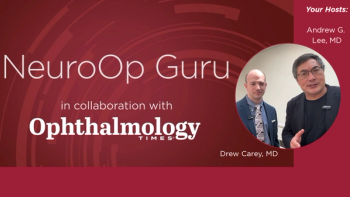
Andrew G. Lee, MD, and Drew Carey, MD, break down the link between optic neuritis and uveitis in central nervous system demyelinating disease.
Anat Galor, MD, MSPH, discusses subtyping dry eye, emerging diagnostic tools, and when to consider oral neuromodulation.
At AAO 2026, Anjum F. Koreishi, MD, shared how to prevent complications after cataract surgery in patients with uveitis.
David F. Chang, MD, shares how to set realistic refractive IOL expectations and streamline patient counseling.
Timothy Janetos, MD, explained when to refer uveitis to a specialist and why access to uveitis care remains limited.
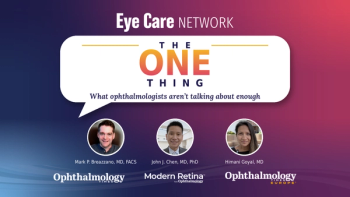
Himani Goyal, MD, John J. Chen, MD, PhD, and Mark P. Breazzano, MD, FACS, point to academic compensation, optic nerve damage, and who chooses retina.