

Opinion|Videos|November 25, 2026
Understanding the Evolving Anti-VEGF Landscape in wAMD
An expanding anti-VEGF armamentarium, including higher-dose and bispecific agents alongside biosimilars, offers mechanistic options in neovascular AMD that warrant deliberate selection and clear patient counseling.
Advertisement
In this episode, "Understanding the Evolving Anti-VEGF Landscape in wAMD," the retina specialists explore how two decades of innovation have reshaped the treatment toolkit. Twenty years after the first approved anti-vascular endothelial growth factor (anti-VEGF) therapy for wet age-related macular degeneration (wAMD), retina specialists now choose from a crowded and still-growing field. Dr. Kitchens reviews the current options, including ranibizumab and its biosimilars, aflibercept 2 mg and an expanding set of biosimilars, aflibercept 8 mg, and faricimab, which pairs VEGF inhibition with Ang-2 blockade. Brolucizumab remains available, he notes, but rare cases of retinal vasculitis have limited its use.
Dr. Javaheri explains how mechanism shapes his choices among second-generation agents. He describes the higher molar dose of aflibercept 8 mg as delivering sustained, potent VEGF suppression, and the angiopoietin-2 component of faricimab as supporting vascular stability, differences he discusses at length with patients. Dr. Dhoot raises the influence of direct-to-consumer advertising, and Dr. Javaheri confirms that patients ask about advertised agents almost daily. He views informed patients as a positive but cautions against switching someone who is doing well simply because a newer agent promises longer intervals, often explaining that the patient is already on that agent and still working toward extension.
Dr. Kim describes how she sets expectations without promising a specific long-term schedule. She presents treatment in stages, beginning with an active phase of monthly injections until the retina is dry, followed by a maintenance phase focused on extending intervals while preserving gains. She compares the process to reaching and then maintaining a fitness goal and introduces the possibility of indefinite treatment gradually. The panel suggests that staged, transparent counseling helps patients accept a chronic treatment course.
The next episode in this series, "Setting Expectations for Anti-VEGF Treatment in wAMD," features the panelists sharing how they ease hesitant patients into their first injection.
Advertisement
Related to this article

In this Q&A, Ping Moore, OD, covers emerging dry eye therapies, from selenium sulfide to next-gen cyclosporine, and how subtype-guided care shapes treatment choices.
Ophthalmology is projected to face one of the steepest physician shortages of any subspecialty by 2038.

Two investigational pipeline therapies take aim at the root causes of dry eye disease

The RMAT designation opens the door to a faster development pathway for EO2002 as a minimally invasive alternative to corneal transplantation, while Emmecell also advances a cell therapy for geographic atrophy.
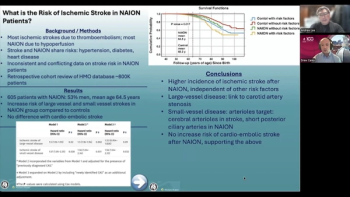
Andrew G. Lee, MD, and Drew Carey, MD, discuss findings from a retrospective study examining ischemic stroke risk in patients with non-arteritic anterior ischemic optic neuropathy and the implications for vascular risk factor management.
Length and width, not thickness, emerge as key drivers of higher-order aberrations.

What the approval of a second targeted biologic means for patients, practice, and the evolving TED treatment landscape

Three real-world cases illustrate strategies to identify and manage GA across a range of scenarios, from coexisting wet age-related macular degeneration to functionally monocular patients.
Advertisement
Advertisement
Trending on Eye Care Network - Ophthalmology Times
1
Thyroid Eye Disease in 2026: Disease state, recent developments, and the pipeline
2
Beyond the eye: The future of retinal imaging in medicine
3
Q&A: GLP-1 RAs and NAION, the case for a baseline exam
4
FLORetina-ICOOR 2026: An eye to the future
5