Murtaza K. Adam, MD, shares pearls on haptic docking, patient selection, and preventing complications with the Yamane technique.

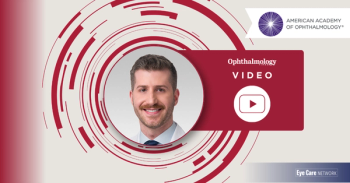
Isa S. K. Mohammed, MD, explains how he matches patients to PRK, LASIK, SMILE, or phakic IOLs and how prior surgery affects IOLs.
Patients seeking freedom from glasses now have more surgical options than LASIK alone, and the choice among them depends on corneal thickness, corneal shape, and the degree of refractive error. In a video interview with Ophthalmology Times, Isa S. K. Mohammed, MD, director of refractive surgery at the Johns Hopkins Wilmer Eye Institute in Baltimore, Maryland, described how he matches patients to photorefractive keratectomy (PRK), laser in situ keratomileusis (LASIK), small incision lenticule extraction (SMILE), and phakic
“The good news is, refractive surgery is one of the things that nowadays we have many good options,” Mohammed told Ophthalmology Times. “So
Mohammed uses PRK for patients with thinner and often irregular corneas who are not candidates for LASIK. Recovery takes longer, he said, “but ultimately the outcomes are just as great.” LASIK, which uses a flap, allows a much faster recovery. “So when patients go home, they take a nap and they wake up and they can see incredibly well,” he said.
Phakic IOLs are an option for patients whose corneas are too irregular for safe corneal surgery or who are highly nearsighted, and they can correct almost all nearsightedness or nearsighted astigmatism. Complication rates for these procedures are “all very low, not zero but very low,” Mohammed said.
SMILE, which Mohammed called “the third generation of laser refractive surgery,” is approved in the US for nearsightedness and nearsighted astigmatism but not for farsightedness, so LASIK and PRK remain necessary for some patients. Without a flap, he said, “there tends to be less dry eye in the early postoperative period,” and patients avoid the slower recovery of PRK. “So it’s kind of the best of both worlds,” he said.
To prepare patients for these conversations, his clinic shows a video outlining every option while patients are dilating. “It does lend for a more comprehensive discussion with the patient, but I do think that’s a good thing, because it’s important to have options,” Mohammed said.
“Once you’ve done surgery on the cornea, the predictability when it comes to cataract surgery is slightly reduced,” Mohammed said. Even after adjusting for prior LASIK, SMILE, or PRK, “the best calculators are still not as predictable as if they’ve never had surgery.” That does not disqualify these patients from surgery, he explained, but their chance of hitting the intended refractive target is slightly lower.
“But usually patients are very happy that they’ve had the prior surgery because they’ve got to enjoy glasses-free independence for decades,” he said. Mohammed discusses training residents and fellows in refractive surgery and barriers to cataract and refractive surgery access worldwide in part 2 of this interview.