

Opinion|Videos|November 18, 2026
Extending Treatment Intervals in wAMD
Second-generation anti-VEGF agents have expanded achievable dosing intervals in neovascular AMD, yet clinicians must weigh durability claims against monocular status, hemorrhage at presentation, and the realities of patient follow-up.
Advertisement
In "Extending Treatment Intervals in wAMD," our panel explores how far treatment intervals can be pushed without compromising disease control. Durability claims for newer anti-vascular endothelial growth factor (anti-VEGF) agents have shifted how far retina specialists are willing to extend patients with wet age-related macular degeneration (wAMD), but comfort levels still vary. Dr. Javaheri describes growing confidence in extending patients, noting that he is no longer anxious when a patient returns late after a hospitalization, because these agents appear to provide a sturdier margin of disease control. He finds this especially valuable for older patients who resist frequent visits, and he often uses trial outcomes to explain why reaching a three- or four-month interval is a realistic goal.
Dr. Kitchens describes a practical recalibration: where 12 weeks once marked the outer limit, 16 weeks has become his new standard. He holds monocular patients and those who presented with hemorrhage at that ceiling, while extending a small number of stable patients with healthy fellow eyes to five months. Dr. Kim is most comfortable at 16 weeks and is cautious about longer intervals for practical reasons. Missed appointments, travel, and caregiver availability create unplanned extensions, and she believes patients are more reliable about visits when they know an injection is expected, making roughly three treatments a year a sustainable sweet spot.
On whether treatment can ever stop, Dr. Kim may move patients caught very early to an as-needed approach but returns to treat-and-extend if fluid recurs. Dr. Dhoot is similarly reluctant to stop, particularly in monocular eyes or after hemorrhage, though he occasionally allows a monitored treatment holiday. The panel concludes that extensions should be individualized rather than driven by labeled maximums alone.
Our next episode, "Navigating Payer Requirements in wAMD," turns to how coverage rules, step therapy, and copay assistance determine what patients actually receive.
Advertisement
Related to this article

In this Q&A, Ping Moore, OD, covers emerging dry eye therapies, from selenium sulfide to next-gen cyclosporine, and how subtype-guided care shapes treatment choices.

Ophthalmology is projected to face one of the steepest physician shortages of any subspecialty by 2038.

Two investigational pipeline therapies take aim at the root causes of dry eye disease

The RMAT designation opens the door to a faster development pathway for EO2002 as a minimally invasive alternative to corneal transplantation, while Emmecell also advances a cell therapy for geographic atrophy.
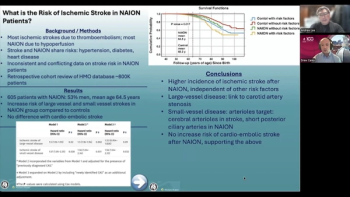
Andrew G. Lee, MD, and Drew Carey, MD, discuss findings from a retrospective study examining ischemic stroke risk in patients with non-arteritic anterior ischemic optic neuropathy and the implications for vascular risk factor management.

Length and width, not thickness, emerge as key drivers of higher-order aberrations.

What the approval of a second targeted biologic means for patients, practice, and the evolving TED treatment landscape

Three real-world cases illustrate strategies to identify and manage GA across a range of scenarios, from coexisting wet age-related macular degeneration to functionally monocular patients.
Advertisement
Advertisement
Trending on Eye Care Network - Ophthalmology Times
1
Johnson & Johnson to acquire Ollin Biosciences in deal worth up to $3.3 billion
2
Dazodalibep data put Sjögren screening in focus for ophthalmologists
3
Q&A: What the FDA’s class-wide NAION warning on GLP-1s means for eye care
4
The important role of midface support in undereye rejuvenation
5