

Opinion|Videos|November 25, 2026
Setting Expectations for Anti-VEGF Treatment in wAMD
Patient hesitancy toward intravitreal injection can delay treatment of neovascular AMD, and engaging families, normalizing the procedure, and injecting on the day of diagnosis may reduce the risk of avoidable vision loss.
Advertisement
In "Setting Expectations for Anti-VEGF Treatment in wAMD," our panel explores how to move a hesitant, newly diagnosed patient toward ongoing care. The prospect of lifelong eye injections can overwhelm patients newly diagnosed with wet age-related macular degeneration (wAMD), and the first injection is often the hardest to secure. Dr. Kitchens describes engaging family members early, since their encouragement frequently persuades a reluctant parent to proceed. He asks patients for a single chance, noting that very few decline further treatment after experiencing their first injection. He adds that patients often reassure one another in the waiting room, and that most leave their first visit saying the procedure was easier than they had feared. That reaction, he explains, creates the buy-in needed to sustain long-term treatment. Dr. Javaheri uses humor to defuse anxiety, pointing out that no one leaving his clinic is in tears. He also promises patients that if the first injection is uncomfortable, he will adjust his technique so the next one is better, which he finds puts many patients at ease.
Dr. Dhoot asks whether the panelists inject on the day of diagnosis, noting that practice patterns vary nationally. Dr. Kim and Dr. Javaheri treat the same day whenever possible, and Dr. Javaheri recalls patients who never returned after delaying, sometimes after searching online for dietary alternatives to injections. Dr. Kitchens agrees that waiting allows patients to dwell on their fears and talk themselves out of care. Dr. Javaheri adds that wAMD, like retinal vein occlusion, can progress quickly, unlike the slower course often seen in diabetic macular edema, so prompt treatment protects vision. The panel's advice is to address fear directly and treat without unnecessary delay.
Our next episode, "Case 1: Treating a Hesitant, Treatment-Naive Patient With wAMD," brings these principles to a patient case that tests how hesitancy shapes the first treatment decision.
Advertisement
Related to this article

In this Q&A, Ping Moore, OD, covers emerging dry eye therapies, from selenium sulfide to next-gen cyclosporine, and how subtype-guided care shapes treatment choices.

Ophthalmology is projected to face one of the steepest physician shortages of any subspecialty by 2038.

Two investigational pipeline therapies take aim at the root causes of dry eye disease

The RMAT designation opens the door to a faster development pathway for EO2002 as a minimally invasive alternative to corneal transplantation, while Emmecell also advances a cell therapy for geographic atrophy.
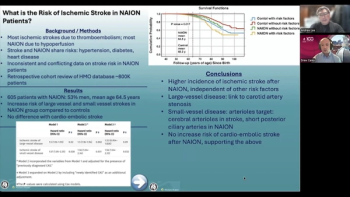
Andrew G. Lee, MD, and Drew Carey, MD, discuss findings from a retrospective study examining ischemic stroke risk in patients with non-arteritic anterior ischemic optic neuropathy and the implications for vascular risk factor management.

Length and width, not thickness, emerge as key drivers of higher-order aberrations.

What the approval of a second targeted biologic means for patients, practice, and the evolving TED treatment landscape
Three real-world cases illustrate strategies to identify and manage GA across a range of scenarios, from coexisting wet age-related macular degeneration to functionally monocular patients.
Advertisement
Advertisement
Trending on Eye Care Network - Ophthalmology Times
1
Thyroid Eye Disease in 2026: Disease state, recent developments, and the pipeline
2
Beyond the eye: The future of retinal imaging in medicine
3
Q&A: GLP-1 RAs and NAION, the case for a baseline exam
4
FLORetina-ICOOR 2026: An eye to the future
5