


News|Podcasts|October 30, 2026
OT Roundup: 3 FDA approvals, vorolanib insert miss, brepocitinib in uveitis
Veeral Sheth, MD, breaks down the LUCIA wet AMD data, plus new AAO findings on GLP-1 agents and anti-VEGF treatment burden in DME.
Advertisement
This edition of OT Roundup covers 3 FDA approvals announced on a single day, a second phase 3 miss for Duravyu in wet age-related macular degeneration (AMD) discussed with Veeral Sheth, MD, positive phase 3 results for brepocitinib in noninfectious uveitis, and registry data on GLP-1 receptor agonists and anti-VEGF treatment in diabetic macular edema (DME).
Missed the last episode?
Three FDA approvals in one day
On October 16, the FDA approved the first nonprescription apraclonidine eye drop, Brytly (apraclonidine ophthalmic solution 0.125%; Alcon), for eye redness; the first at-home subcutaneous therapy for thyroid eye disease (TED), satralizumab (Enspryng; Roche); and a presbyopia indication for phentolamine ophthalmic solution 0.75% (Opus Genetics), already marketed as Ryzumvi (Viatris) to reverse pharmacologically induced mydriasis. In the phase 3 VEGA-3 trial, 27.2% of patients on phentolamine gained at least 15 letters of near vision 12 hours after the day 8 dose, vs 11.5% on placebo.
>>>
Duravyu misses noninferiority in LUCIA
Duravyu (vorolanib insert; EyePoint), a sustained-release tyrosine kinase inhibitor, missed its primary end point in the Phase 3 LUCIA trial, the second of 2 pivotal wet AMD trials. Sheth, of University Retina, said insert eyes needed 38% fewer injections but gained fewer letters than aflibercept. “I definitely don't think that these results sink the class,” he said, and he suggested weighing who was enrolled, how rescue was defined and what happened to vision at 1 year. EyePoint will cut about 53% of its workforce and end both wet AMD trials early to focus on DME.
>>>
>>>
Brepocitinib meets all phase 3 end points in noninfectious uveitis
In the 2 phase 3 CLARITY trials, which enrolled 371 patients, brepocitinib (Priovant Therapeutics), a first-in-class inhibitor of tyrosine kinase 2 and Janus kinase 1, met the primary end point of time to treatment failure. The hazard ratio was 0.27 in CLARITY-1 and 0.22 in CLARITY-2. Pooled steroid-free quiescence at week 48 was 62% vs 20% on placebo. Priovant plans to file a supplemental new drug application in the first half of 2027.
>>>
GLP-1 receptor agonists and anti-VEGF burden in DME
An IRIS Registry analysis presented at the American Academy of Ophthalmology meeting matched 9,896 patients who started a GLP-1 receptor agonist with controls. Over 36 months, anti-VEGF injection trajectories, visual acuity and central subfield thickness did not differ significantly. The retrospective design shows association, not cause.
>>>
Where to listen
OT Roundup is part of the Eyepod podcast network.
New episodes of OT Roundup will be available every other Friday.
Advertisement
Related to this article

IRIS Registry data showed no change in anti-VEGF frequency, vision, or retinal thickness after patients with DME began a GLP-1RA.

In the latest episode of The Retina TL;DR with Dr. Weng—Part 2 of a special two-part series—host Christina Y. Weng, MD, MBA, FASRS, sits down with two more of her former residents for candid advice on transitioning into fellowship, balancing research and family, and what excites them most about the future of retina.
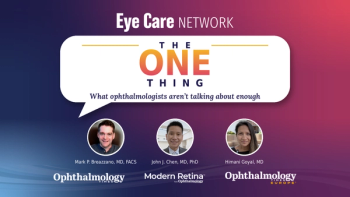
Himani Goyal, MD, John J. Chen, MD, PhD, and Mark P. Breazzano, MD, FACS, point to academic compensation, optic nerve damage, and who chooses retina.

Isa S. K. Mohammed, MD, explains how he matches patients to PRK, LASIK, SMILE, or phakic IOLs and how prior surgery affects IOLs.
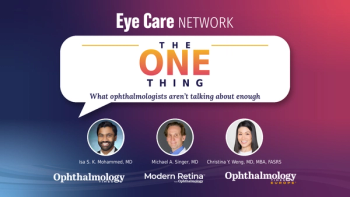
Christina Y. Weng, MD, MBA, FASRS; Michael A. Singer, MD, and Isa S. K. Mohammed, MD, point to early retinal care, corticosteroid training, and regulation and waste.

In the latest episode of The Wills Retina Report, Regillo and Ho discuss where gene therapy stands for retinal disease, from late-stage programs in neovascular age-related macular degeneration to earlier efforts in geographic atrophy and diabetic retinopathy.

Murtaza K. Adam, MD, shares pearls on haptic docking, patient selection, and preventing complications with the Yamane technique.

CHMP backs Accord Healthcare’s Lucentis biosimilar Fovlussea for nAMD, DMO, RVO and CNV ahead of an EC decision.
Advertisement
Advertisement
Trending on Eye Care Network - Ophthalmology Times
1
Retinal imaging as a window into atrial fibrillation
2
First patient dosed in phase 3 NPI-001 trial for Usher syndrome RP
3
Mediterranean diet linked to slower AMD progression across stages
4
OCT-980 receives FDA orphan drug designation for retinitis pigmentosa
5