

Opinion|Videos|November 11, 2026
Selecting Initial Therapy in Newly Diagnosed Wet AMD
Rapid early disease control may establish the trajectory for long-term outcomes in neovascular AMD, supporting first-line use of second-generation anti-VEGF agents in patients with high-risk anatomic or functional features.
Advertisement
Episodes in this series
In this episode, "Selecting Initial Therapy in Newly Diagnosed Wet AMD," the expert retina specialists explore how presentation and patient priorities shape the first anti-VEGF decision.The panel makes a clear case that the first few anti-vascular endothelial growth factor (anti-VEGF) injections can set the course for a patient's long-term outcome in wet age-related macular degeneration (wAMD). Dr. Javaheri describes treating aggressively from the outset, reasoning that drying the retina and flattening pigment epithelial detachments (PEDs) quickly allows faster extension and fewer injections over time.Absent payer barriers, Dr. Javaheri uses second-generation agents first line in many patients. He notes that features such as hemorrhage, large or multiple PEDs, and extensive subretinal fluid shape less how he treats and more how he counsels patients about the likely course of their disease.
Dr. Kitchens prefers to start with what he calls the strongest and longest-acting option, particularly for patients with PEDs, which he views as tougher lesions to dry. Rapid drying allows him to skip a full loading series and begin extending as soon as the retina is dry. Asked about the belief that potent agents increase the risk of retinal pigment epithelium tears, he argues the opposite: large PEDs tend to tear when left untreated, so flattening them early is the priority.Dr. Kim frames her approach around the question patients often ask, namely what she would choose for her own mother. Because lost ground is not always recoverable, she starts with the best available agent whenever insurance allows, and especially for monocular patients, those traveling long distances, and people whose work demands near-perfect vision.The shared message is that the cost of undertreatment early can outweigh the convenience of starting with a less potent option.
The next episode in this series, "Extending Treatment Intervals in wAMD," features the panelists weighing how far they are willing to stretch dosing intervals with second-generation agents.
Advertisement
Related to this article

In this Q&A, Ping Moore, OD, covers emerging dry eye therapies, from selenium sulfide to next-gen cyclosporine, and how subtype-guided care shapes treatment choices.

Ophthalmology is projected to face one of the steepest physician shortages of any subspecialty by 2038.

Two investigational pipeline therapies take aim at the root causes of dry eye disease

The RMAT designation opens the door to a faster development pathway for EO2002 as a minimally invasive alternative to corneal transplantation, while Emmecell also advances a cell therapy for geographic atrophy.
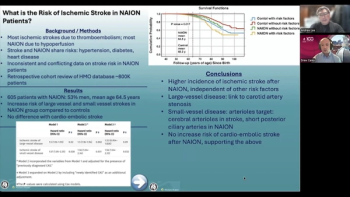
Andrew G. Lee, MD, and Drew Carey, MD, discuss findings from a retrospective study examining ischemic stroke risk in patients with non-arteritic anterior ischemic optic neuropathy and the implications for vascular risk factor management.

Length and width, not thickness, emerge as key drivers of higher-order aberrations.

What the approval of a second targeted biologic means for patients, practice, and the evolving TED treatment landscape

Three real-world cases illustrate strategies to identify and manage GA across a range of scenarios, from coexisting wet age-related macular degeneration to functionally monocular patients.
Advertisement
Advertisement
Trending on Eye Care Network - Ophthalmology Times
1
FDA requires NAION warning across the GLP-1 receptor agonist class
2
Viridian's VRDN-008 sustains IgG suppression through 8 weeks in phase 1
3
VERONA: Katherine Talcott, MD, on early gains with a TKI insert in DME
4
Selecting Initial Therapy in Newly Diagnosed Wet AMD
5