



AMD
Latest News
Advertisement
Video Series





CME Content













Advertisement
Experts discuss the efficacy and durability of newer therapies, focusing on faricimab and the high dose of aflibercept, highlighting the promising clinical trial results, maintaining comparable visual acuity efficacy while achieving longer durability.

When we discuss trial participation with patients, we stress that the goal of these studies is to obtain better visual outcomes and ease the treatment burden.

The reverse stock split is “part of the Company’s plan to regain compliance with the minimum bid price requirement for continued listing on The Nasdaq Capital Market."

Research indicates smoking increases risk of AMD, cataracts and glaucoma
Judy Kim, MD and Peter Kaiser, MD discuss the use of biosimilars and the potential introduction of biosimilar aflibercept for treating retinal diseases. Experts discuss their preferences for specific drugs and highlight the evolving landscape, anticipating challenges in drug selection and emphasizing the need for collaboration between retinal specialists and insurance companies to optimize patient care.
In this insightful discussion on changing therapeutic approaches in neovascular age-related macular degeneration (nAMD) and diabetic macular edema (DME), Judy Kim, MD and Peter Kaiser, MD address barriers like step therapy and the impact of insurance-guided choices on treatment outcomes. The conversation emphasizes the need for a personalized approach, citing clinical trial data while acknowledging the challenges of aligning real-world practices with stringent trial protocols.

Investigators believe that AMD and cancer may have similar risk factors in common.

Researchers have found that the interactive release of anti-inflammatory drugs depend on the level of retinal degeneration. A customized treatment approach is expected to be developed to reduce patients’ inconvenience of having multiple shots.

Rajendra Apte, MD, PhD, has received the Research to Prevent Blindness /American Macular Degeneration Foundation Catalyst Award for innovative research approaches in studying age-related macular degeneration.

The 3 participants have also received their first aflibercept injection for the treatment of wet AMD.

Twelve-week data from the Ph1b/2a AMARONE trial reveals Restoret to be well-tolerated in patients with diabetic macular edema and neovascular age-related macular degeneration.

These 3 participants have received their first aflibercept injection for the treatment of wet AMD.
According to the company, 4D-150 was well tolerated with a favorable safety profile when evaluated through up to 48 weeks of follow-up, with no significant inflammation observed.

Preliminary safety data support a favorable benefit-risk profile at both dose levels. The preliminary efficacy and safety data trending similar to or better than the OPTIC study, in which patients continue to see ongoing clinical benefit through at least 3 years.
The study further defined the relationship between delayed rod-mediated dark adaptation and the status of outer retinal bands on optical coherence tomography.

A minimum of 5,000 patients with up to 5 years of follow-up will be included in the study, with patients from a variety of practice settings and clinician experiences in 28 countries and 500 sites

Dr. Jennifer Lim reveals new data on Angiopoietin-2 inhibition as a target for addressing nAMD and DME.
In conversation with Ophthalmology Times Europe, Anat Loewenstein, MD, illuminates the outcomes of using an AI-based fluid quantification for remote retina monitoring and analysis.
Carl D. Regillo, MD, FACS, FASRS, discussed recent data from the DAVIO 2 trial in his presentation at the virtual Angiogenesis, Exudation, and Degeneration 2024.
Dr. Carl Regillo provided an overview of topline results and a deep dive into subgroup analyses of DAVIO 2 trial data.

Early-onset drusen maculopathy (EODM), is part of the age-related macular degeneration (AMD) phenotype that occurs in individuals under 55 years of age.

EODM may be an ideal candidate for development of complement gene therapy due to the high-impact genetic variants.
SriniVas R. Sadda, MD, sat down with David Hutton of Ophthalmology Times to discuss his presentation about precursor lesions for development of atrophy and AMD from the Angiogenesis Exudation and Degeneration 2024 event.
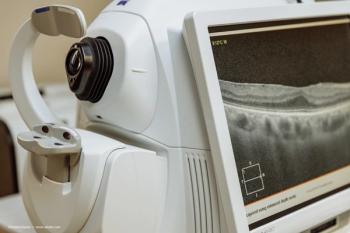
Multimodal technology bridges the gap between advanced age-related macular degeneration (AMD) biomarkers and clinical features.
Advertisement
Advertisement
Trending on Eye Care Network - Ophthalmology Times
1
One day, three approvals: FDA expands options for ocular redness, thyroid eye disease, and presbyopia
2
Brepocitinib meets all Phase 3 end points in noninfectious uveitis
3
Diabetic macular edema: an inflammatory disease in focus
4
Matching artificial tears to dry eye phenotype: a Q&A with Omur Ucakhan, MD
5