

Mark J. Gallardo, MD, discusses how the laser performed alongside cataract surgery in open-angle glaucoma, including medication burden and safety.
Mark J. Gallardo, MD, discusses how the laser performed alongside cataract surgery in open-angle glaucoma, including medication burden and safety.

Drew Carey, MD, and Andrew G. Lee, MD, discuss triage, visual fields, double vision, and cataract topics from Neuro-Ophthalmology Subspecialty Day.
A handful of eye care providers spoke on the factors that have led to a lack of eye care access for World Sight Day.
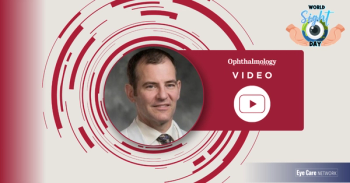
Lloyd Williams, MD, PhD, discusses rising cataract blindness and low-cost surgery in conflict zones for World Sight Day.

At EURETINA 2026, Jordi Monés, MD, PhD, outlined the rationale for gene-agnostic optogenetic therapy MCO-010 to restore vision in Stargardt disease and geographic atrophy.

Ali Tafreshi discusses Oku Digital Health, launched from Topcon to link eye care with primary care, and the barriers ahead.

At EURETINA 2026, David Steel reviewed registry evidence on gas and silicone oil tamponades for retinal detachment repair and outlined novel tamponade agents in his Kreissig Award Lecture.

Sunir Garg, MD, FACS, previews DME and dry AMD data, free papers, and surgical sessions at AAO 2026.

Ritesh Narula, MBBS, MS, discusses phase 1 and early phase 2 results of the Eyestem subretinal stem cell study in geographic atrophy, including an 11-letter mean visual acuity gain maintained at 18 months.

At EURETINA 2026, Arshad Khanani, MD, FASRS, reviews sura-vec, 4D-150 and ixo-vec, 3 nAMD gene therapies in phase 3 with readouts expected over the next 12 months.
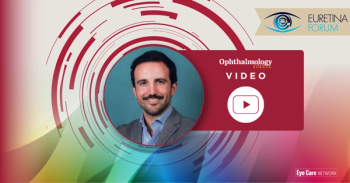
João Pedro Marques, MD, MSc, PhD, FEBOphth, discusses the IRD-PT, a web-based Portuguese registry of roughly 2,400 patients with inherited retinal diseases that supports research and identifies patients for clinical trials.

At EURETINA 2026, Elon van Dijk, MD, PhD, FEBOphth, reviewed trial evidence favouring half-dose PDT over micropulse laser and eplerenone for central serous chorioretinopathy.

Paul Nderitu, MBChB, MPhil, MBCS, FRCOphth, PhD, gives an update at EURETINA 2026 on Global RETFound, a foundation model being built with 108 partners from more than 40 countries

Katherine Talcott, MD, discusses phase 2 VERONA results showing EYP-1901 plus aflibercept reduced supplemental treatment needs in DME, with early vision and anatomy gains and no significant safety signals.
At EURETINA 2026, Arshad Khanani, MD, FASRS, reviews 2-year SPECTRA data on 4D-150 gene therapy for DMO and the phase 3 4SIGHT trial comparing it with aflibercept.

OT Roundup returns with MOGENRY's 4-year RP data, RCA's retina care report, SYD-101's FDA hearing, and new OCU410 GA data.

Francesca Cordeiro, PhD, MD, FRCOphth, explains how Detection of Apoptosing Retinal Cells (DARC) imaging predicted the speed and direction of GA growth and could help stratify patients for treatment.

R. Ross Lakhanpal, MD, FACS, outlines how he counsels newly diagnosed patients, uses FAF imaging, and weighs long-term GA treatment data.

For CVI Awareness Day, 3 experts explain why CVI can hide behind a normal eye exam and why early referral matters.

Veeral S. Sheth, MD, MBA, FACS, FASRS, on how the avacincaptad pegol label update, earlier treatment, and patient counseling shape long-term GA care.

Cathleen McCabe, MD, presents real-world data from a 57-site US study of the enVista Aspire IOL at ESCRS 2026, reporting over 90% patient satisfaction and 20/32 uncorrected intermediate vision in more than 70% of patients.

Nimesh A. Patel, MD, explains why myopia-related retinal detachments are appearing earlier and how routine exams can catch them.

A multimodal OCT and ultra-widefield imaging model detected retinal inflammation in uveitis without fluorescein dye.

Uday Devgan, MD, FACS, co-chair of EyeCon 2026, highlights what makes cataract surgery challenging, when to add MIGS, and why no patient is routine.
Nimesh A. Patel, MD, discusses compounded low-dose atropine and SYD-101 ahead of an October 30 FDA advisory committee meeting.

Christina Y. Weng, MD, MBA, FASRS, highlights findings showing statin use reduced PVR risk by 25% in a propensity-matched cohort of nearly 10,000 patients.

At Retina Society 2026, Emily Eton, MD, discusses a 10-center study finding similar exudate control in Coats disease and Coats-like disease in inherited retinal diseases, with more injections needed in the IRD group.

At Retina Society 2026, Eileen Hwang, MD, PhD, discusses a meta-analysis finding a 1.78 times higher retinal detachment rate in COL2A1 vs COL11A1 Stickler syndrome and the case for prophylactic laser.

At Retina Society 2026, Nimesh Patel, MD, discusses how stage 2 ROP before 34 weeks raises the treatment rate and why he urges early referral and a risk-tailored approach to care.
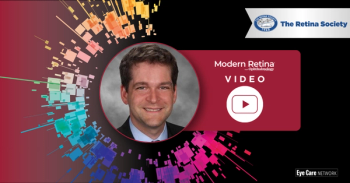
Mark P. Breazzano, MD, FACS, shares findings from a TriNetX real-world database analysis on how HIV co-infection influences RPR titers in patients with ocular syphilis.