


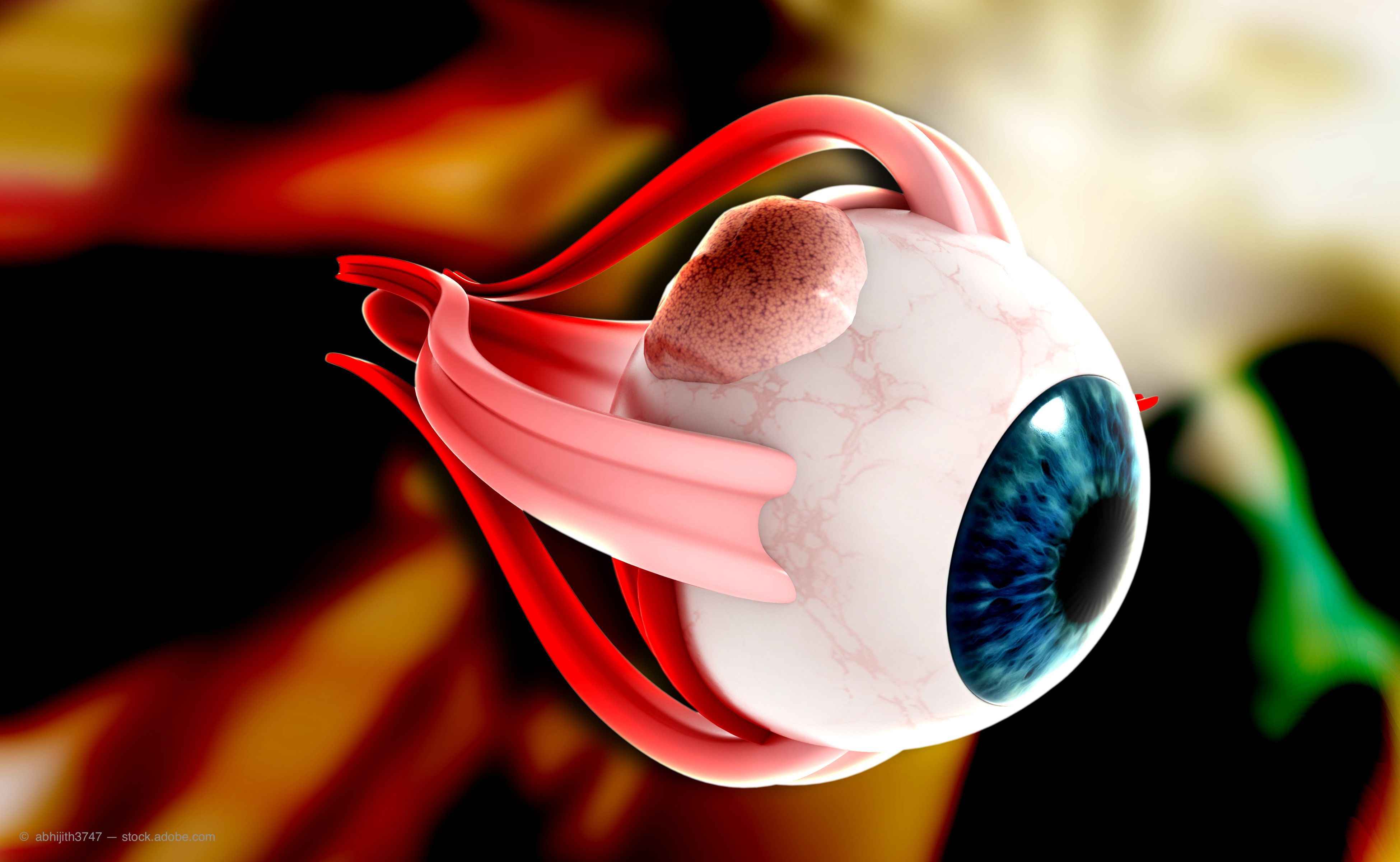

















Clues to diagnosis from patient/family histories, examination techniques.
Clues to diagnosis from patient/family histories, examination techniques.
Trial shows treatment has acceptable safety profile, may improve visual function.
While operating on a patient with chronic uveitis presents some challenges, there are a few pearls that may increase success.

Types of tests and criteria that can be used to diagnose conditions such as age-related macular degeneration, diabetic macular edema, and inherited retinal disease.

A panel of global experts who treat patients with retinal diseases suggest causes of age-related macular degeneration, diabetic macular edema, and inherited retinal disease.
According to researchers, fluorescence lifetime imaging ophthalmoscopy reveals disease-related patterns not visible with other imaging modalities.

Knowledge of tools used in data interpretation helps clinicians trust accuracy of findings.

A survey of fireworks-related injuries for ophthalmologists and retina specialists.
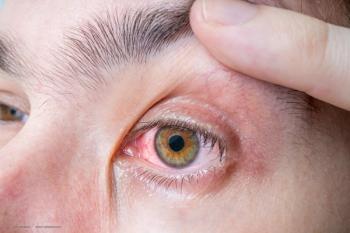
Novel treatments are now shifting paradigm in care of retinal diseases.

Retinal imaging tests are providing material to train and test decision-support systems.

If approved, PDS ranibizumab would become the first and only eye implant with continuous drug delivery offering people with wet AMD.
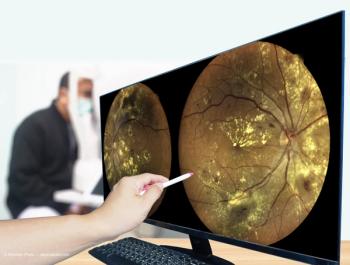
Increased access is key to preventing disease progression in patients.
In endophthalmitis, the systemic anti-infective treatment specific to the infectious agent should always be used.
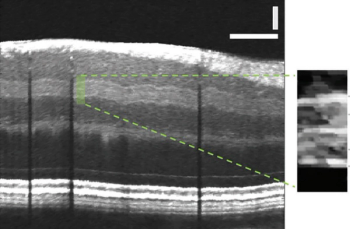
Visible-light optical coherence tomography proves valuable in studies.

Investigators find approach improved vision and visual fields in some patients.

Clearside Biomedical, Inc. reported today positive safety results from Cohort 1 of its ongoing OASIS phase1/2a clinical trial of CLS-AX for the treatment of wet AMD.

Ophthalmology, with its heavy reliance on imaging, is an innovator in the field of artificial intelligence in medicine.

RGX-314 eyed by investigators as a therapeutic option for exudative AMD.

PDUFA action date of October 30, 2021, is assigned for investigational therapy with a proposed indication of treatment of macular edema associated with uveitis.

Study results show that aflibercept-treated eyes are protected.

Retinal imaging tests are providing material to train and test decision support systems.
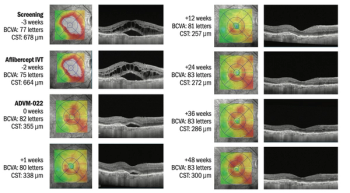
ADVM-022 offers sharp decrease in treatment burden for patients with nAMD.

Investigators are conducting retinal gene therapy trials that offer potential new treatments for inherited causes of vision loss.

Research teams in various countries are pioneering different methods of data processing and deep-learning AI to create new models of care.

The company is hoping to commercialize the first FDA-approved ophthalmic formulation of bevacizumab-vikg for retinal disease. It expects to receive BLA approval from the FDA by mid-2022.