

















Paul Hallen discusses the Retina Industry Insights panel at the Ophthalmology Innovation Summit in San Antonio, Texas.
Paul Hallen discusses the Retina Industry Insights panel at the Ophthalmology Innovation Summit in San Antonio, Texas.

David Boyer, MD, reports on the use of pegcetacoplan to treat geographic atrophy when administered monthly or every-other-month regimens in the phase 3 DERBY and OAKS studies.
At ASRS 2021, Dr David Boyer reported that pegcetacoplan used to treat geographic atrophy and administered in monthly or every-other-month regimens was well tolerated in patients in the phase 3 DERBY and OAKS studies.

Arshad Khanani, MD, MA, reports primary study findings from the phase 3 study on the Port Delivery System with ranibizumab.

Dr Arshad Khanani reported at ASRS 2021 that the Port Delivery System with ranibizumab, an investigational product that continuously delivers ranibizumab intravitreally, achieved results similar to those in patients treated with monthly ranibizumab injections for nAMD.

Richard B. Rosen, MD, DSc(Hon), reports on the capabilities of using clinical OCT for imaging and measuring macular surface macrophage cells during the 2021 ASRS annual meeting.
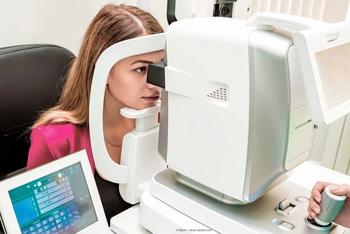
At ASRS 2021 in San Antonio, TX, Dr Richard B. Rosen reported that clinical optical coherence tomography (OCT) can image and measure macular surface macrophage cells.

Justis P. Ehlers, MD, speaks on the findings from a higher-order OCT analysis for inflammatory signal biomarkers in the HAWK Study.

Sunir Garg, MD, reports on the risk of presumed infectious endophthalmitis following administration of anti-VEFG injections in correlation with universal masking.

During the ASRS Annual Scientific Meeting, Dr Sunir Garg reported that the risk of presumed infectious endophthalmitis following administration of anti-VEGF injections does not increase and universal masking may actually decrease the risk of culture-positive endophthalmitis.
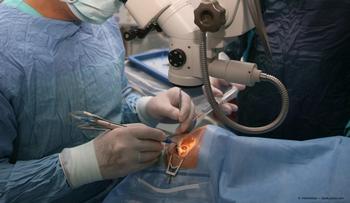
Yoshihiro Yonekawa, MD, reports on the findings of an investigation looking at the prevalence of endophthalmitis following minimally invasive glaucoma surgery.

At the ASRS 39th Annual Scientific Meeting, Dr Yoshihiro Yonekawa reported that the prevalence of endophthalmitis following MIGS is similar to the prevalence rates of endophthalmitis after other incisional glaucoma surgeries.
Alcon's Paul Hallen offers a look at the highlights from the 2021 ASRS annual meeting's OIS panel as well as the company's latest innovations.
Dr Rishi Singh reports on the pooled data from the VISTA and VIVID clinical trials on the use of intravitreal aflibercept injections (IAI) to treat diabetic macular oedema at the ASRS 39th Annual Scientific Meeting.

Rishi Singh, MD, reports on results from the VISTA and VIVID studies analyzing the use of intravitreal aflibercept injections to treat DME.

Caroline Baumal, MD, highlights results from the Phase 3 YOSEMITE and RHINE trials, providing an overview of the efficacy, safety and durability of faricimab in DME.

Dr Caroline Baumal provides an overview of the efficacy, safety and durability of faricimab in diabetic macular oedema (DMO) at ASRS 2021.

At the ASRS 39th Annual Scientific Meeting, Dr W. Lloyd Clark discusses retinal nonperfusion and leakage areas when managing patients with nonproliferative diabetic retinopathy in context of the results of the PANORAMA study.

W. Lloyd Clark, MD, presents results of the nonproliferative diabetic retinopathy-focused PANORAMA study during the 2021 ASRS annual meeting.

Proposal hints at the use of generative adversarial network (GAN) for applications in macular surgery.

The EIDON Ultra-Widefield Lens module from iCare USA has received 510(k) approval from the FDA for distribution in the US.
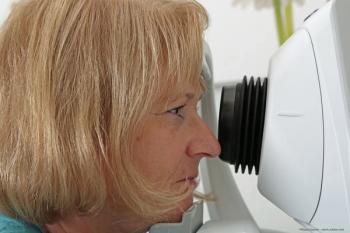
Swept-source optical coherence tomography angiography can detect eyes at risk of developing exudative disease.

Trial results indicate that retinal cell injections improve vision in certain retinitis pigmentosa patients.
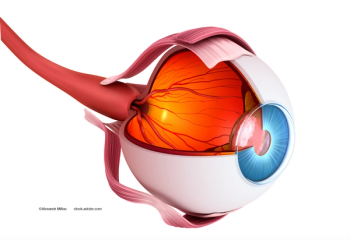
Researchers consider frequency and factors in etiology of complication
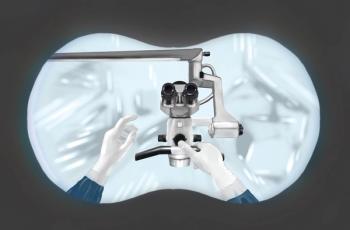
Pilot study shows promise of teaching surgeons with technology.