














Grazia Pertile, MD, discusses the highlights of her presentations on the management of retinal folds after retinal detachment and the role of the anterior vitreous as a cause of recurrent retinal detachment.
Grazia Pertile, MD, discusses the highlights of her presentations on the management of retinal folds after retinal detachment and the role of the anterior vitreous as a cause of recurrent retinal detachment.

Javier Zarranz-Ventura MD, PhD, FEBO, discusses the key highlights from his presentation on a clinical investigation of suitable naïve versus pre-treated DME patients, and what it means for future research.
During a presentation at the EURETINA 2021 Virtual Congress, Dr Daniel Jones discussed GA and emphasized the need for additional study to gain a better understanding of the burden experienced by patients.

In a presentation at the EURETINA 2021 Virtual Congress, Dr Cristina Cristian noted that an injection of brolucizumab treatment in patients with neovascular age-related macular degeneration led to a median improvement in visual acuity (VA) of 10.5 letters and the drug was well-tolerated.
Dr Ramin Tadayoni discusses the myopia panel at the EURETINA 2021 virtual meeting.
Dr Grazia Pertile discusses the highlights of her presentations on the management of retinal folds after retinal detachment and the role of the anterior vitreous as a cause of recurrent retinal detachment.

Anat Loewenstein, MD, MHA, discusses how artificial intelligence can optimize optical coherence tomography.
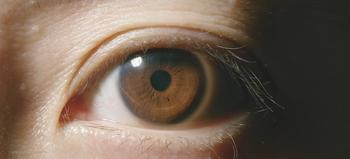
A case study details the care of a patient who had already lost vision in one eye from a similar issue.

Carel B. Hoyng, MD, discusses his presenation regarding macula dystrophies, including Stargardt disease, Best disease, X-linked retinoschisis, and the peripherin-2 (PRPH2) gene.
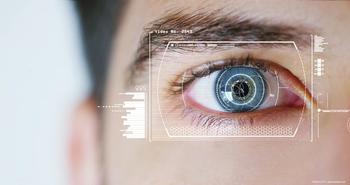
During a presentation at the EURETINA 2021 Virtual Congress, Dr Anat Loewenstein discussed how artificial intelligence can optimize optical coherence tomography.
During a presentation at the EURETINA 2021 Virtual Congress, Dr José-Alain Sahel explains that optogenetics involves the use of artificial photoreceptors from specific retinal cells to restore vision by transferring a gene that encodes for a light-sensitive protein that causes neuronal cells to respond to light stimulation.
Dr Javier Zarranz-Ventura discusses the key highlights from his presentation on a clinical investigation of suitable naïve versus pretreated DMO patients, and what it means for future research.

José-Alain Sahel, MD, explains how optogenetics involves artificial photoreceptors from specific retinal cells to restore vision.

Prof Carel B. Hoyng discusses his presenation regarding macula dystrophies, including Stargardt disease, Best disease, X-linked retinoschisis, and the peripherin-2 (PRPH2) gene.
Quan Dong Nguyen, MD, MSc, FARVO, FASRS, highlights his presentation regarding new biological treatments of posterior uveitis.
Ramin Tadayoni, MD, PhD, discusses the pathology of myopia around the globe.

Jennifer Sun, MD, MPH, explores the question of whether ophthalmologists should be using anti-VEGF agents to treat patients with nonproliferative diabetic retinopathy (NPDR).
Dr Jennifer Sun explores the question of whether ophthalmologists should be using anti-VEGF agents to treat patients with nonproliferative diabetic retinopathy (NPDR).
Professor Quan Dong Nguyen speaks on the highlights of his presentation regarding new biological treatments of posterior uveitis.
OD-OS’s teleguidance offering addresses the lack of experts and also benefits teaching in retina laser care.

Rhegmatogenous retinal detachment studied.

Treating the disease can be a challenge, and at the EURETINA 2021 Virtual Congress, Dr Chekitaan Singh discussed a case study detailing the care of a patient who had already lost vision in one eye from a similar issue.

Speaking during the EURETINA 2021 Virtual Congress, Dr Marta Belmonte-Grau discussed the potential risk for posterior capsular rupture during cataract surgery.

Development of new animal model enhances study of potential mutations.
In the 30 years since optical coherence tomography was first described, it has become one of the most widely used technologies for imaging the human eye.