

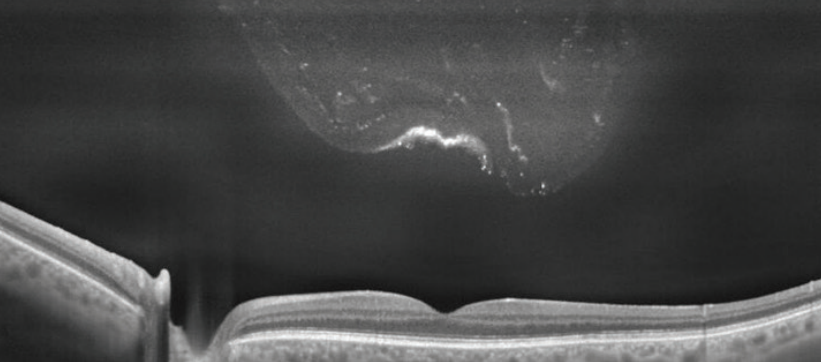















Two teams of researchers from Gyroscope Therapeutics and the University of Pennsylvania are joining forces to explore gene therapy targets for three specific serious eye diseases.

Two teams of researchers from Gyroscope Therapeutics and the University of Pennsylvania are joining forces to explore gene therapy targets for three specific serious eye diseases.
Study results could provide a new preferred treatment paradigm for this population.

Nine pediatric patients with Leber congenital amaurosis show visual improvement in clinical trials.

All syringes used for intravitreal injections have pros and cons. Some recently marketed and forthcoming products are coming closer to meeting “ideal” criteria.
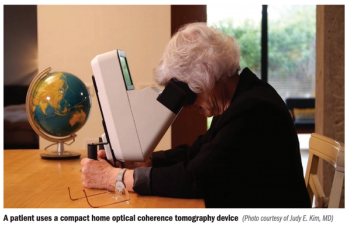
Novel OCT system with AI-based image analysis holds promise.

With several clinical trials underway, ocular therapy is seen as having potential in the treatment of a number of gene-related diseases.
Protocol T Extension Study details methods needed to maintain VA gains over time.
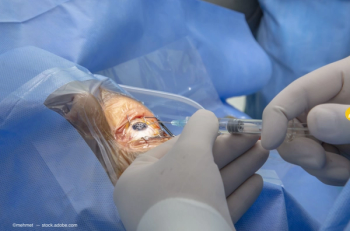
Interim data from a cross-sectional study raise concerns that repeated intravitreal injections of an anti-VEGF agent may be associated with a decline in cognitive health.

Newest advances improving ophthalmologists’ performance in operating room.

Patients with pathogenic variants experience lower VA tied to length of IS/OS junction.

Process eliminates need for expensive in-person examination of patients without DR.

Advances in treatment and surgical techniques have transformed patient care.

Investigators reviewed visual acuity, multi-modal retinal imaging, electroretinography, family history.

Programs use detection and treatment to ease burden of eye disease.

Investigators looked at trends by geographic variation in practice patterns, perceptions toward opioids, and patient population
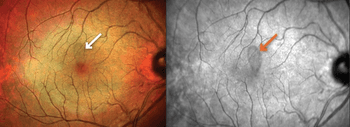
Bradley Smith, MD, presents at AAO 2020 on how fingolimod 0.5 mg, a first-line treatment for multiple sclerosis, may reduce both the number of relapses and disease progression in patients with relapsing-remitting MS as well as the incidence of uveitis.
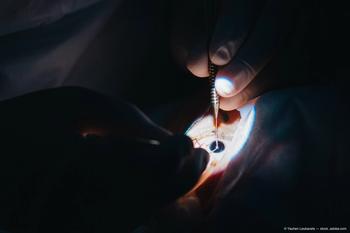
Tamer Mahmoud, MD, PhD, discusses autologous retinal transplant (ART) for macular holes, a procedure he developed, which is providing anatomic hole closure in the vast majority of cases as well as increases in visual acuity.
Josh Anderson, head of U.S. retina sales and marketing for Alcon, outlines what attendees will learn including product updates, new technologies, and practice management materials for ophthalmologists and their patients during the COVID-19 pandemic.
Prof. Giovanni Staurenghi, chairman of the University Eye Clinic, Department of Biomedical and Clinical Sciences at the University of Milan’s Luigi Sacco Hospital, Italy, discusses his presentation from this year's AAO, including findings from the HARBOR study of macular atrophy in AMD patients treated with ranibizumab.
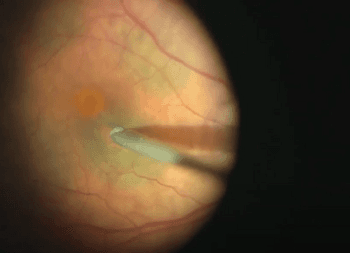
During Day 1 of AAO 2020, Carl Awh, MD, discusses the Micro-Vacuum Pick, a device for peeling internal limiting membranes that's providing vitreoretinal surgeons an alternative to forceps during surgeries.

At AAO 2020, Fernando Arevalo, MD, PhD, details the use of anti-VEGF therapy for the treatment of retinal arteriolar macroaneurysms that are near the fovea.

DME diagnosis plays no role in determining whether patients will receive injection.
Device allows visually impaired to recognize shapes, distinguish between light and dark.
The program is dedicated to the education of fellows and residents and offers a unique opportunity to share notable retina research with peers and mentors.
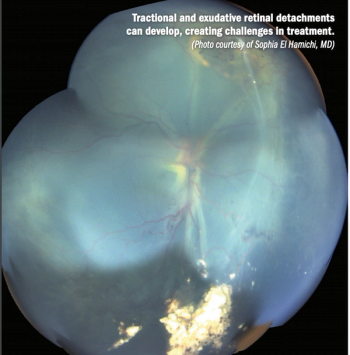
Watchful waiting may prove to be beneficial in complicated cases