

Retina
Latest News

Advertisement
Video Series




CME Content











Advertisement

Altris also has advanced AI models to enable vendor-neutral retina layers segmentation as well as detection and visualization of more than 70 retina conditions such as dry and wet age-related macular degeneration, geographic atrophy, diabetic retinopathy, diabetic macular edema and central retinal vein occlusion.
In this EyePod® episode, David Hutton sits down with Shankar Musunuri, CEO of Ocugen to discuss updated data for OCU400.

The specialty pharmaceutical research company’s new retinal vascular dysfunction model can have an impact on the research and development of new drugs for retinal vascular diseases.
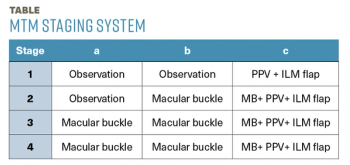
Dr Barbara Parolini gives her guidance on navigating and managing the pathology in stages

Attendees can take advantage of many satellite symposia, sponsored by industry and feauring experts from around the world

Experts in all aspects of retinal care will gather at the RAI Amsterdam Convention Centre, located in the Zuidas business district of the city, which is a short distance from historic Amsterdam with is canals, museums, and shops
According to the companies, the partnership will roll out a proprietary system that has earned FDA breakthrough designation, one of the few ophthalmic devices to achieve this status in almost a decade.
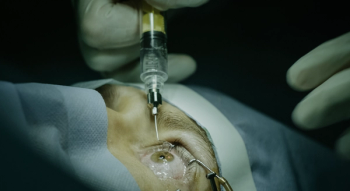
According to a news release, the J-code for SYFOVRE will become effective on October 1, 2023.

News
To educate patients on the disease, the company has enlisted the help of actor Eric Stonestreet and his mother, Jamey.
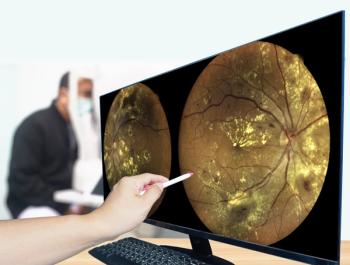
Kiora CEO Brian Strem, PhD, offers an update on the development of KIO-301, a molecule that selectively targets retinal ganglion cells, giving them the ability to sense light.
The research will focus on the compound's impact on biomolecular condensates, which are implicated as a key driver of pathology in neurodegeneration and diseases impacting high metabolic organs. Because the retina is one of the highest energy consuming systems in the human body, deficits in energy supply can be catastrophic.

Researchers from the University of Barcelona are looking to unlock the function of genes in order to design therapies to treat patients diagnosed with retinitis pigmentosa.
VR will have very useful applications in many fields. One of those fields is ophthalmology.

Leaders must confront issues perpetuating unequal access, unfair practices.
Despite its status as an essential postoperative safety eye product and its utilization by every ocular surgeon with every ocular surgery, eye shield innovation has been neglected to date.

The company has released a video presentation that highlights combining genetic markers with high-resolution retinal imaging to assist in the detection and treatment of blindness and multiple systemic diseases.
The diagnostics company is using AI to screen for diabetic retinopathy, glaucoma and age-related macular degeneration

The use of VR mazes hold an intrinsic advantage compared with physical mazes in the ability to control conditions and test various patterns with reliability, participant safety, and repeatability.

The AI retinal scanning model will be free to use for all institutions
The nonprofit marked a major milestone by announcing a suite of webinars with Heidelberg Engineering

According to the company, the clinical study update suggests continued positive trends in best-corrected visual acuity and multi-luminance mobility testing as well as positive trends in low-luminance visual acuity among treated eyes.
The diagnostic imaging experts will provide education through the Cybersight platform

According to the company, OPGx-LCA5 is designed to address vision loss due to Leber congenital amaurosis associated with mutations in the LCA5 gene, which causes one of the most severe early-onset retinal dystrophies.

The company has 9 presentations at the annual congress of the European Society of Cataract and Refractive Surgeons being held in Vienna. AVG also is a sponsor of the International Society of Presbyopia.

The non-profit will partner with the imaging company to prevent blindness and fund new retinoblastoma research.
Advertisement
Advertisement