






Retina
Latest News
Advertisement
Video Series






CME Content











Advertisement

The augmented reality headset compensates for central vision loss to enhance the visual clarity of patients with age-related macular degeneration and other conditions such as Stargardt disease.
At this year's American Academy of Ophthalmology meeting in San Francisco, California, Marco A. Zarbin, MD, spoke with Ophthalmology Times about his team's post-hoc analysis of the YOSEMITE and RHINE clinical trials

In the study, researchers changed the microenvironment in the eye in a way that enabled them to take stem cells from blood and turn them into retinal ganglion cells that were capable of migrating and surviving into the eye’s retina.

At AAO 2023, Diana Do, MD, spoke with the Ophthalmology Times team about her presentation of the results for the 96-week PHOTON study of aflibercept for diabetic macular oedema

The company also completes enrollment of the multiple ascending dose phase of AMARONE, the first clinical trial of EyeBio’s lead investigational asset Restoret, with favorable initial safety and tolerability at all dose levels.
Mark Blecher, MD, spoke with the Ophthalmology Times team about his poster addressing retinal visualization and patients who've had small aperture IOL implantation at this year's American Academy of Ophthalmology meeting.
Mark Blecher, MD, spoke with the Ophthalmology Times team about his poster addressing retinal visualisation and patients who have undergone small aperture IOL implantation at this year's American Academy of Ophthalmology meeting

In the clinical trial, Oxurion’s novel PKal Inhibitor, THR-149, did not meet its primary endpoint

Oliver Hvidt, CEO and co-founder of Norlase, spoke with Ophthalmology Times about the company's 4-year journey from AAO 2019 to present at this year's American Academy of Ophthalmology meeting.
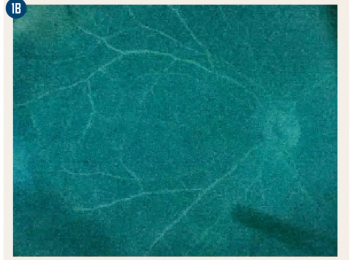
Developing technology may offer marked improvements in surgical precision

The endorsement follows FDA approval in the United States this summer

News
According to the company, OCU410ST uses an AAV delivery platform for the retinal delivery of the RORA (RAR Related Orphan Receptor A) gene.

Jayashree Kalpathy-Cramer, PhD, was granted $300,000 from the Michael J Fox Foundation to examine key data put together at the Sue Anschutz-Rodgers Eye Center with artificial intelligence in an effort to identify biomarkers of Parkinson’s disease.

NYU Langone Health performs landmark procedure called “major paradigm shift for potential vision therapies”
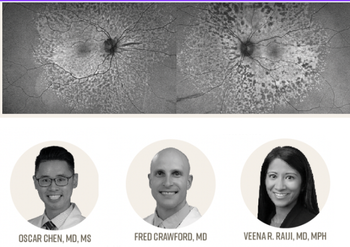
In this case study, a patient with recently diagnosed cancer demonstrated significant improvement for ocular symptoms of BDUMP following plasmapheresis

At the 2023 AAO meeting, Paul Runge, MD, FACS, spoke with Ophthalmology Times about his time in Ukraine treating retinopathy of prematurity (ROP) and implementing the Norlase Lion laser at this year's American Academy of Ophthalmology meeting.

The general public should use caution when reading AI-generated medical information as it may be inaccurate, misleading, or biased.
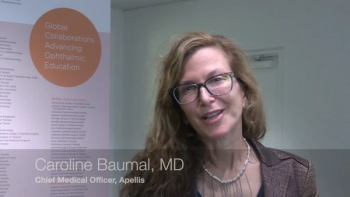
Caroline Baumal, Chief Medical Officer at Apellis, spoke with Ophthalmology Times on the GALE extension study of pegcetacoplan for geographic atrophy, and shared insights on her career transition, emphasizing the significance of mentorship and a passion for one’s work at this year's American Academy of Ophthalmology meeting in San Francisco.

Peter K. Kaiser, MD, provides an overview of innovative therapies in development for patients with dry age-related macular degeneration.

Kodiak paused further development of tarcocimab last summer after its GLEAM and GLIMMER studies in diabetic macular edema did not meet their primary endpoint.

Conference
The company presented topline Phase I/II first-in-human results at the 127th American Academy of Ophthalmology annual meeting in San Francisco, demonstrating significant improvement in visual field, in concordance with trended improvements in visual acuity and functional vision.

Investigators sought to estimate the costs of treating GA with pegcetacoplan and to identify possible utility measures to compare treatments for GA
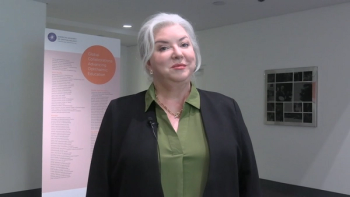
Kerrie Brady, president and chief executive officer of OcuTerra Therapeutics, shares progress in their Phase 2 DR:EAM Diabetic Retinopathy study, with promising results expected in Q1 2024 for their OTT166 eye drop treatment.
Kerrie Brady, president and chief executive officer of OcuTerra Therapeutics, shares progress in their Phase 2 DR:EAM Diabetic Retinopathy study, with promising results expected in Q1 2024 for their innovative eye drop treatment, OTT166.

The latest innovations are in focus at the 127th annual meeting of the American Academy of Ophthalmology, being held at the Moscone Center in San Francisco.
Advertisement
Advertisement