



Retina
Latest News
Advertisement
Video Series




CME Content











Advertisement

The company announced it has scheduled an End-of-Phase 2 meeting with the FDA in Q4 2023 to discuss the specifics of the APX3330 development program.

Faricimab is currently approved in more than 70 countries to treat nAMD and DME, with more than 1 million doses distributed globally, and Genentech will highlight its ophthalmology portfolio at the American Society of Retina Specialists annual meeting in Seattle.

The companies plant to create a comprehensive resource that provides valuable insights into health outcomes, medication adherence, and the effectiveness of various treatment protocols.

According to the companies, this partnership will leverage RetinAI's innovative digital health technologies and RCA's network of clinics to analyze real-world health clinical and imaging data.

For visual recovery to occur, there must be photoreceptors left that can be rescued.

According to a study, the experimental eye drop treatment was twice as effective as the standard injection therapy at reducing swelling and improving blood flow within the retina of mice with RVO.

According to researchers at Duke University Medical Center, the tool demonstrates the potential for a non-invasive and inexpensive way to diagnose a common precursor of Alzheimer’s disease.
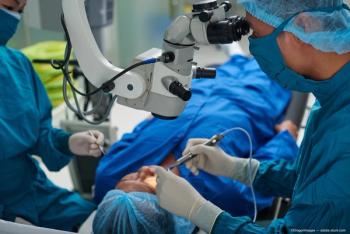
Vantage Surgical Solutions has acquired Ophthalmic Surgical Solutions (OSS). OSS is a Kansas-based company specializing in ophthalmic surgical equipment and services.
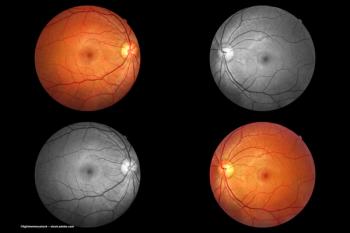
Investigators set out to evaluate how well an AI system works when integrated into a handheld smartphone-based retinal camera to screen patients for DR using 1 retinal image in each eye.
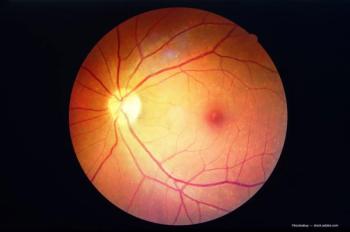
Investigators set out to evaluate how well an AI system works when integrated into a handheld smartphone-based retinal camera to screen patients for DR using 1 retinal image in each eye.

According to the companies, R100 is an adeno-associated virus (AAV) vector invented by 4DMT for intravitreal delivery. It has the ability to penetrate the internal limiting membrane barrier and to efficiently transduce the entire retina, resulting in robust transgene expression within retinal cells.

A new study found an approach that identifies high-risk patients so all preemies don’t need to undergo an invasive eye exam.

A study found the approach identifies high-risk patients so all preemies don’t need to undergo an invasive eye exam.

Clinical trial investigator Victor H. Gonzalez, MD, presented data at the 83rd Scientific Sessions of the American Diabetes Association in San Diego, California.
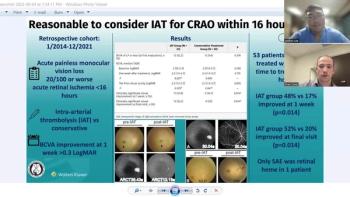
Andrew Lee, MD, and Andrew Carey, MD, sit down on another episode of the NeuroOp Guru to discuss IAT for CRAO within 16 hours.

Results reported in JAMA Ophthalmology show that about 20% of those with diabetic retinopathy have a case that could threaten their vision.

According to researchers, the new imaging approach reveals changes in retinal microcirculation may indicate brain diseases that involve reduced blood flow.

A late breaking poster at the event in San Diego presented by Paolo S. Silva, MD, reveals AI algorithms for diabetic retinopathy progression risk estimation.

According to researchers, the new imaging approach reveals changes in retinal microcirculation may indicate brain diseases that involve reduced blood flow.

In-person and virtual trainings, coupled with the support of local product representatives, are the best ways to ensure retina specialists are set up for success.

Kaushal Solanki, PhD, discusses how ophthalmologists can now use the Topcon NW400 retinal camera with its EyeArt AI system to automatically detect diabetic retinopathy.
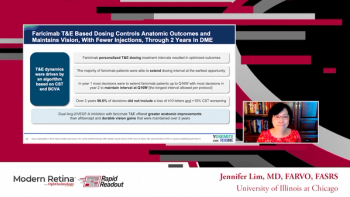
Dr Jennifer Lim presents two case studies demonstrating the application of the personalized treatment interval algorithm from the YOSEMITE and RHINE clinical trials for faricimab in DME.
Dr Jennifer Lim reviews the personalized treatment algorithm in the YOSEMITE and RHINE trials for faricimab in DME, discussing visual and anatomic outcomes with the treat and extend strategy.
Eyenuk receives FDA clearance for additional camera for autonomous detection of diabetic retinopathy
The company noted the FDA clearance also includes its proprietary Real-Time Quality Feedback to improve the gradeability of retinal images and reduce the need for eye dilation, expanding the choice for primary care clinics to screen people with diabetes.

Vitrectomy is a tool that can help surgeons curb complications.
Advertisement
Advertisement