


Retina
Latest News
Advertisement
Video Series


CME Content











Advertisement
Ophthalmology Times® talked with Edmund Arthur, OD, PhD, FAAO, about his research on the early detection of diabetic retinopathy in underserved communities at this year's ARVO meeting.
Ophthalmology Times® talked with Jay Barth, MD, about the work at Ascidian Therapeutics and their research into developing a new way to administer gene therapy at this year's ARVO meeting.
Dr T.Y. Alvin Liu talks about predictive AI and its uses in ophthalmology and screening of the eyes at this year's ARVO meeting.
Dr Caroline Baumal talks about Apellis' presentations focusing on visual function, imaging and artificial intelligence at this year's ARVO meeting.

Hydrogen water intake improved retinal blood flow (RBF) dysregulation in response to flicker stimulation and systemic hyperoxia in type 2 diabetic mice.
Thomas V. Johnson, MD, PhD, sat down with David Hutton, Managing Editor, Ophthalmology Times®, to discuss his presentation at this year's ARVO meeting on retinal engineering and RGC replacement.

Japanese investigators have found an ocular biomarker of cardiovascular diseases.

Former smokers were at higher risk of having to undergo surgery for TED in a recent study, but the risk was lower than that associated with current smoking.

A recent study aimed to set the record straight on the occurrence of retinal vein occlusions (RVOs) following messenger RNA COVID-19 vaccinations.

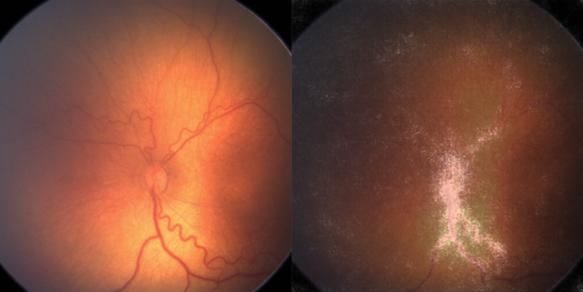
AVA-Net is a deep-learning network developed by scientists from the University of Illinois at Chicago.

Reducing treatment burden, finding something other than a shot a month is key.

During a presentation at the Vit-Buckle Society meeting in Las Vegas, Sally S. Ong, MD, highlighted a new study of patients who underwent primary repair of uncomplicated RRDs at the Wilmer Eye Institute to examine the baseline, surgical and postoperative characteristics that affect best-corrected VA outcomes.

Dr Ong and colleagues undertook a retrospective study of patients who underwent primary repair of uncomplicated RRDs at the Wilmer Eye Institute to examine the baseline, surgical, and postoperative characteristics that affect best-corrected VA (BCVA) outcomes.

The programme includes thousands of poster and paper presentations by up-and-coming vision scientists and world leaders in their respective subspecialties.

The host city of New Orleans, Louisiana, US, is replete with old world charm and ambiance and can satisfy any sightseeing, gastronomic and musical appetites.

As technology advances, innovations increase physician capabilities.

Findings from a recent study suggest that AO retinal imaging has the potential to become a sensitive marker for MS.

A large cohort study found that there is no association between the first mRNA COVID-19 vaccinations and acute RVO.
Sally S. Ong, MD, shares the key takeaways from her presentation, Predictors of Poor Visual Outcome After Repair of Uncomplicated Rhegmatogenous Retinal Detachments, at the 11th Annual Vit-Buckle Society meeting.
Sean D. Adrean MD, FAAO, discusses the key takeaways from his presentation, Purposeful Pneumatic Induced Resorption of Submacular Fluid in Macula-off Retinal Detachments, at the 11th Annual Vit-Buckle Society meeting, April 13 to 15, in Las Vegas, Nevada.

Jennifer Lim, MD, FARVO joined David Hutton, Managing Editor, Ophthalmology Times®, to discuss her presentation on keratoprosthesis combined with vitrectomy surgery given at this year's Vit-Buckle Society meeting.

Jennifer Lim, MD, FARVO sat down with David Hutton, Managing Editor, Ophthalmology Times®, to discuss her presentation at this year's Vit-Buckle Society meeting on keratoprosthesis combined with vitrectomy surgery.

Daraius Shroff, MD, developed the Triple S toolkit for hAM grafting for use during vitreoretinal surgery, which he described at the 2023 Vit-Buckle Annual Society meeting.

J. Peter Campbell, MD, MPH, sat down with David Hutton, Managing Editor, Ophthalmology Times®, to discuss pediatric retina surgery and 3 key pearls to consider while performing the surgery.

J. Peter Campbell, MD, MPH, sat down with David Hutton, Managing Editor, Ophthalmology Times®, to discuss pediatric retina surgery and 3 key pearls to consider while performing the surgery.
Advertisement
Advertisement