











In the face of the COVID-19 pandemic, the procedure required adjustments.
In the face of the COVID-19 pandemic, the procedure required adjustments.
Assessing cornea status can aid early recognition of disease-related changes
Researchers from the Department of Ophthalmology at the University Hospital Bonn and Deutsches Zentrum für Neurodegenerative Erkrankungen suggest that assessments of the eye’s retina could help to detect a loss of brain substance, ie “brain atrophy.” The findings are based on data from the Rhineland Study.
Investigators identified that patients with moderate and severe SARS-CoV-2 pneumonia have decreased central retinal vascular density compared with patients who were asymptomatic/paucisymptomatic or control subjects.

Researchers from the Department of Ophthalmology at the University Hospital Bonn and Deutsches Zentrum für Neurodegenerative Erkrankungen suggest that assessments of the eye’s retina could help to detect a loss of brain substance, i. e. “brain atrophy.” The findings are based on data from the Rhineland Study.

Technology that allows consistent monitoring could be useful tools in 2022—and may be the key to tracking nAMD progression in fellow eyes among patients who have had intervals extended due to new technology.

Mary Durbin, PhD, Chief Scientific Officer at Heru, discusses the benefits and capabilities of the various testing modalities available in 1 wearable platform.
Presenters at the conference provided new evidence about detecting geography atrophy and wet and dry AMD early and predicting disease progression. Investigators are also focused on finding cures for inherited retinal diseases.

Investigators at the Eye Clinic, Department of Medicine, Surgery and Health Sciences, University of Trieste, Trieste, Italy, found that the appearance of the retina and optic disc was associated with the SARS-CoV-2 virus.
Researchers know that parts of the retina are considered as biomarkers for Alzheimer disease, but the team from Otago’s Dunedin Multidisciplinary Health and Development Research Unit in New Zealand have been investigating the retina’s potential to indicate cognitive change earlier in life.
During her talk at Angiogenesis, Dr. Loewenstein outlines how artificial intelligence could revolutionize diabetic retinopathy screening.
Robert L. Stamper, MD, speak with Ophthalmology Times®' David Hutton to discuss his presentation at the Glaucoma 360 event in San Francisco, where he presented an update on OCT-Angiography and its role in detecting the density of the capillaries in the macula.

Spect’s mobile device will enable providers to conduct critical eye screenings anywhere in a matter of minutes.

Investigators search for a link between transient ischemic attacks and changes in the retina.
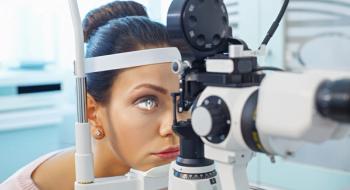
The GMOPC was established in February 2020 at an inaugural meeting in Los Angeles, California, as an investigator-initiated clinical research study, with Heidelberg Engineering as an industry partner.
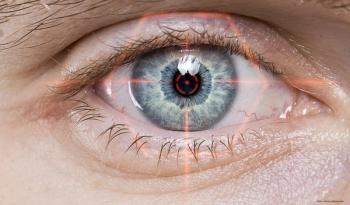
Work by a team of investigators is shedding light on the severity for gene variants and establishing outcome measures for therapeutic trials.

Investigators are searching for a link between TIAs and changes in the back of the eye.
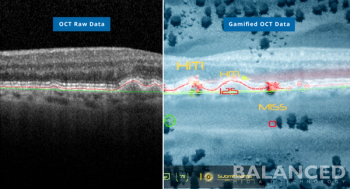
A partnership that includes BALANCED Media|Technology, the Retina Foundation of the Southwest and Southern Methodist University is seeking a patent for machine learning software for OCT images aids in identity progression and treatment options.

Work by a team of investigators is shedding light on the severity for gene variants and establishing outcome measures for therapeutic trials.
This Bascom Palmer Eye Institute 2-day virtual scientific program promises a distinguished international faculty who will share the latest developments in imaging, translational research, and clinical trials as well as the impact these advances will have on clinical ophthalmology.
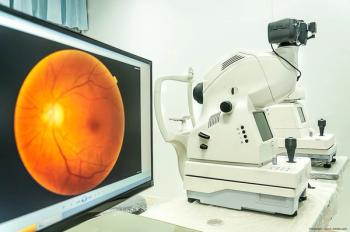
The difference between retina’s biological age and person’s real age linked to heightened death risk, with a team of Australian investigators finding that evidence suggests the microvasculature in the retina may be a reliable indicator of the overall health of the body’s circulatory system and the brain.
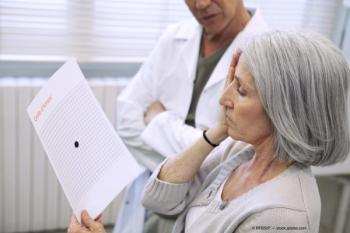
A partnership that includes BALANCED Media|Technology, the Retina Foundation of the Southwest and Southern Methodist University is seeking a patent for machine learning software for OCT images aids in identity progression and treatment options

Imaging study revealed specific retinal and choroidal changes associated with the disease.

According to the company, the iScan80 is a high-speed OCT system ideal for practices seeking an affordable and versatile OCT system.
Ted Leng, MD, discusses his IRIS Registry analysis presentation regarding variations in vitreoretinal physician utilization of ancillary testing.