



















Firas Rahhal, MD, discusses Outlook Therapeutics’ Phase 3 pivotal NORSE TWO trial for ONS-5010.
Firas Rahhal, MD, discusses Outlook Therapeutics’ Phase 3 pivotal NORSE TWO trial for ONS-5010.

A University of California Davis study shows that small serving of the fruit increased protective pigments in the eye.

Faricimab is the first and only FDA-approved medicine targeting two distinct pathways, Ang-2 and VEGF-A, that often cause retinal diseases that may cause vision loss.
Joshua Mali, MD, shares how the FDA-approved faricimab-svoa (Vabysmo, Genentech) will change the treatment landscape for wet AMD and DME.
Joshua Mali, MD, talks about how the FDA approval of faricimab will change the treatment landscape for wet AMD and DME.

Genentech’s treatment of faricimab is the first and only FDA-approved medicine targeting two distinct pathways, angiopoietin (Ang)-2 and vascular endothelial growth factor (VEGF)-A, that often cause retinal diseases that may cause visual loss.

A team of investigators are working on a simple test that may someday identify those who can stop therapy.

Across four studies, about half of eligible faricimab patients were able to go 4 months between treatments, and approximately three-quarters could be treated every 3 months or longer. Two papers published in The Lancet highlight one-year results.

Across four studies, about half of eligible faricimab patients were able to go 4 months between treatments, and approximately three-quarters could be treated every 3 months or longer. Two papers published in The Lancet highlight one-year results.

A partnership that includes BALANCED Media|Technology, the Retina Foundation of the Southwest and Southern Methodist University is seeking a patent for machine learning software for OCT images aids in identity progression and treatment options
Firas Rahhal, MD, discusses Outlook Therapeutics’ Phase 3 pivotal NORSE TWO trial for ONS-5010.
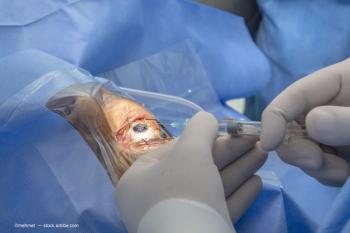
A team of investigators are working on a simple test that may someday identify those who can stop therapy.

ASCENT, REGENXBIO’s Phase III clinical trial conducted in partnership with AbbVie, is expected to enroll patients in the United States and Canada, with pivotal trials expected to support BLA submission for RGX-314 in 2024.

A University of California Davis study shows that small serving of the fruit increased protective pigments in the eye.

According to researchers, gaining a good understanding of what Musashi proteins do and how to manipulate their function could lead to the development of a universal therapy for blinding diseases.

Real-world evidence is growing in importance as a source of information that can help support clinical decision-making when evaluated properly.

ASCENT, REGENXBIO’s Phase III clinical trial conducted in partnership with AbbVie, is expected to enroll patients in the United States and Canada, with pivotal trials expected to support BLA submission for RGX-314 in 2024.

Current options, challenges in developing novel therapies.
Jill Hopkins, MD, discusses results from phase 3a of the Merlin trial for brolucizumab as a treatment for wet AMD and provides updates on KESTREL and KITE trials for the treatment of diabetic macular edema.

First annual Geographic Atrophy Awareness Week, hosted by Prevent Blindness, will be December 6-12, 2021.

Patients can get real-time disease monitoring with self-operated device.
Jay Duker, MD, discusses EYP-1901, EyePoint Pharmaceuticals’ sustained-release anti-VEGF drug for the treatment of wet AMD.

Options facilitate increased durability for patients with retinal degeneration.
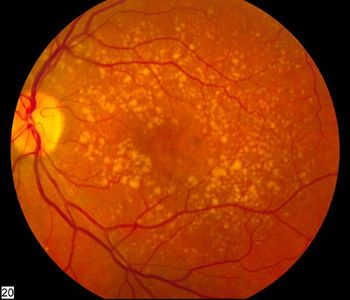
CellSight researchers at the Sue Anschutz-Rodgers Eye Center were published for a discovery that could lead to early diagnosis and intervention of dry age-related macular degeneration.

Sunir J. Garg, MD, speaks on the influence of COVID-19 universal face masking on the risk of endophthalmitis following intravitreal anti-VEGF injections.