




















The study found no association between treatment and the risk of chronic kidney disease or end-stage renal disease.
The study found no association between treatment and the risk of chronic kidney disease or end-stage renal disease.

The intravitreal implant (OTX-TKI) is being evaluated to treat wet age-related macular degeneration in a phase 1b clinical trial.

The axitinib intravitreal implant (OTX-TKI) is being evaluated to treat wet age-related macular degeneration in a phase 1b clinical trial.

A poll for retina specialists regarding their attendance at the 2022 Retina World Congress in Fort Lauderdale, Florida. This poll is now closed.

According to the ALOFT study, patients demonstrate improved long-term vision in real-world setting after wet AMD conversion compared to current standard of care.

Apellis Pharmaceuticals releases results of their Geographic Atrophy Insights Survey (GAINS), revealing a large emotional toll and significant decrease in independence for patients with geographic atrophy.

A poll for retina specialists regarding their attendance at the Association for Research in Vision and Ophthalmology 2022 Meeting in Denver, Colorado. This poll is now closed.

Investigators found that patients with neovascular age-related macular degeneration in all countries included in the study lost vision as a result of the lockdown and reduced number of treatments during the COVID-19 pandemic.

If the Biologics License Application is approved by the FDA, the company could receive 12 years of marketing exclusivity for an FDA-approved alternative for the most frequently used anti-VEGF treatment in wet AMD patients in the United States.

If the BLA is approved, the company could receive 12 years of marketing exclusivity for an FDA-approved alternative for the most frequently used anti-VEGF treatment in wet AMD patients in the United States.

The company is planning a Phase 2 trial with an optimized formulation in wet AMD that is expected to start in fourth quarter of 2022.

The company notes that its clinical trial of the light delivery system meets the primary efficacy endpoint and can offer hope to patients with dry AMD who are experiencing vision loss and currently have limited treatment options.
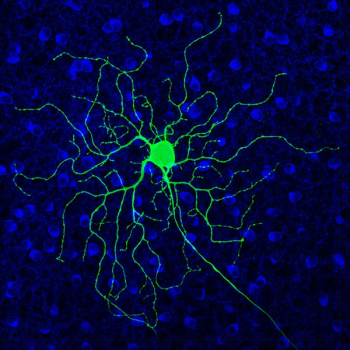
According to a team of investigators at University of California, Berkeley, tests of the drug Antabuse could prove the role of hyperactive retinal cells in blindness, potentially leading to better therapies.

The implant achieves impressive efficacy and reduces treatment burden.

Taiichi Hikichi, MD, counteracted the potential inflammatory effect of brolucizumab by combining its administration with a sub-Tenon’s capsule injection of triamcinolone acetonide.

Technology that allows consistent monitoring could be useful tools in 2022—and may be the key to tracking nAMD progression in fellow eyes among patients who have had intervals extended due to new technology.

According to the company, pegcetacoplan demonstrated continuous and clinically meaningful effects at month 18 in the studies, which also found that treatment effects in DERBY were comparable to OAKS during months 6 to 18. The combined 18-month data show the potential for improving treatment effects over time.
Firas M. Rahhal, MD, discusses concerns of using repackaged IV bevacizumab for the treatment of wet AMD.

According to the company, pegcetacoplan demonstrated continuous and clinically meaningful effects at month 18 in the studies, which also found that treatment effects in DERBY were comparable to OAKS during months 6 to 18. The combined 18-month data show the potential for improving treatment effects over.

Investigational pipeline provides promise for an unmet need.

Mary Durbin, PhD, Chief Scientific Officer at Heru, discusses the benefits and capabilities of the various testing modalities available in 1 wearable platform.

The first FDA-approved bispecific antibody for the eye targets two leading causes of vision loss.

Ultrasonic retinal prosthesis has been achieved by a research group at UCLA. It is a step towards a non-invasive retinal prosthesis that works without invasive eye surgery.

Investigators studying old flies have gained some new insight into retinal degeneration, seeking an understanding "of the molecular mechanisms that drive age-associated changes and the external and internal factors that influence them.”

Trial recruitment is enabled by the Foundation Fighting Blindness' patient registry, My Retina Tracker Registry, which includes gene