




















According to the company, the clinical trial is reviewing EYP-1901, an investigational sustained delivery anti-vascular endothelial growth factor (anti-VEGF) treatment for wet age-related macular degeneration (wet AMD).

According to the company, the clinical trial is reviewing EYP-1901, an investigational sustained delivery anti-vascular endothelial growth factor (anti-VEGF) treatment for wet age-related macular degeneration (wet AMD).
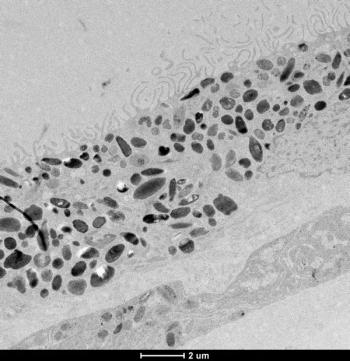
The discovery of molecular signatures of age-related macular degeneration will help with better diagnosis and treatment of this progressive eye disease.

Retina indications for which ranibizumab-eqrn is interchangeable include neovascular (wet) age-related macular degeneration; macular edema following retinal vein occlusion; diabetic macular edema; diabetic retinopathy, and myopic choroidal neovascularization.

The doctors will join the Cataract and Primary Eye Care, Glaucoma, and Retina Services.

Positive results from recent pre-clinical studies support the potential of long-acting PASylated nomacopan to advance toward IND/IMPD for clinical trials in geographic atrophy (GA) in dry age-related macular degeneration (dAMD), a disease with no approved treatments.
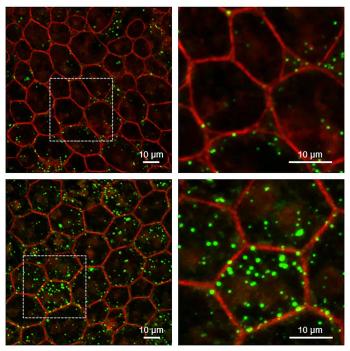
Eyes of mice lacking protective protein show signs similar to age-related macular degeneration.

According to the company, the study assesses the safety and tolerability of a single dose of CLS-AX administered to patients diagnosed with wet AMD by suprachoroidal injection.

LBS-008 is the company’s orally administered tablet for the treatment of Stargardt disease. There are currently no FDA approved treatments for Stargardt disease or dry AMD.
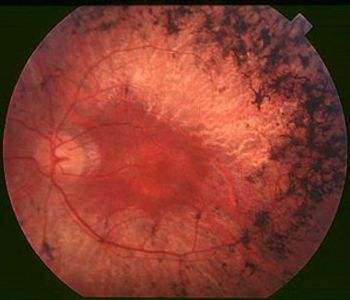
A team of scientists, led by Andrzej Foik, PhD, of the International Center for Translational Eye Research in Poland, is working on new therapies that may slow vision loss in patients diagnosed with retinal degeneration.

The ASRS "See for a Lifetime; See a Retina Specialist" initiative will spotlight early detection and outline the importance of seeing a retina specialist.

Eyes of mice lacking protective protein show signs similar to age-related macular degeneration.

The ASRS See for a Lifetime See a Retina Specialist initiative will spotlight early detection and outline the importance of seeing a retina specialist.

According to the company, pegcetacoplan is an investigational, targeted C3 therapy for the treatment of geographic atrophy secondary to age-related macular degeneration.

Pegcetacoplan is an investigational, targeted C3 therapy for the treatment of geographic atrophy secondary to age-related macular degeneration.
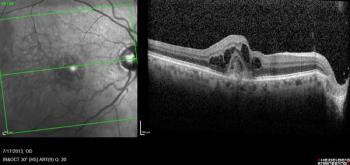
Speaking at the American Society of Retina Specialists 2022 annual meeting in New York, Carl Danzig, MD, detailed how treatment with faricimab in patients with neovascular AMD resulted in improvements in visual acuity, central subfield thickness and pigment epithelial detachments.

In the TENAYA and LUCERNE studies, more than 60% of faricimab patients could be treated every 4 months at 2 years, an increase from 45% at year 1. Study results are being presented at the American Society of Retina Specialists 2022 annual meeting in New York.

Mount Sinai study is among the first to link cardiovascular risk to a specific form of age-related macular degeneration.
The University of Oklahoma Health Sciences Center has received an unrestricted grant from Research to Prevent Blindness for $575,000 over 5 years to support eye research conducted by the Department of Ophthalmology.

Charles Brodowski, MD, and Patrick Rapuano, MD, have been named co-chief residents at Wills Eye Hospital, and will lead the team of resident doctors on staff, focusing on training and recruitment while attending to their own medical resident duties.

According to investigators, patients with age-related macular degeneration like the port delivery system for ranibizumab because it requires fewer treatments and there is less discomfort.

CAM encourages corneal healing in patients with ocular surface disease.
A team of investigators from Johns Hopkins Medicine say they’ve discovered that levels of a specific protein appears to help accurately predict whether people with the wet form of age-related macular degeneration may need lifelong, frequent eye injections to preserve vision or if they can be safely weaned off the treatments.

A team of investigators form Johns Hopkins Medicine say they’ve discovered that levels of a specific protein appears to help accurately predict whether people with the wet form of age-related macular degeneration may need lifelong, frequent eye injections to preserve vision or if they can be safely weaned off the treatments.

Rahul Khurana, MD, offers updates and details about the Aaviate study, which is investigating a possibly once-and-done gene therapy option for macular degeneration via suprachoroidal drug delivery.

Investigators show the effectiveness of Home-OCT based remote monitoring model.