
















Angiogenesis, Exudation, and Degeneration 2021 Virtual Symposium highlights and thoughts on current treatments options for DME and exudative AMD are discussed.
Angiogenesis, Exudation, and Degeneration 2021 Virtual Symposium highlights and thoughts on current treatments options for DME and exudative AMD are discussed.
Anat Loewenstein, MD, MHA, explores dual Ang-2/VEGF-A inhibition in the management of diabetic macular edema and exudative age-related macular degeneration.

LumiThera has announced positive interim data in visual and ERG clinical outcomes in the ELECTROLIGHT pilot study in dry AMD patients.

Aleksandra Rachitskaya, MD, speaks on the current gaps in AMD treatment as well as ongoing retinal advancements to help address unmeet needs of patients.
Anat Loewenstein, MD, provides an update on the latest developments in emerging therapies for the management of age-related macular degeneration (AMD) and wet AMD.
Anat Loewenstein, MD, provides an update on the latest developments in emerging therapies for the management of age-related macular degeneration (AMD) and wet AMD.
Joshua Mali, MD, discusses the three major risk factors for developing age-related macular degeneration (AMD).
Joshua Mali, MD, discusses the three major risk factors for developing age-related macular degeneration (AMD).
Ian C. Han, MD, dives into the basics of age-related macular degeneration (AMD) and what patients need to know.
Ian C. Han, MD, dives into the basics of age-related macular degeneration (AMD) and what patients need to know.
Rishi P. Singh, MD, highlights various treatment options available for the management of patients with age-related macular degeneration, as well as the status of potential therapies.

Delivery into the suprachoroidal space may potentially extend the duration of therapeutic action and reduce or relieve the treatment burden for wet AMD.
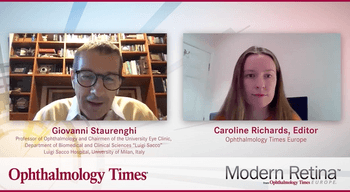
Prof. Giovanni Staurenghi, chairman of the University Eye Clinic, Department of Biomedical and Clinical Sciences at the University of Milan’s Luigi Sacco Hospital, Italy, discusses his presentation from this year's AAO, including findings from the HARBOR study of macular atrophy in AMD patients treated with ranibizumab.
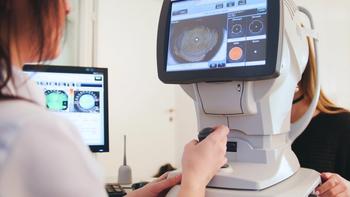
Modifier-25 same-day examinations are critical to the successful treatment and overall health and well being of these patients.

Study points to the possible role of addressing preprocedural anxiety

Investigators find that nanoparticles deliver gene therapy successfully in mice, rats

Agreement would include global rights for investigational treatment, risuteganib, expected to help reverse vision loss due to dry AMD

Intravitreal gene therapy continues to be well tolerated; shows robust efficacy

Though OCTA has become indispensable for managing macular degeneration and diabetic retinopathy, Robert L. Stamper, MD, explains why the technology must become more sophisticated and evolved before it reaches its full potential for glaucoma specialists.
Interim data update from first cohort using suprachoroidal delivery of RGX-314 expected by end of 2020

Results of a prospective trial show the tool is ready for clinical use and potential deployment for remote telemedical use.

A study suggests this user-friendly platform may be useful as a supplemental visual function measure in patients with AMD.
Find out how the LIGHTSITE I results may pave the way for a new treatment approach.

Subretinal transplantation of human embryonic stem cells (hESC)-derived retinal pigment epithelial (RPE) cells in patients with AMD and geographic atrophy (GA) appears well tolerated, according to date presented during ARVO 2020.

The number of patients with retinal diseases is steadily increasing in the United States, according to a retrospective study presented during ARVO 2020.