
Andrew G. Lee, MD, and Drew Carey, MD, break down the link between optic neuritis and uveitis in central nervous system demyelinating disease.

Andrew G. Lee, MD, and Drew Carey, MD, break down the link between optic neuritis and uveitis in central nervous system demyelinating disease.
The concerns of October 10, 1857, sound remarkably familiar today.
The Wilmer Eye Institute's new Glaucoma Division chief discusses mentoring junior faculty, multicenter trials, and optic nerve regeneration.
Andrew G. Lee, MD, and Drew Carey, MD, break down a debate over PDE-5 inhibitor use after non-arteritic anterior ischemic optic neuropathy.
A story about stocks, bonds, and one very lucky misunderstanding.
Andrew G. Lee, MD, and Drew Carey, MD, discuss a study exploring whether these two conditions are really one disease—and what that means for long-term treatment.
Ophthalmology is projected to face one of the steepest physician shortages of any subspecialty by 2038.
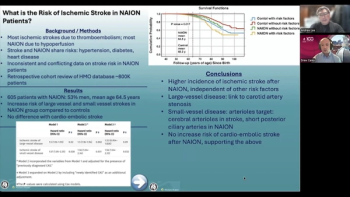
Andrew G. Lee, MD, and Drew Carey, MD, discuss findings from a retrospective study examining ischemic stroke risk in patients with non-arteritic anterior ischemic optic neuropathy and the implications for vascular risk factor management.
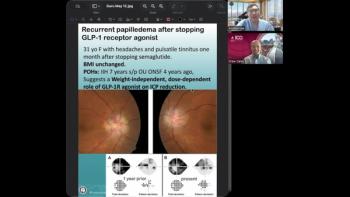
Andrew G. Lee, MD, and Drew Carey, MD, discuss recurrence of papilledema after discontinuation of GLP-1 receptor agonists and the implications for monitoring patients with idiopathic intracranial hypertension.

Learning Brazilian Portuguese boosts brain resilience and may delay dementia symptoms, but a humorous lesson highlights the realities of health care paperwork and waiting rooms.
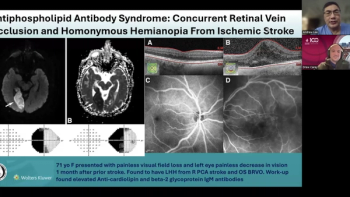
Andrew G. Lee, MD, and Drew Carey, MD, discuss how eye and brain vascular events such as retinal vein occlusion and stroke can signal antiphospholipid syndrome and require further evaluation.
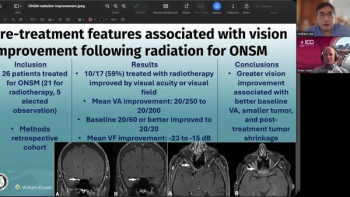
Andrew G. Lee, MD, and Drew Carey, MD, review how clinical and imaging findings relate to vision recovery after radiotherapy for optic nerve sheath meningioma.

Clinicians emphasize screening, individualized care, and recognition of sex-based differences to prevent vision-threatening complications
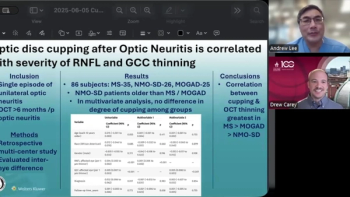
Andrew G. Lee, MD, and Drew Carey, MD, discuss how optic disc cupping after optic neuritis reflects nerve and ganglion cell thinning, not disease type, helping distinguish it from glaucoma.
Jennifer E. Thorne, MD, PhD, discusses evidence from the ADJUST trial, including relapse risk, retreatment success, and how clinicians should monitor children when considering adalimumab discontinuation.

The year introduced shifts in residency education, and program directors reflect on changes, challenges, and what’s next.

Sezen Karakus, MD, highlights options including compounded cyclosporine, autologous serum drops, recombinant human nerve growth factor, and newer topical agents to manage refractory or neurotrophic dry eye.
Peter J. McDonnell, MD, reflects on his early experience managing bullous keratopathy with penetrating keratoplasty and how advances like DMEK have transformed outcomes across corneal, refractive, and cataract surgery.
Andrew G. Lee, MD, and Drew Carey, MD, discuss the case of a patient with persistent papilledema after brain tumor resection due to superficial siderosis.
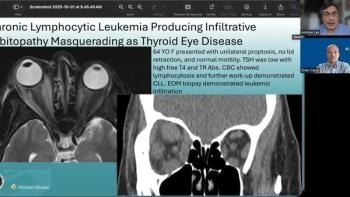
Andrew G. Lee, MD, and Drew Carey, MD, highlight how chronic lymphocytic leukemia can mimic Graves’ orbitopathy, underscoring the importance of a thorough evaluation.


OCT-A angiography can help reveal early neurodegenerative disease signs, offering a non-invasive method for identifying high-risk patients through retinal analysis.
Ahead of the September 8 meeting in Paris, the program co-chair of the event and current president of the American Academy of Ophthalmology discusses how the workshop aims to shape consensus on guidelines, research priorities, and emerging therapies in myopia control.
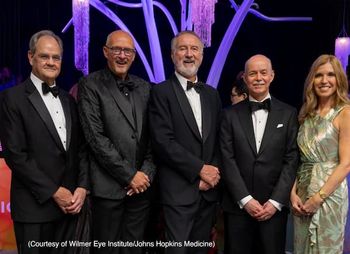
From Nobel laureates to AI-driven research, the Wilmer Eye Institute honors a century of transforming vision science and care.
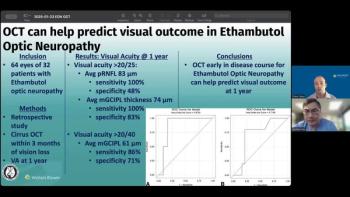
Andrew G. Lee, MD, and Drew Carey, MD, discuss how baseline optical coherence tomography parameters can help ophthalmologists counsel patients and make more informed decisions after ethambutol-associated optic neuropathy.
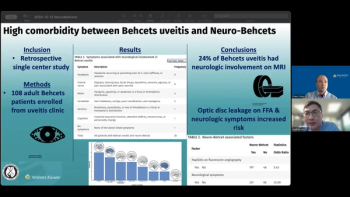
In cases with optic nerve hyperfluorescence or neurologic symptoms, prompt neuroimaging is warranted to rule out neuro-Behcet disease and guide multidisciplinary management.

From revised patient flow to smarter tech adoption, ophthalmologists share which changes from 2020 have become cornerstones of modern care—and how they’re preparing for the next big disruption

Ophthalmologists reflect on the transformative impact of COVID-19, highlighting adaptations in patient care, safety protocols, and the rise of telemedicine.
A combination of canaloplasty and goniotomy provides sustained IOP reduction and decreases medication burden with a strong safety profile, making it a valuable option for glaucoma management.
An AI model for target IOP prediction performs as well as glaucoma specialists, offering a promising tool to enhance glaucoma management, especially for nonspecialists.