

Commentary|Podcasts|January 5, 2026
The Residency Report: When can adalimumab be stopped in JIA-associated uveitis
Fact checked by: Sheryl Stevenson

Jennifer E. Thorne, MD, PhD, discusses evidence from the ADJUST trial, including relapse risk, retreatment success, and how clinicians should monitor children when considering adalimumab discontinuation.
Advertisement
Episodes in this series
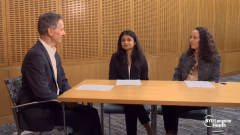



In this installment of
The discussion centers on the ADJUST trial (Stopping of Adalimumab in Juvenile Idiopathic Arthritis [JIA]–Associated Uveitis), which examined outcomes following the discontinuation of
Thorne frames the rationale succinctly, noting that the trial addresses “how chronic is chronic?” JIA-associated uveitis is the most common systemic condition associated with uveitis in children and carries a significant risk of vision-threatening complications, often necessitating long-term immunosuppression. Adalimumab is widely used, but families frequently ask, “My child has done really well on this drug for 2 to 3 years. Can we stop it now?”
The ADJUST trial was the first randomized controlled trial to prospectively evaluate outcomes after discontinuation of immunomodulatory therapy in chronic uveitis.1 Children were eligible after at least 12 months of quiescent disease, though approximately 75% had been controlled for 2 years or longer. Participants were randomly selected to continue adalimumab or discontinue therapy. Those who stopped adalimumab experienced significantly higher rates of recurrence of uveitis, arthritis, or both, leading to early termination of the trial based on prespecified stopping rules.
Thorne highlights that nearly 70% of patients who discontinued therapy had a recurrence, with a median time of 3–4 months and most flares occurring within 6 months—“not a great drug holiday.” Importantly, however, there were key “silver linings.” Patients who flared generally regained disease control after restarting adalimumab, typically within 3–4 months, and visual acuity outcomes did not differ between those who discontinued therapy and those who remained on treatment.
The discussion also explores why pediatric patients were chosen as the study population, emphasizing more uniform disease phenotypes and earlier biologic use compared with adult uveitis, which is often more heterogeneous. Looking forward, the panel notes the potential value of post-hoc analyses, biomarkers, microbiome data, and age-related signals—particularly the observation that children under 12 years were more likely to relapse—to better identify patients who may safely discontinue therapy in the future.
Reference
Acharya NR, Ramanan AV, Coyne AB, et al. Stopping of adalimumab in juvenile idiopathic arthritis-associated uveitis (ADJUST): a multicentre, double-masked, randomised controlled trial. Lancet. 2025;405(10475):303-313. doi:10.1016/S0140-6736(24)02468-1
Advertisement
Related to this article
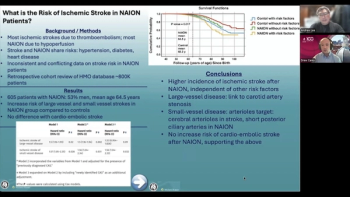
Andrew G. Lee, MD, and Drew Carey, MD, discuss findings from a retrospective study examining ischemic stroke risk in patients with non-arteritic anterior ischemic optic neuropathy and the implications for vascular risk factor management.

Ultra-widefield imaging reveals early retinal risk in pediatric patients.

Their conversation covers a holistic, cross-specialty approach to ocular surface disease and the unmet need driving a new model of dry eye care in Ireland.

Douglas D. Koch, MD, and Karolinne Maia Rocha, MD, PhD, discuss the optics behind enhanced monofocal lenses, patient selection, and how to set expectations.

In this Q&A, Ping Moore, OD, covers emerging dry eye therapies, from selenium sulfide to next-gen cyclosporine, and how subtype-guided care shapes treatment choices.

Ophthalmology is projected to face one of the steepest physician shortages of any subspecialty by 2038.

Two investigational pipeline therapies take aim at the root causes of dry eye disease

Cataract surgery becomes refractive: learn how IOL choices and preop counseling across distance, intermediate and near turn 20/20 into 20/happy.
Advertisement
Advertisement
Trending on Eye Care Network - Ophthalmology Times
1
Brepocitinib meets all Phase 3 end points in noninfectious uveitis
2
Demodex blepharitis: Diagnosis, treatment response, and recurrence
3
Myopia control using spectacle lenses with highly aspherical lenslets
4
SpyGlass Pharma's BIM-IOL System holds 37% IOP reduction at 4 years in first-in-human trial
5