















The latest invention from Mark S. Humayun, MD, PhD, brings hope to sufferers of age-related macular degeneration, a common type of blindness.

The latest invention from Mark S. Humayun, MD, PhD, brings hope to sufferers of age-related macular degeneration, a common type of blindness.
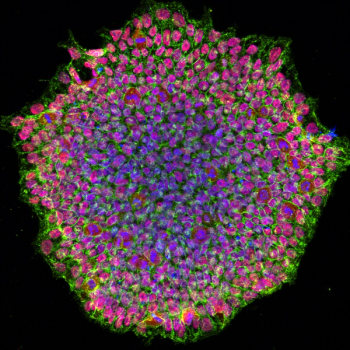
The team hopes the use of patient-derived stem cells will enable high-throughput drug screening for potential therapeutics for patients.

NGM621 is a monoclonal antibody product candidate engineered to potently inhibit complement C3 for the treatment of patients with geographic atrophy secondary to age-related macular degeneration.

The company noted that the study was the first to evaluate whether AI software can accurately detect more-than-mild diabetic retinopathy using a single image per eye, obtained from either a desktop or handheld retinal camera.

According to investigators, the implant can provide a sustained infusion of drug to the retina
A team of investigators has conducted ocular pharmacokinetic studies, including metabolism, providing valuable information for ocular drug development.

Cleveland Eye Bank Foundation (CEBF) will feature nine researchers from three eye institutions on February 15, from 3 to 5 pm Eastern, for its second annual virtual vision research symposium.
According to the companies, a social media initiative will include donation to Prevent Blindness’ Sight-Saving Fund.

The university recently launched its Center for Neuronal Longevity, which brings together a multidisciplinary team to address unmet needs in vision loss and other neurological diseases.

Spect’s mobile device will enable providers to conduct critical eye screenings anywhere in a matter of minutes.
Firas Rahhal, MD, discusses Outlook Therapeutics’ Phase 3 pivotal NORSE TWO trial for ONS-5010.

Faricimab is the first and only FDA-approved medicine targeting two distinct pathways, Ang-2 and VEGF-A, that often cause retinal diseases that may cause vision loss.
Joshua Mali, MD, shares how the FDA-approved faricimab-svoa (Vabysmo, Genentech) will change the treatment landscape for wet AMD and DME.
A team of investigators at the University of California, Irvine have found that inhibiting ceramide accumulation in retina protects photoreceptors improves vision
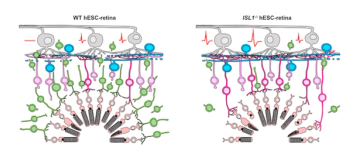
A team of investigators at the RIKEN Center for Biosystems Dynamics Research in Japan have used a genetic modification to improve human-derived retina transplants grown in the lab.

Organization makes a commitment to expand translational research acceleration program and fund career development award.

Work by a team of investigators is shedding light on the severity for gene variants and establishing outcome measures for therapeutic trials.

A study finds acceptable outcomes, vision, and microperimetry improvements at higher doses.

This Bascom Palmer Eye Institute 2-day virtual scientific program promises a distinguished international faculty who will share the latest developments in imaging, translational research, and clinical trials as well as the impact these advances will have on clinical ophthalmology.
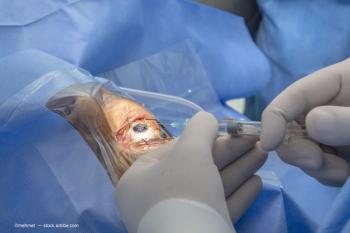
Nanoscope Therapeutics has received IND clearance from the FDA to begin a Phase 2 trial of its Multi-Characteristic Opsin ambient-light activatable optogenetic monotherapy to restore vision in Stargardt patients.
Across four studies, about half of eligible faricimab patients were able to go 4 months between treatments, and approximately three-quarters could be treated every 3 months or longer. Two papers published in The Lancet highlight one-year results.
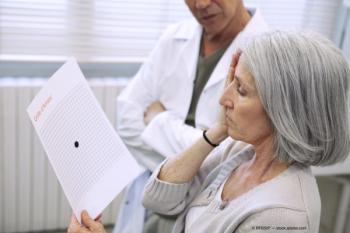
A partnership that includes BALANCED Media|Technology, the Retina Foundation of the Southwest and Southern Methodist University is seeking a patent for machine learning software for OCT images aids in identity progression and treatment options
A team of investigators are working on a simple test that may someday identify those who can stop therapy.

The difference between retina’s biological age and person’s real age linked to heightened death risk, with a team of Australian investigators finding that evidence suggests the microvasculature in the retina may be a reliable indicator of the overall health of the body’s circulatory system and the brain.

Since joining the foundation in 2018, Menzo has been involved in the formation of the Retinal Degeneration Fund, the venture arm of Foundation Fighting Blindness.