


Retina
Latest News


Kiora Pharmaceuticals and Théa Open Innovation announce partnership, will target IRDs
By David Hutton
Advertisement
Video Series









CME Content











Advertisement

How biosimilars expand treatment options for patients with retinal disease
Published: | Updated:
An in-depth case study conversation

Sanders is affiliated with the Retina Group of Washington (RGW) and PRISM Vision Group. He is the first African American and the first PRISM-affiliated physician to serve as president of the ASRS.

Researchers at Mass Eye and Ear have demonstrated that retinal imaging can help predict a person’s risk of developing ocular, neuropsychiatric, cardiac, metabolic, and pulmonary diseases.

LambdaVision is leveraging the microgravity environment of the space station to develop higher-quality implants than is currently possible on Earth.

LambdaVision is leveraging the microgravity environment of the space station to develop higher-quality implants than is currently possible on Earth.

ACDN-01 is the first-ever RNA exon editor to enter clinical development and the only clinical-stage therapeutic targeting the genetic cause of Stargardt disease. Ascidian expects to initiate enrollment in Phase 1/2 STELLAR study in the first half of 2024.

The afternoon sessions begin after lunch and continue well into the evening at the Angiogenesis, Exudation, and Degeneration 2024 meeting

The one-day event will be held online Saturday, February 3, 2024, and is sponsored by the Bascom Palmer Eye Institute, University of Miami Health System
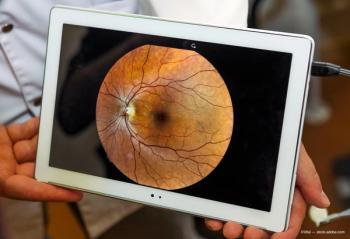
While the potential for fundus images is recognized, the methodology and clinical application must be improved.

According to researchers at Johns Hopkins Children’s Center, AI-driven cameras take images of the back of the eye and require no eye drops can be used to close care gaps.

Leanne Clevenger, MD, described a case that highlights varying approaches and protocols for addressing a complex case of retinal detachment repair in a patient with trauma to the globe.

David Hutton of Ophthalmology Times talks with Sunir Garg, MD about his surgical video panel at this year's Retina Fellows Forum.

According to the company, favorable safety and tolerability profiles were observed with the first 2 SPVN06 doses across 6 patients. The exploration of SPVN06 in geographic geographic atrophy is set to begin in 2024.

The American subsidiary of the German ophthalmic diagnostic device designer announced in a news release that its OCULUS Easyfield VR™ is now available in the US ophthalmic market

Genetic testing is proving to be an evolving technology for ophthalmologists.

The app is a tool aimed at allowing patients to measure their visual acuity at home by themselves.

Investigators advised that further studies should be conducted to understand more precisely the benefits and risks

Two retina specialists participated in an Ophthalmology Times case-based roundtable discussion and shared their experiences using the anti-VEGF biosimilars, ranibizumab-eqrn and ranibizumab-nuna to manage retinal diseases.

Euan Thomson, Head of the Ophthalmology Strategic Business Unit and Head of the Digital Business Unit at Carl Zeiss Meditec, discusses plans for the company's vitreoretinal surgery workflows following announcement of DORC acquisition
According to the Advanced Research Projects Agency for Health, its program aims to transplant human eyes and reestablish visual connection to the brain.

NIDEK Co. Ltd. has made a financial donation to Orbis International to support Orbis’s artificial intelligence (AI)-based screening services in Vietnam.

David Eichenbaum, MD, discussed the status of the technology at the Retina 2024 meeting in Maui.

The commercial release of OcuLenz is planned for the first half of 2024. Ocutrx is collaborating with Medicare and insurance providers to ensure the headset's affordability and accessibility.
Varun Chaudhary, MD, FRCSC, addressed the big questions in treating patients with retinal vascular diseases at the Retina 2024 meeting in Maui.

According to a study by Johns Hopkins Children’s Center researchers, AI-driven cameras that take images of the back of the eye and require no eye drops can be used to close care gaps.
Advertisement
Advertisement