






Retina
Latest News
Advertisement
Video Series




CME Content











Advertisement

The study illustrates efficacy of AVT06 as compared with aflibercept (Eylea) for neovascular age-related macular degeneration

According to researchers, the strongest biomarker was achieved from a single bright flash of light to the right eye, with AI processing significantly reducing the test time.

Catch up on Modern Retina's top stories, and ones you may have missed in 2023

Catch up on a few of Modern Retina's top stories and ones you may have missed in 2023

A genome topology map of human retina development lays the foundation for understanding diverse clinical phenotypes in simple and complex eye diseases.

Scientists have developed a versatile imaging system that will help diagnose pathologies in the eye fundus.

During a multidisciplinary meeting with FDA, based on preliminary results from an ongoing Phase 1/2 study, the company received alignment on key points of the Phase 3 study design.
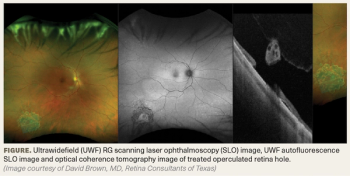
The technology provides effective, efficient evaluations when paired with the right patients

Inaugural awards honor 3 residents in ophthalmology, optometry, and retina

Ocugen says the Regenerative Medicine Advanced Therapy designation will "help expedite the development of new regenerative medicines."

A genome topology map of human retina development lays the foundation for understanding diverse clinical phenotypes in simple and complex eye diseases.

The kidney and eye are structurally and functionally similar, and the diseases of the organs may present similarly and via common pathways.

LambdaVision seeks to cure genetic blindness with a protein-based artificial retina. Harnessing microgravity in low-Earth orbit, the company collaborates with NASA and the ISS to perfect its manufacturing process.

EXN407 has the potential to be the first topical treatment for diabetic retinopathy and diabetic macular oedema

ROP can be a disease that affects both the retinal and choroidal vasculatures.
David A. Eichenbaum, MD, highlighted new therapies such as faricimab and high-dose aflibercept to reduce the burden of diseases like macular degeneration and diabetic eye conditions while improving patient outcomes during his presentation at EyeCon 2023.

Dilsher Dhoot, MD, presents two cases involving DME and CRVO, that show remarkable anatomical improvement with a biosimilar comparable to those achieved with reference biologics.
Dilsher Dhoot, MD, provides an overview of biosimilars in retinal diseases and discusses how he identifies patients suitable for biosimilar therapy.

The company has come into agreement with IQVIA Services Japan G.K. as well as AUROLAB.

Fish have the built-in ability to regenerate retinal neurons by turning another retinal cell type called Müller glia into neurons. Researchers have been able to coax the human Müller glia into changing identity in the laboratory, which could serve as a potential source of new neurons to treat vision loss.

A retrospective observational study shows BCVA was maintained after 6 months for patients with neovascular AMD

According to the company, ATSN-101 continues to demonstrate clinically meaningful improvements in vision at the highest dose and is well-tolerated 12 months post-treatment.

The investigators wanted to determine if subclinical changes in the blood–aqueous barrier and the retinal physiology developed after anti-VEGF treatments with aflibercept, brolucizumab, and or faricimab .

In recognition of global Geographic Atrophy Week, Prevent Blindness is providing free educational resources on GA for patients, care partners and healthcare professionals

At this year’s EURETINA meeting, retina specialists highlighted important developments in diabetic macular oedema and diabetic retinopathy research
Advertisement
Advertisement