





Approach shows potential as a promising second-line screening tool for patients with diabetes.

Approach shows potential as a promising second-line screening tool for patients with diabetes.

Real-world evidence is growing in importance as a source of information that can help support clinical decision-making when evaluated properly.

The company anticipates that the Sirius and Celeste studies will further validate QR-421a’s ability to stabilize vision loss in people with USH2A mediated retinitis pigmentosa and Usher syndrome.

The difference in visual acuities based on CST fluctuations in these patients with diabetic macular edema remained significant.

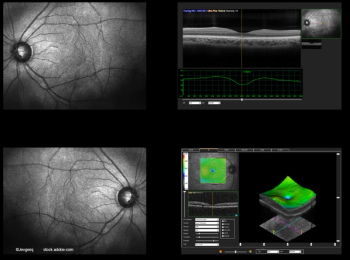
SD-OCT is providing reproducible, high-quality, registered images to assess the treatment response in macular disease.

Investigators say renal function could be used as a possible predictor for poor treatment response in certain patients with diabetic macular edema.

Novartis has revealed the first interpretable results from year two (week 100) of the Phase III KESTREL study.

Patients’ reluctance to visit a clinic during the COVID-19 pandemic is pushing retina specialists to optimize therapy.

The company's AI-enabled mobile telemedicine platform helps clinicians capture retinal images and screen for vision-threatening eye diseases, such as diabetic retinopathy, glaucoma and age-related macular degeneration.

Unity Biotechnology announces improvement in visual acuity sustained through 24 weeks following single dose of UBX1325 in Phase 1 study of patients with advanced vascular eye disease.

A team of investigators from the University of Michigan may have unlocked a potential new recipe for counteracting the impact that COVID-19 has on patients with underlying disease processes such as type 2 diabetes.

The company will move the highest dose of THR-149 (0.13mg) into Part B of the study based on favorable safety profile and positive efficacy data.

Investigators found evidence of improvement in vision and retinal structure in patients with DME and AMD sustained through 12 weeks.

A literature review indicates that intravitreal administration of anti-VEGF drugs are effective for treating DME, but close attention should be paid to the potential for elevated IOP, cataract progression.

Study: Older age and eyes with severe nonproliferative diabetic retinopathy or proliferative diabetic retinopathy had a higher risk of a vision loss event.

Option has a broader biologic effect for patients.