



DME
Latest News


FDA approves faricimab-svoa 6.0 mg single-dose prefilled syringe for use in the treatment of wet AMD, DME and RVO
By David Hutton
Advertisement
Video Series



CME Content





Advertisement

According to the company, the acquisition includes 2 commercial assets Iluvien and Yutiq, expanding ANI’s foothold in ophthalmology.

The mapping method revealed prominent microscopic abnormalities consistent with diabetic retinopathy.

Low birth weight, blood transfusion, necrotising enterocolitis, bronchopulmonary dysplasia and antenatal steroid and surfactant therapies are among the factors that affect the development of ROP.

According to a study, the research reveals that boosting a specific protein, IRAK-M, in retinal cells could offer a new and highly effective therapy for AMD

Schocket has been serving as Interim chair since July, 2022, and during that time has worked to establish best practices for the department, strengthening its academic programs and improving its financial viability.
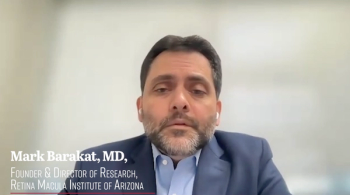
Mark Barakat, MD, sat down with Ophthalmology Times to discuss intraocular pressure outcomes with intravitreal injection of aflibercept, 8mg and 2mg in patients with diabetic macular edema through week 48 of the phase 2/3 PHOTON trial.

Understanding how the intricate networks of blood vessels in the eye and brain are formed ultimately could inspire new treatments for conditions like diabetic retinopathy and stroke.

Sean Adrean, MD, FAAO, sat down with Ophthalmology Times to discuss a post hoc analysis of the phase 2/3 PHOTON trial and the outcomes of patients with DME and baseline BCVA of 20/50 or worse or 20/40 or better who were treated with aflibercept 8 mg and 2 mg.
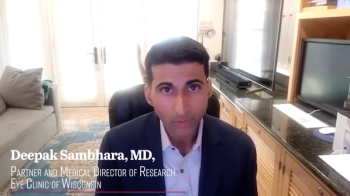
Deepak Sambhara, MD, sat down with Ophthalmology Times to discuss the impact of baseline central retinal thickness (CRT) on vision among patients with diabetic macular edema (DME), as a post hoc analysis of the phase 2/3 PHOTON trial.

The FDA recently approved Biologics' Yesafili as well as Samsung Bioepis and Biogen's Opuviz, both close copies of Regeneron Pharmaceutical’s Eylea. The approval offers ophthalmologists and patients additional therapeutic options.
The agency approved Yesafili (Biocon Biologics) and Opuviz (Samsung Bioepis, Biogen) as biosimilars to Eylea (Regeneron Pharmaceuticals).

News
The campaign will encourage, educate and empower the public to include vision and eye health as a part of their healthcare by asking them to share how eye care services and exams improved their vision and their daily lives.

While it fell short of the primary endpoint of improvement of non-proliferative diabetic retinopathy (NPDR) of at least 2 Diabetic Retinopathy Severity Scale (DRSS) levels as of week 36, DURAVYU did demonstrate stable or improved disease severity with reduced rates of NPDR in 9 months.
News
According to the company, 46.2% of patients demonstrated a 1- or 2-step improvement in the Diabetic Retinopathy Severity Scale (DRSS) at 40 weeks in the Axpaxli arm, compared to 0% in the control arm.

The molecule is being evaluated in 2 phase 3 clinical trials for wet AMD and is administered via intravitreal injection in combination with standard-of-care anti–VEGF-A therapy.

Oculogenex founder talks about collaboration with NASA and ISS on experiment in macular degeneration
Hema Ramkumar, an ophthalmologist and founder of Oculogenex, sat down with David Hutton of Ophthalmology Times to discuss their connection with NASA and their experiment on macular degeneration-treated mice in space.

Experts discuss the use of steroids, particularly in the context of diabetic macular edema (DME). The inflammatory nature of DME reveals the effectiveness of steroids, especially in cases where persistent fluid remains despite anti-VEGF treatment.
Experts discusses concerns related to the use of new agents, focusing on intraocular inflammation (IOI) and potential batch variations in biologics faricimab and aflibercept. He emphasizes close monitoring for IOI and advises clinicians to scrutinize patients for any signs of inflammation during follow-up visits.
Peter Kaiser, MD shares his early experiences with faricimab and high dose aflibercept for nAMD and DME. He notes positive outcomes, especially with hard-to-treat patients, and emphasizes the ongoing evaluation of patient response to treatment.

Diabetic macular edema is often treated with dexamethasone intravitreal implant, and bevacizumab. While they both treat the same disease, they work in different ways.

Extended treatment intervals with bevacizumab preserved vision of many patients with high baseline vision.

According to the company, EXN407 is the first topical SRPK1 inhibitor to demonstrate both safety and signals of biological response as monotherapy for these indications.
Peter Kaiser, MD discusses the utilization of newer agents, faricimab and high dose aflibercept, for refractory patients who haven't responded well to previous treatments and for patients doing well but aiming to extend dosing intervals.
Experts discuss the use of steroids, particularly in the context of diabetic macular edema (DME). The inflammatory nature of DME reveals the effectiveness of steroids, especially in cases where persistent fluid remains despite anti-VEGF treatment.
Experts discuss the approach to loading doses in the context nAMD and DME. Kaiser, MD explains that loading doses may not be necessary based on studies like the CAT study, while he highlights the importance of individualized treatment plans tailored to the specific needs of each patient and the nuances of different retinal diseases.
Advertisement
Advertisement