
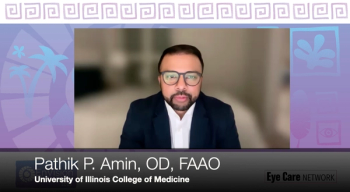
Pathik P. Amin, OD, FAAO, details his segment of an educational track session on glaucoma at this year's conference.
Pathik P. Amin, OD, FAAO, details his segment of an educational track session on glaucoma at this year's conference.
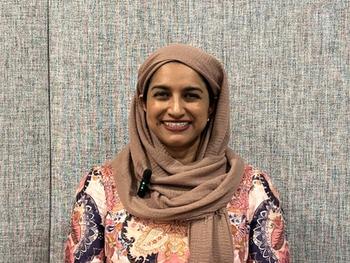
Shameema Sikder, MD, details a session she presented with Roomasa Channa, MD, at EnVision Summit 2026.

Bonnie An Henderson, MD, founder of EnVision Summit, highlights how the annual conference integrates MD and OD tracks, practical subspecialty updates, and structured opportunities for connection across career stages.
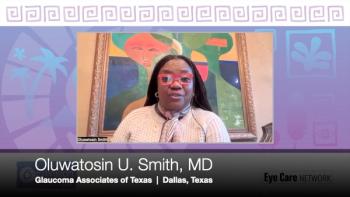
Oluwatosin U. Smith, MD, highlights how the foundation provides education, research, and access-to-care for patients and clinicians globally and locally.
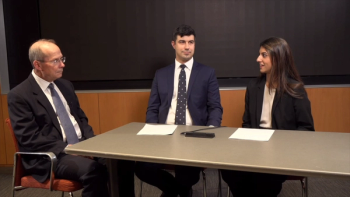
NYU Grossman’s Preeya Mehta, MD, and Jonathan S. Williams, MD, sit down with Mount Sinai’s Louis R. Pasquale, MD, to discuss long-term safety and efficacy data from a PreserFlo microshunt trial and the role of microshunts in glaucoma surgery.
Marta Pazos, MD, PhD, examined the role of optical coherence tomography, artificial intelligence, and clinical evaluation in early glaucoma management.
Steffen Hamann, PhD, FEBO, FRCOphth, discusses how optic disc drusen can mimic glaucoma and discussed evolving imaging and research strategies.
Andrew Tatham, MD, MBA, FRCOphth, FEBO, outlines the role of micro-invasive glaucoma surgery alongside established glaucoma procedures, focusing on safety, patient selection, and future directions.
Prof. Dr. med. Wolf A. Lagrèze highlights the clinical role, limitations, and future potential of optical coherence tomography in glaucoma and neuro-ophthalmic disease.
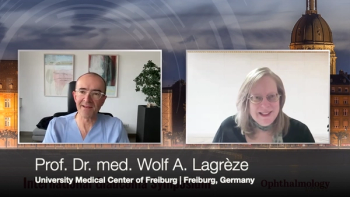
Prof. Dr. med. Wolf A. Lagrèze highlights the clinical role, limitations, and future potential of optical coherence tomography in glaucoma and neuro-ophthalmic disease.
Panelists discuss how emerging therapies—including TKIs, sustained-release implants, and gene therapy—may reduce treatment burden and shift retinal disease management toward longer-acting, maintenance-based approaches.
In the latest episode of The Retina TL;DR with Dr. Weng, host Christina Y. Weng, MD, MBA, FASRS, talks with Dr. Zacks about ONL1204, a first-in-class Fas pathway inhibitor showing promise in neuroprotection for retinal diseases—from retinal detachment to geographic atrophy and glaucoma.
Their conversation focuses on anatomy-driven, individualized approaches and multidisciplinary decision-making for patients with neovascular glaucoma.
Panelists discuss how aflibercept 8 mg maintains a safety profile similar to 2 mg and how workflow, systemic risk, and patient comfort influence confidence in adopting the higher-dose formulation.
Panelists discuss how clinicians manage suboptimal responders by focusing on stability rather than complete dryness, using multimodal approaches, and avoiding premature treatment switching.
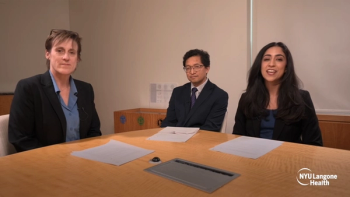
Jennifer E. Thorne, MD, PhD, discusses evidence from the ADJUST trial, including relapse risk, retreatment success, and how clinicians should monitor children when considering adalimumab discontinuation.
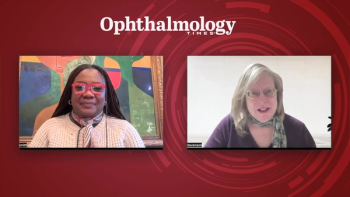
Oluwatosin U. Smith, MD, highlights the practical impact of expanding tools on real-world glaucoma treatment.
Panelists discuss how trial findings for aflibercept 8 mg and faricimab in RVO demonstrate comparable efficacy and durability, with treatment selection ultimately guided by patient characteristics and future labeling.
Panelists discuss how pivotal RVO trial data for aflibercept 8 mg show strong durability and visual outcomes while raising questions about long-term disease chronicity and vascular remodeling under sustained VEGF suppression.

Sahar Bedrood, MD, PhD; Inder Paul Singh, MD; and AnnMarie Hipsley, DPT, PhD, recount moments that blended professional milestones with mentorship and legacy.
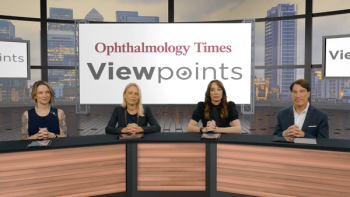
The series concludes with guidance on adopting emerging therapies, managing patient expectations, and addressing unmet needs in dry eye care.

Explore the complexities of LASIK candidacy, lens options, and managing patient expectations for optimal post-operative satisfaction.
Explore the complexities of vision correction for artists, including monovision options and the benefits of light adjustable lenses in surgery.
Panelists discuss how faricimab and aflibercept 8 mg compare in drying and durability and how clinicians manage IOP considerations tied to injection frequency, volume, and syringe variability.
Explore the complexities of vision correction for artists, including monovision options and the benefits of light adjustable lenses in surgery.
Panelists discuss how real-world adherence to loading doses and thoughtful switching or reloading strategies can optimize durability and outcomes, particularly in undertreated patients.
Explore advanced IOL selection in cataract surgery, emphasizing patient-centered choices and successful outcomes with the enVista Envy lens.
Strategies for tapering and sustaining therapy once stabilization is achieved are discussed.
The importance of combining clinical metrics and patient-reported outcomes is examined.
Panelists discuss how the 8-mg aflibercept formulation improves drying efficacy, extends dosing intervals, and reduces burden while maintaining familiarity for patients across AMD and DME.