

Commentary|Podcasts|June 23, 2026
iOpeners with Nicole Bajic, MD: Nikolina Budimlija, MD, on building a multidisciplinary dry eye clinic in Ireland
Author(s)Nicole Bajic, MD, Nikolina Budimlija, MD
Fact checked by: Sheryl Stevenson

Their conversation covers a holistic, cross-specialty approach to ocular surface disease and the unmet need driving a new model of dry eye care in Ireland.
Advertisement
Episodes in this series





In this episode of
An oculoplastic surgeon’s path to dry eye care
Budimlija's focus on dry eye grew out of a gap in care she observed in Ireland, where patients with complex ocular surface disease were routinely underserved. "You would have anterior segment surgeons, corneal surgeons, cataract surgeons, but nobody wants to deal with the dry eye," she explained. Patients were often dismissed with advice to use lubricating drops and little else, leaving those with more complex presentations without appropriate management.
That unmet need prompted her to ask deeper questions about why patients were suffering, why diagnoses were not being established accurately, and how care could be improved. The result was the development of an ocular surface clinic now operating for nearly 8 years, focused not only on dry eye but on the full spectrum of complex ocular surface conditions.
Dry eye as a systemic condition
Central to Budimlija's approach is the recognition that dry eye frequently reflects underlying systemic disease. In her practice, she has seen a growing number of patients in Ireland presenting with ocular surface symptoms linked to autoimmune conditions such as Sjögren syndrome and rheumatoid arthritis, as well as hormonal changes in menopausal women. "We always like to say dry eyes, not only the dry eye," she noted, emphasizing that surface symptoms are often a manifestation of broader systemic factors.
Her response has been to build what she describes as a holistic framework, integrating input from dermatology, rheumatology, and specialists in hormonal health. The goal is to establish accurate diagnoses early and deliver treatment tailored to each patient's systemic profile, rather than addressing ocular surface findings in isolation.
Community optometry as a referral foundation
In Ireland, community optometrists serve as the primary point of contact for patients with visual complaints, but are not authorized to prescribe medications. This positions them as a critical referral source for more complex cases. Budimlija noted strong support from community optometrists, who channel patients with complicated dry eye presentations to her clinic—a pipeline that underpins the model's reach and sustainability.
Bajic observed that this multidisciplinary orientation differs meaningfully from how dry eye is typically managed in the US, where the cross-specialty collaboration Budimlija describes remains less common.
Looking ahead: Research and a new society
Budimlija is currently involved in a large ongoing clinical study in dry eye and expects it to generate new insights and broaden treatment options available in Europe, where the therapeutic landscape lags behind what is available in the US.
She is also active in dry eye advocacy at the society level, serving on the board of the European Dry Eye Society and helping to establish the Dry Eye Society of the Americas (DESA).
Advertisement
Related to this article

Dry eye cases rise with heavy screen use and younger patients; learn modern workups spotlighting MGD, etiology-driven treatments, and collaborative care reshaping outcomes.

Optometrist–ophthalmologist co-management targets dry eye early, improves cataract and refractive surgery satisfaction, and uses advanced diagnostics and treatments for healthier ocular surfaces.

In this Q&A, Ping Moore, OD, covers emerging dry eye therapies, from selenium sulfide to next-gen cyclosporine, and how subtype-guided care shapes treatment choices.

Ophthalmology is projected to face one of the steepest physician shortages of any subspecialty by 2038.

Two investigational pipeline therapies take aim at the root causes of dry eye disease

Findings from the third annual State of Dry Eye survey link symptom management to quality of life gains, including lower anxiety and improved self-confidence.

The RMAT designation opens the door to a faster development pathway for EO2002 as a minimally invasive alternative to corneal transplantation, while Emmecell also advances a cell therapy for geographic atrophy.
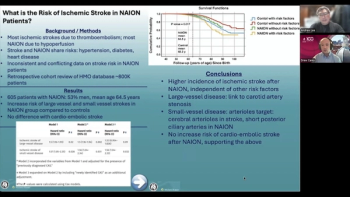
Andrew G. Lee, MD, and Drew Carey, MD, discuss findings from a retrospective study examining ischemic stroke risk in patients with non-arteritic anterior ischemic optic neuropathy and the implications for vascular risk factor management.
Advertisement
Advertisement
Trending on Eye Care Network - Ophthalmology Times
1
Brepocitinib meets all Phase 3 end points in noninfectious uveitis
2
Matching artificial tears to dry eye phenotype: a Q&A with Omur Ucakhan, MD
3
Demodex blepharitis: Diagnosis, treatment response, and recurrence
4
Myopia control using spectacle lenses with highly aspherical lenslets
5