

Commentary|Podcasts|June 11, 2026
The Retina TL;DR with Dr. Weng: Clinical trials, career, and community with David A. Eichenbaum, MD, FASRS
Fact checked by: Sheryl Stevenson
In the latest episode of The Retina TL;DR with Dr. Weng, host Christina Y. Weng, MD, MBA, FASRS, talks with Dr. Eichenbaum about the cell and gene therapy pipeline ahead, what sustains a career in retina, and why lifting others up is just what you do.
Advertisement
Episodes in this series
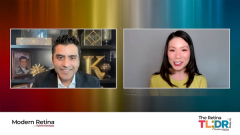
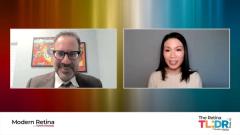
Like what you just watched? The goal of The Retina TL;DR with Dr. Weng video series, hosted by Christina Y. Weng, MD, MBA, FASRS, is to provide fast-paced, high-level information for today's modern retina specialist. We'd love to hear your feedback. Email us at eyecarenetwork@mjhlifesciences.com .
In this episode of
Role Reversal: Christina Y. Weng, MD, MBA, FASRS, and David A. Eichenbaum, MD, FASRS, Swap Seats
The Retina TL;DR host Christina Y. Weng, MD, MBA, FASRS, recently turned the tables — appearing as a guest on Eichenbaum Acorns, hosted by David A. Eichenbaum, MD, FASRS. Check out Weng's appearance on the episode here.
Sixth gear, clinical trials, and the pipeline ahead
When asked to share the most important principle behind his professional success, Eichenbaum offered a driving analogy: "All the successful retina specialists I know only have one gear, which is drive. It's like sixth gear. They are always going."
Eichenbaum credits his fellowship training—including Jeffrey Heier, MD, at Ophthalmic Consultants of Boston, along with Jay Duker, MD, and Elias Reichel, MD, at Tufts New England Eye Center—as the spark for his passion for drug development. He described the community around clinical trials, including pharmaceutical and scientific partners, as one of the most rewarding parts of his career, noting he still collaborates with many of those same mentors nearly 20 years later.
Looking ahead, Eichenbaum expressed excitement about cell therapy, including the phase 2 Genentech OpRegen Lineage trial for geographic atrophy, which he sees as holding potential to restore vision. He also cited anticipation around upcoming data readouts from gene therapy programs—including Adverum Biotechnologies, 4DMT, and Regenxbio—and tyrosine kinase inhibitor programs from EyePoint Pharmaceuticals and Ocular Therapeutix. "The best is always yet to come," he said.
Mentorship and paying it forward
Eichenbaum spoke candidly about the role mentorship has played in his own trajectory. A graduate of public school through medical school, he credited a residency mentor at the University of South Florida with advocating for him to secure his fellowship. That experience drives his commitment to supporting junior colleagues and underrepresented specialists: "Just because you're not from an Ivy League college doesn't mean you're not going to be an incredibly hardworking and productive and patient-centric clinician and clinical scientist."
When asked what keeps him engaged across clinical, research, industry, and mentorship work, Eichenbaum said variety is the antidote: "It's a strategy to never get bored." He attends 6 to 9 retina meetings annually and described his connection to the broader retina community—across specialties and industry—as a key source of professional energy.
Eichenbaum closed by explaining the name of his podcast, Eichenbaum Acorns. His surname is a Yiddish word meaning "acorn tree," a name carried by his grandfather's family from Eastern Europe. "You plant little acorns, and they grow into these tremendous oaks," he said—a nod both to his family lineage and to the idea that great things grow from small beginnings.
Christina Y. Weng, MD, MBA, FASRS, is professor and the Alice R. McPherson Retina Research Foundation Chair in Ophthalmology, and fellowship program director, vitreoretinal diseases and surgery with Baylor College of Medicine in Houston, Texas. Weng has no relevant financial disclosures.
David A. Eichenbaum, MD, FASRS, is a retina specialist with Retina Vitreous Associates of Florida in Tampa and Collaborative Associate Professor of Ophthalmology at the University of South Florida. Disclosures: 4DMT I,C; AAVantgarde C; AbbVie I,C; Adverum I,C; Alcon I,C; Akari C; Alexion I,C; Amaros I,C,E; ANI C; Annexon I,C; Apellis I,C,S; Astellas I,C,S; Aviceda I; Bausch & Lomb C; Bayer I,C,S; Biocon C; Bitfount C; Boehringer Ingelheim I,C; Boston Image Reading Center E; Complement Therapeutics C; EcoR1 C; Emmes C; EyeBio I; EyePoint I,C,E; Focus/F-Prime I,C; Genentech I,C; Harrow C; Hemera E; Ionis I; Imvionix C; Janssen I; Kodiak I,C; Kriya C; Kyowa Kirin I; Lexitas C; Merck I,C; Nanoscope C; Neurotech C; Notal Vision C; Novartis I,C; Ocugen C; Ocular Therapeutix I,C; Oculis I; Ollin I,C,E; Opthea I,C; Orasis C; ONL I; Outlook C; PPD ThermoFisher C; Priovant I; Regeneron C,I,S; Regenxbio I,C; ReVive C,E; RetinAI I,C; Roche I,C; Samsara C; Surrozen C; Stealth I,C; Stoke C; Tilak C; Unity I,C; US Retina E.
Key: C = Consultant; I = Investigator; S = Speaker; E = Equity/Stockholder/Options
Advertisement
Related Content
Advertisement

Latest CME












Advertisement
Advertisement
Trending on Eye Care Network - Ophthalmology Times
1
One day, three approvals: FDA expands options for ocular redness, thyroid eye disease, and presbyopia
2
Duravyu misses wet AMD end point again as EyePoint pivots to DME
3
A vascular link: erectile dysfunction may signal glaucoma risk in men
4
The Retina TL;DR with Dr. Weng: Thriving in fellowship with Amer Alsoudi, MD, and Monia Reding, MD
5