

5-year OPTIC data showed a single injection of Ixo-vec gene therapy cut annualized anti-VEGF injections 87%, with sustained aflibercept expression and no new safety signals, in a high-need population with nAMD.
5-year OPTIC data showed a single injection of Ixo-vec gene therapy cut annualized anti-VEGF injections 87%, with sustained aflibercept expression and no new safety signals, in a high-need population with nAMD.

Real-world data presented at ASRS 2026 show pegcetacoplan slowed photoreceptor and RPE loss in geographic atrophy, with a greater treatment effect in eyes with concurrent neovascular AMD.

A wider partial-total ellipsoid zone gap on OCT predicted faster total EZ loss and geographic atrophy in intermediate AMD—pointing to a biomarker for trial enrichment.
New real-world data from ASRS 2026 show nearly 40% of wet AMD patients go 180+ days without anti-VEGF treatment within a year, and treatment gaps are linked to worse long-term vision.
3-year REMAIN data show MCO-010 optogenetic therapy delivered durable ~3-line vision gains in retinitis pigmentosa regardless of gene mutation, with no treatment-related serious adverse events, per Benjamin Bakall, MD, PhD, at ASRS 2026.
AI-driven OCT analysis shows faricimab reduces diabetic macular edema fluid and thickness more than aflibercept, suggesting eccentric subfields may guide treat-and-extend dosing.

Learn how missed follow-ups and insurance hurdles limit retinal anti-VEGF care—and the strategies clinicians use to keep patients treated.

ARCHER data reveal which GA eyes risk major vision loss: midrange baseline acuity and subfoveal lesions, shaping counseling and future AMD trials.

A real-world Vestrum database analysis found pegcetacoplan was linked to better visual acuity outcomes in geographic atrophy, including in patients with concurrent neovascular AMD, per Nimesh Patel, MD, at ASRS 2026.

An AI platform that screens patient charts for clinical trial eligibility increased randomization by 37.5% and cut screen failures by 13% in a retina practice.

Arshad M. Khanani, MD, MA, discusses phase 3 SOL-1 data showing axitinib sustained vision in wet AMD for 9-12 months after 1 dose, outperforming aflibercept 2 mg.

Applying phase 3 LUGANO/LUCIA criteria to the phase 2 DAVIO 2 population showed stable vision and anatomy with the vorolanib insert EYP-1901 in wet AMD, Aleksandra Rachitskaya, MD, FASRS, reported at ASRS 2026.

OLN324 outperformed faricimab on anatomic outcomes as early as week 1 in the JADE trial, with no cases of intraocular inflammation across both dose groups.
Initiating aflibercept 8 mg or faricimab as a first-line therapy was associated with longer treatment intervals and superior anatomic outcomes in a real-world analysis of more than 12,000 eyes.

In the latest episode of The Retina TL;DR with Dr. Weng, host Christina Y. Weng, MD, MBA, FASRS, talks with Dr. Brodie about a photovoltaic subretinal implant showing meaningful visual gains in patients with geographic atrophy due to AMD.
Clinicians unpack anti‑VEGF access barriers—missed visits, step therapy, costs—and how bevacizumab and assistance programs keep patients treated.
Exploring ranibizumab port delivery: long-lasting anti-VEGF control, but surgery, access hurdles and safety tradeoffs make patient selection crucial.
Cataract surgery becomes refractive: learn how IOL choices and preop counseling across distance, intermediate and near turn 20/20 into 20/happy.

Dry eye cases rise with heavy screen use and younger patients; learn modern workups spotlighting MGD, etiology-driven treatments, and collaborative care reshaping outcomes.

Bedside OCT in preterm infants links retinal thickness to motor, cognition, and autism risk at age 2, hinting at earlier brain screening.
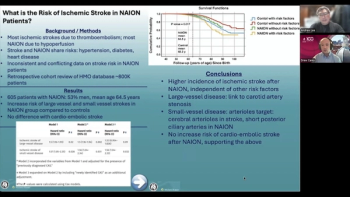
Andrew G. Lee, MD, and Drew Carey, MD, discuss findings from a retrospective study examining ischemic stroke risk in patients with non-arteritic anterior ischemic optic neuropathy and the implications for vascular risk factor management.
Ranibizumab port system delivers anti‑VEGF durability, but surgical risks, access hurdles and patient selection limit wider use.
See how retina experts set anti-VEGF intervals: loading doses, OCT-based treat-and-extend, and why 4-month claims don’t fit all.

Andy Chang and Mikhail Boukhny of BVI Medical discuss the company's new Experience Hub in Sant Cugat, Spain, a hands-on training facility built to gather surgeon feedback ahead of the Virtuoso platform's European launch.

Learn how real-world Encelto implantation refines MacTel care, from selecting progressing symptomatic patients to surgical technique, safety counseling, and future ECT promise.

Optometrist–ophthalmologist co-management targets dry eye early, improves cataract and refractive surgery satisfaction, and uses advanced diagnostics and treatments for healthier ocular surfaces.

Ectoine eye drops boost tear stability and ease redness and tired eyes, along with burning, foreign body and dryness sensations, offering fast, irritation-free relief for patients with dry eye disease.
How faricimab reshapes DME care: trial vs real-world durability, Ang2/VEGF clues, when to switch, and how AI-guided OCT may help.
Clinical and real-world faricimab data reshape DME treatment strategies, highlighting durability, drying benefits, and when switching therapies may improve outcomes.
Not every question in the management of patients with GA has a clear answer—the two retina specialists work through the ones clinicians face most often in practice.