













Faricimab FDA approval: Dr. Joshua Mali shares what this new therapy will mean to retina specialists
Joshua Mali, MD, shares how the FDA-approved faricimab-svoa (Vabysmo, Genentech) will change the treatment landscape for wet AMD and DME.
Joshua Mali, MD, shares how the FDA-approved faricimab-svoa (Vabysmo, Genentech) will change the treatment landscape for wet AMD and DME.

This Bascom Palmer Eye Institute 2-day virtual scientific program promises a distinguished international faculty who will share the latest developments in imaging, translational research, and clinical trials as well as the impact these advances will have on clinical ophthalmology.

Across four studies, about half of eligible faricimab patients were able to go 4 months between treatments, and approximately three-quarters could be treated every 3 months or longer. Two papers published in The Lancet highlight one-year results.

Numerous studies have shown that adherence declines with more complex regimens of more than 1 or 2 bottles.

According to the company, A197 is a novel, first-in-class, topical immunomodulatory agent which will move into Phase II clinical trials in dry eye patients.

Mark Gallardo, MD, reports 12-month outcomes of iStent inject® combined with cataract surgery in a predominantly Hispanic patient population with mild to moderate open-angle glaucoma (OAG) and comorbid cataract.

Kathryn M. Hatch, MD, details how collagen CXL is evolving with the goals of reducing complications and actually improving visual acuity.

Cathleen McCabe, MD, presents results of a retrospective study highlighting the effectiveness of dexamethasone intraocular suspension 9% following cataract surgery.

Physician offers practical advice for the use of systems.

Administration has minimal impact on patients’ perception of pain.

Uday Devgan, MD, FACS, of Devgan Eye Surgery in Los Angeles and Beverly Hills, CA, answers a few key questions his patients have asked when considering cataract surgery.
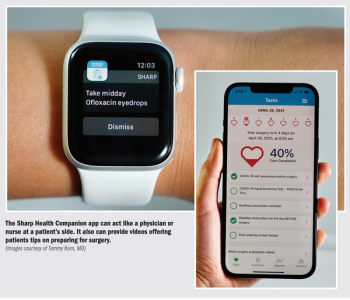
Technology enables physicians to provide and receive important information more quickly.

Much of today’s surgical refuse is due to the single use of virtually everything.

Investigators find little difference between the options.
In recognition of Cataract Awareness Month.
In recognition of Cataract Awareness Month.

Lens option can correct for surgically induced astigmatism or an inaccurate position.
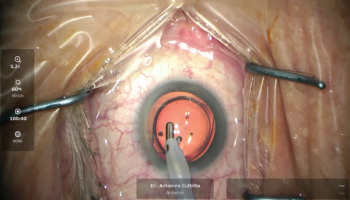
Bi-sign design compensates for aberrations resulting from misalignment.
Mark Packer, MD, offers personal insight in honor of Cataract Awareness Month.
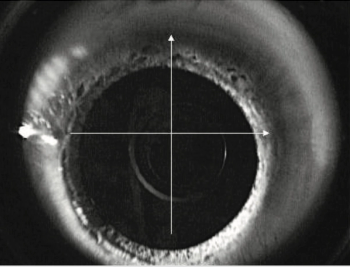
Procedure can improve best-corrected visual acuity, enhancing quality of life for patients.

Therapeutic choices beneficial for patients may be available in 1 to 3 years.

Investigators examine the demographic, refractive, PRO data measure.

Patients are serious about procedure and ready to move forward.

Investigators find treatment is an option for treating open-angle glaucoma.
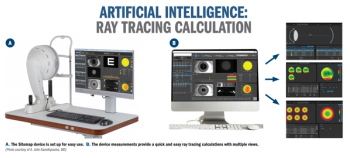
Novel technique provides another option for normal and irregular corneas.