














TOUR006 is an anti-IL-6 antibody with a differentiated profile for the treatment of thyroid eye disease (TED).
TOUR006 is an anti-IL-6 antibody with a differentiated profile for the treatment of thyroid eye disease (TED).

More than 135 patients have been recruited in 4 months for Phase 2 study of a single intravitreal (IVT) injection of ONL1204 ophthalmic solution as an adjunct to standard-of-care surgery.

The investigators performed a retrospective cohort study of patients from 10 US ocular inflammatory disease (OID) subspecialty practices.

A team of researchers have successfully transplanted human microglia into a mouse retina to create a model for studying eye disease treatments, such as diabetic retinopathy, glaucoma and age-related macular degeneration.
According to Regeneron, the approval was based on data in the PULSAR and PHOTON trials, in which the drug demonstrated clinically equivalent vision gains to aflibercept Injection 2 mg that were maintained with fewer injections.

According to the company, the MAA submission is based on data from the GATHER1 and GATHER2 Phase III clinical trials.

APP13007, if approved, may have an advantageous profile in dosing frequency and side effects while reducing the inflammation and pain associated with ocular surgery.

According to Regeneron, visual gains and safety of aflibercept 8 mg remained consistent with the established profile of aflibercept 2 mg injection.

According to the company, the therapeutic is the only approved GA treatment with a statistically significant reduction in the rate of GA progression at the 12-month primary endpoint across two Phase 3 clinical trials.

In a presentation at the American Society of Retina Specialists 41st Annual Meeting in Seattle, Diana Do, MD, said the PHOTON study demonstrated the impact aflibercept 8 mg could have in reducing the treatment burden for patients diagnosed with DME.
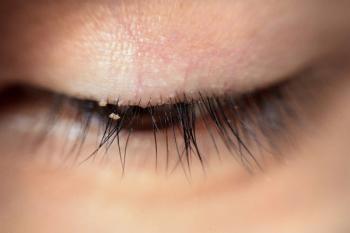
According to Tarsus Pharmaceuticals, lotilaner ophthalmic solution 0.25% (XDEMVY) is the first approved therapeutic for Demodex blepharitis, and has demonstrated efficacy across multiple clinical measures of disease.

The company also provided an update on tarcocimab development program for the treatment of neovascular age-related macular degeneration and diabetic macular edema.

With lawsuits looming over the issue, the FDA has updated the label on Horizon Pharmaceutical’s drug for thyroid eye disease to include risks associated with hearing loss.

According to the company, the transaction includes U.S. and Canadian commercial rights to six therapeutics, including two non-prescription brands.

A trial funded by the National Institutes of Health underscores need for more research to head off high myopia.

According to the company, VRDN-001 data demonstrated clinically meaningful and rapid improvement in signs and symptoms of chronic TED at week 6 after receiving two infusions of VRDN-001 10 mg/kg or 3 mg/kg.

The India-based pharmaceutical company is taking its first steps into ophthalmology with the announcement.
According to Horizon Therapeutics, the analysis shows subclinical spinal cord lesions were associated with future NMOSD attacks. The analysis was being presented at the 9th Congress of the European Academy of Neurology in Budapest.
William B. Trattler, MD, highlights some of the novel therapies for dry eye that have recently been approved by the FDA, along with various treatment approaches that are in development.

An expert discusses how to ensure optimal administration.

Horizon Therapeutics announced the Brazilian Health Regulatory Agency (ANVISA) has approved TEPEZZA as the first and only medicine approved in Brazil for treatment of thyroid eye disease.

Experts weigh pros and cons of treatment option for orbital cellulitis in pediatric patients

Experts in the field weigh in on the perfluorohexyloctane ophthalmic solution, the first and only FDA-approved treatment for DED that directly targets tear evaporation instead of tear formation.

AG-80208 is a novel, first-in-class, formyl peptide receptor (FPR) agonist formulated as an aqueous solution eye drop to treat the inflammation linked with DED.

In April, the FDA approved an update to the TEPEZZA indication language, specifying its use in all patients with TED regardless of TED activity or duration. Horizon Therapeutics presented its data at the Endocrine Society's 2023 annual meeting in Chicago.