
















On this episode of the NeuroOp Guru video blog, Andy Lee, MD, and Drew Carey, MD, discuss the use of fluoxetine in patients with visual field loss after suffering a stroke.


Dry eye paradise: FDA green-lights Miebo as first and only eye drop approved for the condition

Allgenesis announces Phase 1b data showing AG-80308 providing improvements in dry eye patients
On this episode of the NeuroOp Guru video blog, Andy Lee, MD, and Drew Carey, MD, discuss the use of fluoxetine in patients with visual field loss after suffering a stroke.
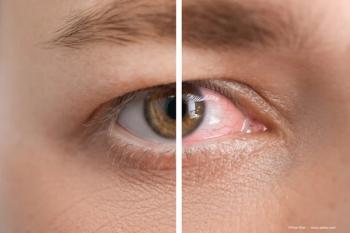
The MERIT study found that intraocular corticosteroid treatment remains the most effective therapy for uveitis-related macular edema, and vision gains in participants who received the corticosteroid treatment were very promising.

According to the company, topline results from the clinical trial are expected by the third quarter of 2024.

Treatment option offers positive outcome for patients diagnosed with disease.

Therapeutic has fewer adverse effects in patients with POAG, OHT.

New option a potential treatment for patients diagnosed with dry eye disease.

While the 6-weekly regimen was less effective in improving the clinical activity score or exophthalmos than the higher dose regimen, it is an acceptable treatment choice for patients with marginal or lower clinical activity scores.

The lawsuit states the $27.8 billion acquisition would allow Amgen to strengthen their drug portfolio and stifle drug competition in a bid to monopolize two fast-growing medications.

The company noted YUTIQ is used for the treatment of chronic non-infectious uveitis affecting the posterior segment of the eye, and is the same as Alimera’s ILUVIEN.

The goal of the project is to encourage patients with Demodex blepharitis to visit an ophthalmologist.

According to researchers, these chronic, progressive retinal diseases, including retinitis pigmentosa, arise from genetic and environmental disruptions of cellular and tissue stability.

According to the company, the announcement represents the first FDA-approved, fixed-combination of tropicamide and phenylephrine for mydriasis.

Lowe is the VP, of Commercial Operations at Eyenovia, and discussed the FDA approval of MydCombi for mydriasis at the 2023 ASCRS annual meeting in San Diego.

Jim Mazzo, executive chairman of Neurotech Pharmaceuticals, discussed the company's goal to slow down the progression of MacTel and their recent advancements at the ASCRS annual meeting in San Diego.

The study, titled “A Clinical Registry Study of Glaucoma Medication Use in Patients with Mild Glaucoma Severity After MIGS,” will be presented Sunday by Michael Mbagwu, MD, at the American Society of Cataract and Refractive Surgery annual meeting in San Diego, California.
Ophthalmology Times® spoke with Mitch Shultz, MD at ASCRS 2023 in San Diego about the a new FDA clinical trial for a device called StableVisc being launched on the market by Bausch + Lomb.

Jason Bacharach, MD, presented results at the American Society of Cataract and Refractive Surgery annual meeting in San Diego, highlighting that a large phase 3 clinical trial demonstrated no relevant differences between the 2 formulations.

In a presentation at the American Society for Cataract and Refractive Surgery annual meeting in San Diego, Ana Balbuena-Pareja, MSc, explained how cenegermin-bkbj ophthalmic solution 0.002% (Oxervate, Dompé) had a positive effect on corneal nerve regeneration and sensation in patients with neurotrophic keratitis.

APP13007 is used for the treatment of post-operative inflammation and pain following ocular surgery.

Horizon recently received an updated indication for TEPEZZA to specify its use in patients with TED, regardless of disease activity or duration, coming after the company released positive topline results from the phase four clinical trial of patients with chronic TED.

These three FDA-approved ophthalmic medicines, which are now commercially available under the Harrow umbrella, were among the five products that Harrow purchased in January of 2023.

Efavirenz boosts cholesterol turnover in retina, brain.

Analysis signals up to 59% risk reduction in rate of vision loss compared with sham treatment at 12 months.

Physician discusses clinical presentations, treatment options for 2 cases.

Therapies to target geographic atrophy are in sight.