



















Raj Kannan, the new CEO of Aerie Pharmaceuticals, talks with Ophthalmology Times' David Hutton about what's coming down the pipeline for Aerie.

Raj Kannan, the new CEO of Aerie Pharmaceuticals, talks with Ophthalmology Times' David Hutton about what's coming down the pipeline for Aerie.
"Tell Me Your Secrets" is the theme of the virtual April 2 event, which is expected to build on the foundation established during the first program held last fall.

Physicians find the Vivity lens offers their patients reduced glare, halos and increased spectacle independence.
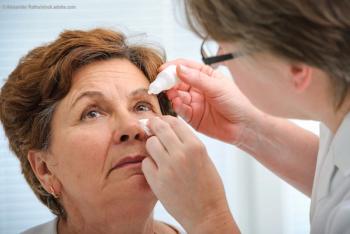
The study, conducted with Tufts Medical Center, represents a breakthrough showing that Microdose Array Print technology can provide similar benefits of non-preserved medications.

The company notes that the system’s design includes a small footprint, enhanced ergonomics, superior imaging, dual-pulsed laser, and advanced astigmatism management tools.
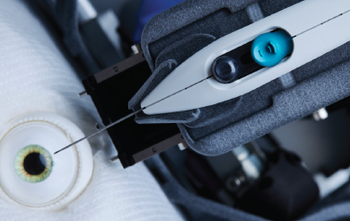
Utilizing new technology, surgeons can be 20 to 40 times more precise.

Oluwatosin U. Smith, MD, associate professor in the Department of Ophthalmology, University of Texas Southwestern, Dallas, speaks with Ophthalmology Times'® Sheryl Stevenson on the highlights of her presentation exploring remote monitoring of glaucoma and the future of virtual care on the whole.
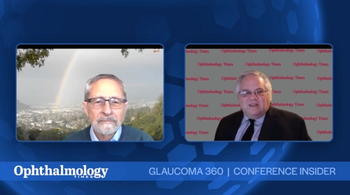
Robert L. Stamper, MD, speak with Ophthalmology Times®' David Hutton to discuss his presentation at the Glaucoma 360 event in San Francisco, where he presented an update on OCT-Angiography and its role in detecting the density of the capillaries in the macula.

Ranya Habash, MD, medical director of Technology Innovation, assistant professor of Clinical Ophthalmology at Bascom Palmer Eye Institute, University of Miami in Miami, Florida, offers a preview of her New Horizons keynote speech on "The future of eye care: science fiction to science fact."

Ora Chief Medical Officer Gustavo De Moraes, MD, PhD, MPH, speak with Ophthalmology Times®' Sheryl Stevenson to discuss some of the cutting-edge advancements in therapies and diagnostics for the treatment of glaucoma patients.

Glaucoma 360's co-founders and co-chairs Adrienne L. Graves, PhD, and Andrew G. Iwach, MD, speak with Ophthalmology Times®' Sheryl Stevenson on what attendees can expect from this year's annual meeting.

The Toronto-based medical eyewear company partnered with the visual assistance community to help empower an Oregon college student with enhanced vision.
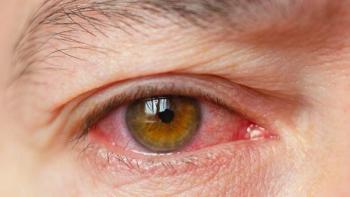
Moore suffered from dry eye disease and Lumenis noted that treatment with OptiLight improved her condition. Now she’s partnering with the company to share her story and empower others.
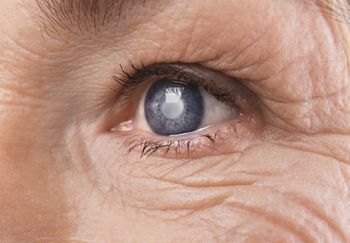
The company noted that the study was the first to evaluate whether AI software can accurately detect more-than-mild diabetic retinopathy using a single image per eye, obtained from either a desktop or handheld retinal camera.

The rate of adverse events was low in this higher risk, difficult-to-manage population of special-needs children, noted Margaret Reynolds, MD.

TearLab Corp. announced that Adam Szaronos has been appointed president and CEO by the company's Board of Directors, effective immediately.

Using its proprietary software, the company has been able to create models in a fraction of the time typically needed for fitting one.

The company’s re:Vive technology features 6 vision diagnostic exams, supported by 5 reimbursable CPT codes in 1 wearable solution.

Lens combines diffractive multifocal and extended depth-of-focus properties.
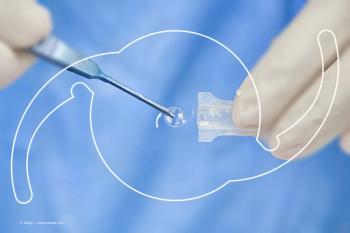
“Real talk” on new devices gives surgeons, patients decision-making insights

Diagnostics, imaging, and therapeutics pave the way for better outcomes.
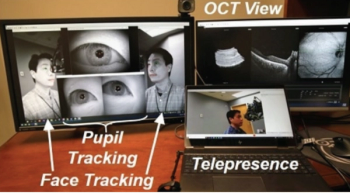
Pilot study tests the technology to obtain remote fundus imaging of patients.

Patients can get real-time disease monitoring with self-operated device.

Changes are resulting in better outcomes for patients with glaucoma.

Investigators learn that a wearable aid can offer improved mobility.