



Technology
Latest News
Advertisement
Video Series






Shorts

0:54
Euretina 2026: AI's biggest potential lies in retinal imaging, not surgery (yet)
9 days ago
by
Ritesh Narula, MBBS, MS(+1 more)
0:50
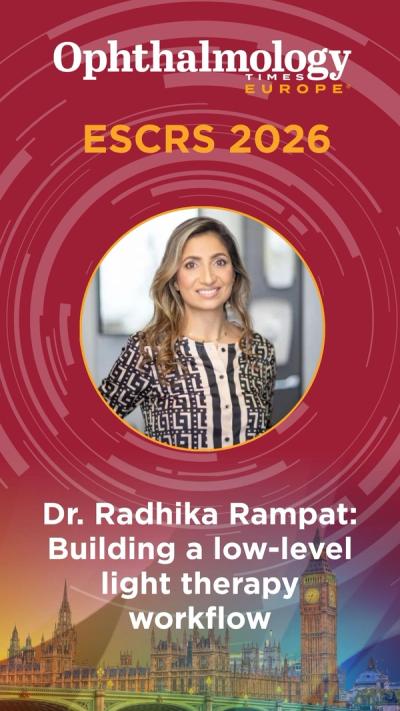
Building a low-level light therapy workflow
a month ago
by
Radhika Rampat(+2 more)

0:40
Dr. Radhika Rampat: AI in practice today
a month ago
by
Radhika Rampat, MBBS, FRCOphth
1:10
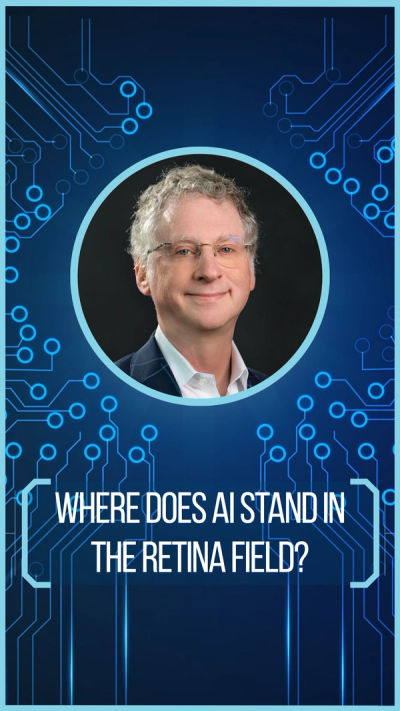
AI in retina: A new collaborator in the fight against blindness
a month ago
by
Joel Pearlman, MD, PhD (+1 more)
0:42
AI in ophthalmology: from structural to functional biomarkers
2 months ago
by
Miguel A. Busquets, MD, FACS(+1 more)
0:46
Honing in on early neurodegenerative disease via the IPL
2 months ago
by
Maria Emfietzoglou, MD(+1 more)
1:12
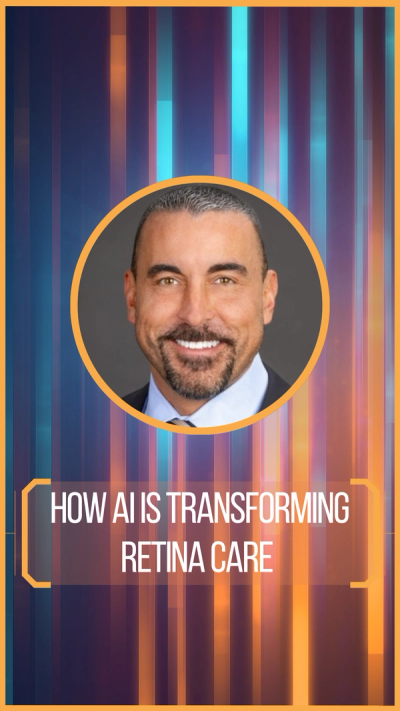
How AI is transforming retina care, from RPE analysis to predictive modeling
2 months ago
by
Miguel A. Busquets, MD, FACS(+1 more)

0:41
Microsecond laser's role in treating chronic CSCR
2 months ago
by
Jhon E. Zans, MD(+2 more)
0:53
How AI can help shape future clinical trials
2 months ago
by
Hasenin Al-khersan MD(+1 more)
0:54
Should patients use AI to research symptoms?
2 months ago
by
Nimesh Patel, MD(+1 more)
CME Content















Advertisement

AI accelerates retina trials and imaging insights, boosts screening access, and raises urgent questions on regulation, privacy, and equity.

AI model beats human graders at spotting glaucoma risk in UK population retinal photos, boosting accuracy and strengthening the case for scalable AI vision screening.

Ahead of his November 10, 2026, start date, the incoming Duke ophthalmology chair shares his vision for research, training, and the integration of AI and data science.
Wet AMD gains a new FDA-approved therapy as retina, glaucoma, and dry eye pipelines surge—plus AI, devices, and workforce trends reshaping care.
Physician AI use has more than doubled since 2023—but the next leap in ophthalmology won't come from smarter diagnostic algorithms alone.
Louie Cai, MD, discusses why manual prescreening is so labor-intensive, how the study was designed, and what broader adoption of AI-assisted screening could mean for clinician time, patient satisfaction, and the pace of drug development.
A real-world Vestrum database analysis found pegcetacoplan was linked to better visual acuity outcomes in geographic atrophy, including in patients with concurrent neovascular AMD, per Nimesh Patel, MD, at ASRS 2026.

An AI platform that screens patient charts for clinical trial eligibility increased randomization by 37.5% and cut screen failures by 13% in a retina practice.
Rising star in Ophthalmology, Nicholas Riina, MS, focuses on artificial intelligence and uses robotics training to enhance glaucoma diagnosis.

The FDA issued a nationwide recall of a steroid eye drop.
June brings FDA clearance for Lumvoa, key retina and glaucoma trials, device deals, and hard truths on AI performance in eye care.
In this Q&A, Dipanjan Pan, PhD, breaks down the science behind the COSMIC tear biosensor platform and what it will take to bring it to clinical use.
Study finds ChatGPT-5 overpredicts success after macular hole surgery—beating specialists on paper but missing failures.
Diana Canto-Sims, OD, owner of Buena Vista Optical, discusses how Meta's donation of free AI glasses to blind veterans could close longstanding access gaps in low vision care—and where voice-command wearables fit alongside traditional rehabilitation tools.

Bayer acquired Perfuse Therapeutics and its experimental endothelin-blocking eye implant PER-001, and partnered with AI firm Iambic Therapeutics to accelerate small molecule drug discovery.

ARPA-H funds OCULAB to build tear-duct sensors that track biomarkers in real time and microdose drugs, transforming dry-eye and systemic care.

A balanced mix of AI-generated and smartphone-captured images eliminated the domain-specific failures seen with single-source training

Step-by-step prompting boosts multimodal AI accuracy on bilingual ophthalmology vignettes with images—but weak subspecialty and image-reading skills remain.

The update introduces a 250 kHz scan speed for OCT Angiography combined with enhanced TruTrack Active Eye Tracking, as well as new multimodal imaging capabilities, including the Green Autofluorescence Module
Alkeus Pharmaceuticals has dosed the first participant in the phase 3 NORTHSTAR trial of oral gildeuretinol for Stargardt disease, a condition with no approved treatments.

Finding satisfaction in ocular research—considerations about AI and enhanced datasets.

A newly developed diagnostic system, CaptureTumor (CaT), driven by artificial intelligence (AI) and designed specifically for smartphone deployment, achieved diagnostic accuracy comparable to that of a specialist-graded slit-lamp evaluation” for detecting rare ocular surface malignancies.

The device, described in a new study, uses a technique called temporal interference-based transcorneal electrical stimulation, or TI-TES.

The app is designed to improve confidence among neurology and ophthalmology trainees.

Caveolin‑1 is a membrane-associated protein expressed in many cell types that plays a key role in modulating inflammatory signaling.
Advertisement
Advertisement
Trending on Eye Care Network - Ophthalmology Times
1
AAO 2026: Optogenetic gene therapy heads to phase 2 trial in geographic atrophy
2
AAO 2026: DAYBREAK shows tarcocimab and tabirafusp-ted noninferior to aflibercept in wet AMD
3
Slowing Stargardt: What a 36% reduction in lesion growth could mean for adolescent patients
4
AAO 2026: Blood pressure and optic nerve perfusion: a complex relationship
5