
















If the BLA is approved, the company could receive 12 years of marketing exclusivity for an FDA-approved alternative for the most frequently used anti-VEGF treatment in wet AMD patients in the United States.


First dose administered in Phase 1/2 clinical trial for gene therapy candidate OCU400 for inherited retinal degeneration

First patient dosed in Phase I/II trial for gene therapy candidate OCU400 for inherited retinal degeneration
If the BLA is approved, the company could receive 12 years of marketing exclusivity for an FDA-approved alternative for the most frequently used anti-VEGF treatment in wet AMD patients in the United States.

The company is planning a Phase 2 trial with an optimized formulation in wet AMD that is expected to start in fourth quarter of 2022.

Lower dose performs as effectively as a higher dose when treating ROP.
A. Paul Chous, MA, OD, FAAO, leads a discussion about the optimal circumstances for optometrists and ophthalmologists to work together to manage a patient with retinal eye disorders.
Experts in the field of retinal eye disorders discuss how the COVID-19 pandemic and use of telemedicine has affected communication between optometrists, ophthalmologists, patients, and providers.

Mark Packer, MD, shares his perspective on the relationship between ICL implantation or LASIK and retinal detachment.

In the face of the COVID-19 pandemic, the procedure required adjustments.

A team of investigators at the Okinawa Institute of Science and Technology Graduate University in Japan have identified a gene necessary for the survival of retinal ganglion cells—a class of neurons located in the retina that are critical for vision.
Lower doses vs higher ones are equally effective for treating disease

Investigators find that fusing human retinal cells with adult stem cells could be a potential therapeutic strategy to treat retinal damage and visual impairment.

Investigators have questioned the potential for the vascular density to be a biomarker for microvascular abnormalities following COVID-19 and found that longitudinal studies are needed to determine this.
According to the company, VVN001 demonstrated clinical and statistical superiority over vehicle in reducing total and sub-regional corneal fluorescein staining scores.

Investigators observe survival rate with orbital retinoblastoma improves substantially due to a combination approach that includes intensive sequential treatment comprised of chemotherapy, enucleation, and external beam radiation therapy.

A team of investigators at the Okinawa Institute of Science and Technology Graduate University in Japan have identified a gene necessary for the survival of retinal ganglion cells – a class of neurons located in the retina that are critical for vision.

The company notes that its clinical trial of the light delivery system meets the primary efficacy endpoint, and can offer hope to patients with dry AMD who are experiencing vision loss and currently have limited treatment options.
Experts in the field of retinal eye disorders talk about the role of ophthalmologists and optometrists in regard to patient education and communication.
Dilsher S. Dhoot, MD, and A. Paul Chous, MA, OD, FAAO, discuss the American Academy of Ophthalmology (AAO) guidelines on co-management between optometrists and ophthalmologists in retinal eye disorders.
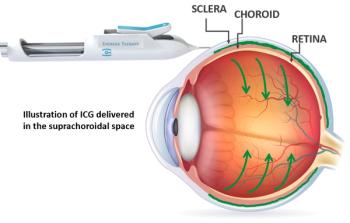
Provides safe, effective injection to target choroidal, retinal tissues

Jorge Calzada, MD, shares his use of MicroPulse laser technology to combat central serous retinopathy (CSR).
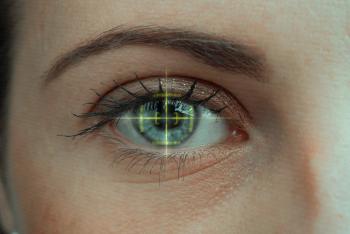
According to a team of investigators at University of California, Berkeley, tests of the drug Antabuse could prove the role of hyperactive retinal cells in blindness, potentially leading to better therapies.

Sub-retinal injection of adeno-associated virus leads to visual acuity gains.

Investigators find that hybrid cells could be a potential therapeutic strategy to treat retinal damage and visual impairment.

Ultrasonic retinal prosthesis has been achieved by a research group at UCLA. It is a step towards a non-invasive retinal prosthesis that works without invasive eye surgery.

"Tell Me Your Secrets" is the theme of the virtual April 2 event, which is expected to build on the foundation established during the first program held last fall.

Researchers from the Department of Ophthalmology at the University Hospital Bonn and Deutsches Zentrum für Neurodegenerative Erkrankungen suggest that assessments of the eye’s retina could help to detect a loss of brain substance, i. e. “brain atrophy.” The findings are based on data from the Rhineland Study.