

















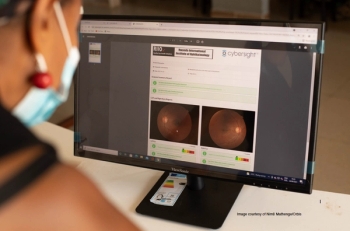
The research from eye care nonprofit Orbis International focuses on diabetic retinopathy in Rwanda, where associated vision complications from diabetes are growing.
The research from eye care nonprofit Orbis International focuses on diabetic retinopathy in Rwanda, where associated vision complications from diabetes are growing.
Jeff Cleland, PhD, CEO of Ashvattha, discusses safety data for an at-home subcutaneous anti-VEGF injection option in development for the treatment of wet AMD and DMO.

Increasing understanding of the genetics behind Usher syndrome suggests that treatment may become possible in the very near future.
The OpRegen trial is a cell therapy trial, looking to explore potential safety and efficacy for patients with advanced dry age-related macular degeneration (AMD).
Though the speed of traditional guillotine cutters has increased significantly in recent years, there are certain limitations. With the advent of hypersonic vitrectomy, Sunir J. Garg, MD, FACS, explains how retinal surgeons can remove the vitreous gel with more efficiency.

Retina specialists and their patients have learned how AI and telemedicine can be effective in monitoring disease progression and alerting clinicians to early signs of adverse changes.
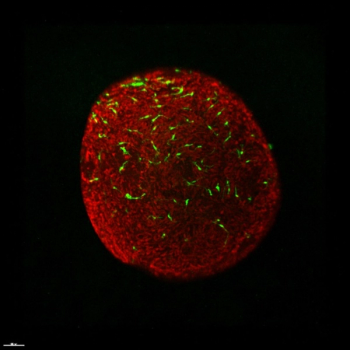
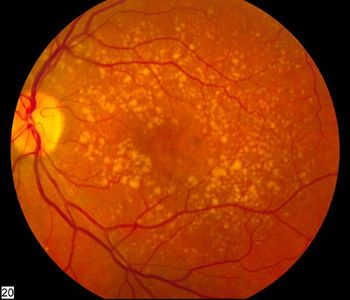
After 10 years, AREDS2 formula shows increased efficacy compared to original formula, benefit of eliminating beta-carotene.

The study assesses retinal blood biomarkers using a new prototype OCT, aiming to measure retinal biomarkers such as blood flow volume, average velocity and vessel diameter with a new prototype.

Scientists have revived light-sensing neuron cells in organ donor eyes and restored communication between them as part of a series of discoveries that stand to transform brain and vision research.
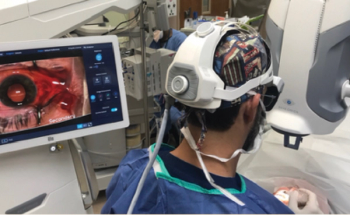
Physicians can use navigational tools to attain a much more immersive perspective.
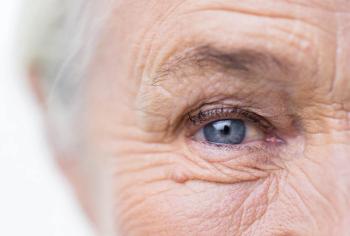
According to the study by a team of researchers from the University of California Irvine and University of Southern California, treatment with Humanin G reduced protein levels of inflammation markers that become elevated in age-related macular degeneration.
The study found that if certain forms of nystagmus that are seen in patients, then there is a higher chance of poor binocular visual function, as well as higher interocular suppression.

Dr Carlos Quezada Ruiz, senior medical director at Genentech, discusses “Predicting optimal treatment regimen for patients with neovascular age-related macular degeneration using machine learning.”

The companies are marketing the first FDA-approved ophthalmology biosimilar as a treatment option for patients with retinal disorders.

According to the company, the AI platform can predict a person's risk of having a stroke or a heart attack in the next five years.

According to Novartis, the approval is based on year 1 data from the Phase III KESTREL and KITE clinical trials investigating brolucizumab-dbll 6 mg vs aflibercept 2 mg in diabetic macular oedema patients.

According to Novartis, the approval is based on year 1 data from the Phase III KESTREL and KITE clinical trials investigating brolucizumab-dbll 6 mg vs aflibercept 2 mg in diabetic macular edema patients.

Faricimab is the first treatment for wet AMD and DME in Canada that acts by targeting both VEGF-A and Ang-2, two key drivers of vascular instability that have been associated with vision-threatening retinal conditions.

The study assess retinal blood biomarkers using a new prototype OCT, aiming to measure retinal biomarkers such as blood flow volume, average velocity, and vessel diameter with a new prototype.

A new technique will allow fast and non-invasive assessment of the physiological state of the retina. This could be a real breakthrough in the treatment of eye diseases.

As novel therapies in the pipeline are aiming to decrease the rate of GA expansion—the endpoint Karl Csaky, MD and Fredrick Ferris III, MD, identified in 2007—Dr. Csaky reinforces on the importance of preserving the central retinal tissue.

Prof. Anat Loewenstein discusses data regarding the efficacy of faricimab at targeting both the VEGF and Ang2 pathways in patients with neovascular AMD and diabetic macular oedema.

According to the company, the ReCLAIM-2 study of elamipretide demonstrates a correlation between ellipsoid zone dysfunction and vision.