

















KALAHARI study update; novel surgical approaches for progressive retinal detachments; and a new risk is identified for CST fluctuations.
KALAHARI study update; novel surgical approaches for progressive retinal detachments; and a new risk is identified for CST fluctuations.

J. Fernando Arevalo, MD, PhD, investigated the anatomic and functional outcomes of pars plana vitrectomy, scleral buckle, or a combination of the two, and suggested that the combination approach may need further consideration.
Speaking at the American Society of Retina Specialists 2022 annual meeting in New York, Carl Danzig, MD, detailed how treatment with faricimab in patients with neovascular AMD resulted in improvements in visual acuity, central subfield thickness and pigment epithelial detachments.
Metformin may provide AMD protection; DAVIO presents positive 12-month results; TOWER study reveals new imaging index for AMD.
During a presentation at the American Society of Retina Specialists 2022 annual meeting in New York, Bobeck S. Modjtahedi, MD, presented results of a study that examined the accuracy of tools for predicting the risk of vision-threatening diabetic retinopathy.
In a presentation at the American Society of Retina Specialists, Dimitra Skondra, MD, PhD, points out that the low-to-moderate doses of metformin carried the greatest potential benefit in a retrospective case-control study.
At ASRS 2022 in New York City, New York, Rishi Singh, MD, is presenting, “12-Month Results of EYP-1901 Vorolanib in a Bioerodible Durasert Insert for nAMD: The DAVIO Trial.” The Phase 1 trial showed a reduction in treatment burden over 12 months as well as a favorable safety profile.
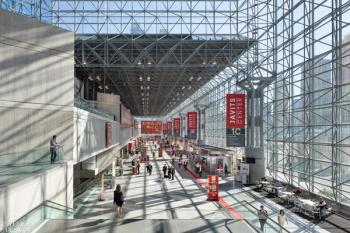
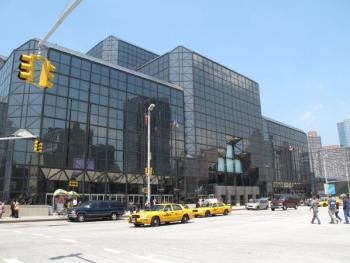
In a presentation at the American Society of Retina Specialists 2022 annual meeting at the Jacob K. Javits Convention Center in New York, Yoshihiro Yonekawa, MD, detailed that primary scleral buckling achieved the best visual acuity, and pointed out that rhegmatogenous detachments increased with age.

Rhegmatogenous detachments increased with age; myopia, trauma, and history of retinopathy were common underlying risk factors for development of rhegmatogenous retinal detachments.

In the TENAYA and LUCERNE studies, more than 60% of faricimab patients could be treated every 4 months at 2 years, an increase from 45% at year 1. Study results are being presented at the American Society of Retina Specialists 2022 annual meeting in New York.
Topics spanned from faricimab in nAMD and DME; pediatric retinal detachment surgery; and the relationship between outer retinal integrity and subretinal fluid.
Nadia K. Waheed, MD, MPH; and David M. Brown, MD, review unmet needs and the importance of selecting the proper needle for intravitreal injections.
Experienced ophthalmologists provide advice for opening up high-volume intravitreal injection clinics.

Mount Sinai study is among the first to link cardiovascular risk to a specific form of age-related macular degeneration.
Albert J. Augustin, MD, presented a talk entitled, “First Results of the Miniature Telescope in Dry AMD” in Fort Lauderdale, Florida. The Galilean telescope device offers visual improvements for patients with late-stage AMD.
Dr Dilsher Dhoot discusses the post hoc analysis of the Copernicus and Galileo trials, which investigated if a delay in treatment would affect visual acuity gains or change in anatomy.
The University of Oklahoma Health Sciences Center has received an unrestricted grant from Research to Prevent Blindness for $575,000 over 5 years to support eye research conducted by the Department of Ophthalmology.
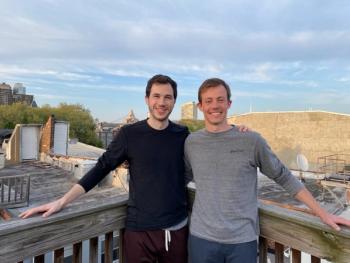
Charles Brodowski, MD, and Patrick Rapuano, MD, have been named co-chief residents at Wills Eye Hospital, and will lead the team of resident doctors on staff, focusing on training and recruitment while attending to their own medical resident duties.

The first in a series of upgrades to Stellaris Elite incudes maximum vacuum increase and trocar/cannula system removeable valve cap enhancement.

According to investigators, patients with age-related macular degeneration like the port delivery system for ranibizumab because it requires fewer treatments and there is less discomfort.
Dr Steven Yeh provides a brief overview of available therapies for noninfectious uveitis and uveitis macular oedema.
CAM encourages corneal healing in patients with ocular surface disease.
Dr Aleksandra Rachitskaya discussed the Phase 3 Archway end-of-trial results for the investigation of the Port Delivery System with ranibizumab in neovascular AMD.
A team of investigators at the Agency for Science, Technology and Research in Singapore have developed a bio-functional thermogel, a type of synthetic polymer, to prevent retinal scarring caused by failed retinal detachment repair surgery.

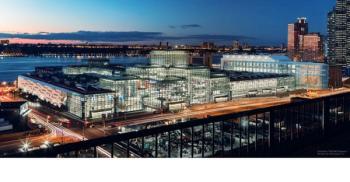
The 40th annual scientific meeting of the American Society of Retina Specialists will be held July 13-16 at the Jacob K. Javits Convention Center in New York.