



















Dilsher S. Dhoot, MD, and A. Paul Chous, MA, OD, FAAO, discuss future directions and unmet needs in the field of retinal eye disease.
Dilsher S. Dhoot, MD, and A. Paul Chous, MA, OD, FAAO, discuss future directions and unmet needs in the field of retinal eye disease.

Key opinion leaders discuss the barriers to co-management of retinal eye disease.

Options under investigation for the treatment of AMD include interruption of the dry AMD disease process and gene therapy to prompt the retina to heal itself.

A multicentre, retrospective, consecutive international study on infants with ROP who were treated with anti-VEGF injections demonstrated good outcomes and low complication rates.

The trial marks the first-ever in vivo delivery of an experimental CRISPR gene editing medicine to a paediatric patient, with the company on track to complete dosing of the paediatric mid-dose cohort in the first half of 2022.

Researchers at the University of Southern California have stimulated the retinas of blind mice using focused ultrasound technology.

An end-of-week review of what happened in ophthalmology from April 9-April 15.

According to the company, post-hoc analyses from Illuminate trial of sepofarsen demonstrate an encouraging efficacy signal when comparing active treatment and sham eyes to their corresponding contralateral eyes across multiple endpoints. The company plans to discuss findings with regulators in Q3.

The trial marks the first-ever in vivo delivery of an experimental CRISPR gene editing medicine to a pediatric patient, with the company on track to complete dosing of the pediatric mid-dose cohort in the first half of 2022.

Dilsher S. Dhoot, MD, and A. Paul Chous, MA, OD, FAAO, discuss the transition of care from ophthalmologist to optometrist once a patient has completed active treatment for retinal eye disease.

Experts in the field of retinal eye disorders discuss the role of injectable anti-VEGF inhibitors and how they have changed the treatment landscape.
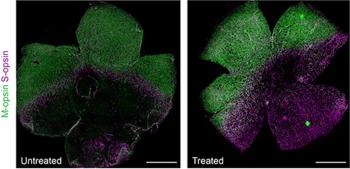
According to researchers at the University of California, Irvine, base editing may provide long-lasting retinal protection and prevent vision deterioration in patients with inherited retinal degeneration, specifically in Leber congenital amaurosis patients.

According to review, patients with mild DR at baseline fare better

This affordable device allows the view through a slit lamp to be shared in real time or recorded, for teaching purposes and for reference.

Impact of native lipids on rhodopsin signaling and regeneration opens door to GPCR drug discovery in native membrane environments

The trial marks the first-ever in vivo delivery of an experimental CRISPR gene editing medicine to a pediatric patient, with the company on track to complete dosing of the pediatric mid-dose cohort in the first half of 2022.
A large retrospective analysis was carried out to investigate various risk factors for endophthalmitis as well as the effect of using a hydrogel sealant.

Approval is based on year 1 data from the Phase III KESTREL and KITE trials investigating brolucizumab 6 mg versus aflibercept 2 mg in DMO patients.

According to researchers at the University of California, Irvine, base editing may provide long-lasting retinal protection and prevent vision deterioration in patients with inherited retinal degeneration, specifically in Leber congenital amaurosis patients.
Developments in imaging, translational research and clinical trials of treatments for retinal diseases dominated discussion at the two-day Bascom Palmer Eye Institute Angiogenesis, Exudation, and Degeneration 2022 virtual conference.

Lower dose of bevacizumab is as effective as a higher dose for treating retinopathy of prematurity.

Dilsher S. Dhoot, MD, leads a discussion about the treatment landscape of retinal eye disorders.

Key opinion leaders discuss how co-management affects the patient-provider relationship in the treatment of retinal eye disorders.

According to the company, the modifier gene therapy candidate is for the treatment of retinitis pigmentosa resulting from mutations in the nuclear receptor subfamily 2 group E member 3 and Rhodopsin genes.

Investigators at the International Center for Materials Nanoarchitectonics have developed the first-ever artificial retinal device that increases the edge contrast between lighter and darker areas of an image, using ionic migration and interaction within solid.