
















Carl D. Regillo, MD, and Jennifer I. Lim, MD, caution against the ophthalmic use of biosimilar products approved for systemic use. They also review how indications for biosimilars are granted upon approval.

Carl D. Regillo, MD, and Jennifer I. Lim, MD, caution against the ophthalmic use of biosimilar products approved for systemic use. They also review how indications for biosimilars are granted upon approval.

Carl D. Regillo, MD, and Jennifer I. Lim, MD, review clinical trial data for biosimilar products, with interpretation of safety data when comparing to the biologic reference products.

APOE4 gene associated with Alzheimer’s disease risk was found to protect mice from glaucoma. Research team also prevented retinal ganglion cell death by blocking the APOE signaling pathway, pointing to a potential treatment strategy for glaucoma.

Foundation Fighting Blindness is a driving force in advancing retinal gene therapies into clinical trials.

Moving past the eyes and into the brain: It is vital to think beyond the eye in the presence of visual impairment and blindness.

According to Johns Hopkins Medicine researchers, as little as $65 per year appears to influence practitioners, making them up to twice as likely to prescribe the companies’ brand name eyedrops for glaucoma instead of cheaper generic versions.

CAM encourages corneal healing in patients with ocular surface disease.

Researchers at the Medical University of Vienna are focusing on how the retina can be used as a prognostic marker. Analyses revealed that retinal layer thinning as a result of an MS relapse predicts the severity of future relapses and the likelihood of disability.

In a study, investigators found that no characteristics of inflammatory bowel disease are related to ocular manifestations of the disease.

Carl D. Regillo, MD, and Jennifer I. Lim, MD, discuss how evolving understanding regarding bioequivalence and the safety of biosimilars may lead to their wider use in the treatment of retinal disorders.

Carl D. Regillo, MD, and Jennifer I. Lim, MD, share historical perspective on the safety of biosimilars and their use in medicine.

The study provided evidence of safety, visual acuity improvement and structural stability in a difficult-to-treat patient population.

This year’s hybrid meeting will allow attendees to participate in person or virtually. Either way, this congress will offer a wealth of information to specialists covering all aspects of retinal diseases.

According to a news release, the U.S. Food and Drug Administration has approved Coherus’ ranibizumab-eqrn (Cimerli) as an interchangeable biosimilar for all five indications of Lucentis.

Nancy Lurker, CEO of EyePoint Pharmaceuticals, shares the 12-month safety data from the DAVIO trial, investigating EYP-1901 for the treatment of wet age-related macular degeneration (AMD) and nonproliferative diabetic retinopathy.

Dr Jayanth Sridhar shares a day in the life of an academic retina specialist.

Although off-label repackaged bevacizumab syringes appear to satisfy an urgent clinical and financial need for patients with a variety of retinal disorders, they are known to be associated with considerable public health concerns due to the risks posed to patients from compounding pharmacies’ lack of compliance with a variety of FDA requirements.

Kodiak Sciences Inc. announced that its BEACON Phase 3 study of tarcocimab, its novel antibody biopolymer conjugate, met the primary endpoint of non-inferior change from baseline in visual acuity at week 24 compared to aflibercept in patients with macular edema due to retinal vein occlusion.

The brain structures with most changes coincide with those which are altered most in Alzheimer’s, according to a study by researchers at the Universidad Complutense de Madrid in Spain.

Carl D. Regillo, MD, and Jennifer I. Lim, MD, review the regulatory oversight process regarding biosimilars after they have entered the market.

Carl D. Regillo, MD, and Jennifer I. Lim, MD, provide an overview of the development and clinical evaluation of biosimilar agents.

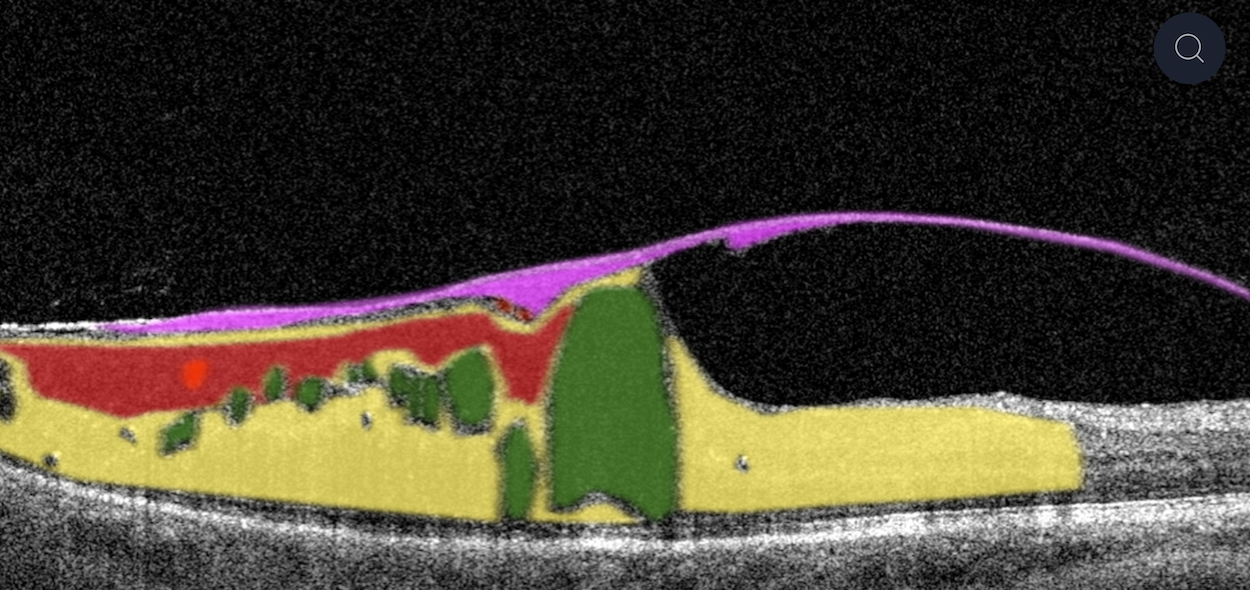
Recent reports of retinal atrophy have raised concerns on potential long-term safety.

Retina indications for which ranibizumab-eqrn is interchangeable include neovascular (wet) age-related macular degeneration; macular edema following retinal vein occlusion; diabetic macular edema; diabetic retinopathy, and myopic choroidal neovascularization.

The discovery of molecular signatures of age-related macular degeneration will help with better diagnosis and treatment of this progressive eye disease.

The doctors will join the Cataract and Primary Eye Care, Glaucoma, and Retina Services.