















The results also showed that, compared to use of systemic antivirals alone, treatment with adjunctive intravitreal injections or early pars plana vitrectomy did not affect the time to development of retinal detachments.

The results also showed that, compared to use of systemic antivirals alone, treatment with adjunctive intravitreal injections or early pars plana vitrectomy did not affect the time to development of retinal detachments.

The data analysis indicated that patients achieved robust visual gains and central subfield thickness reductions with faricimab dosed every 8 weeks and with PTI dosing up to every 16 weeks. The gains were sustained through year 2 of the trials.

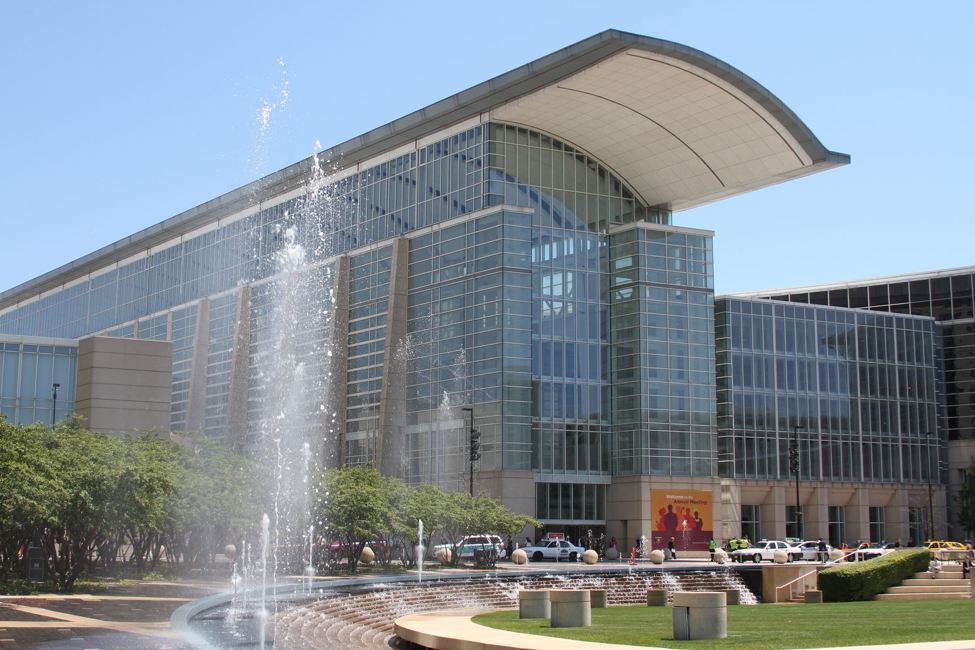
In an announcement at the American Academy of Ophthalmology’s 2022 annual meeting at McCormick Place in Chicago, the company noted that results from Phase 1/2 MGT009 study demonstrate safety profile of investigational gene therapy botaretigene sparoparvovec (AAV-RPGR) and suggest sustained vision improvement in patients with X-linked retinitis pigmentosa.
At the 2022 American Academy of Ophthalmology meeting, Justis Ehlers, MD, presented a talk titled, "Defining the Fluid Problem in Neovascular AMD: To Dry or Not to Dry?"
At AAO 2022, Dr Justis Ehlers presented a talk entitled, "Defining the Fluid Problem in Neovascular AMD: To Dry or Not to Dry?"

Data were presented during an oral presentation at the American Academy of Ophthalmology’s 2022 annual meeting at McCormick Place in Chicago.
Roger A. Goldberg, MD, MBA, discusses his 2022 AAO poster: "T&E-Based Personalized Treatment Interval Dynamics in the YOSEMITE/RHINE Trials of Faricimab in DME."

The destination of Marco Island, Florida not only serves as an excellent backdrop for this year's Ophthalmology Times® EyeCon 2022 but also provides a unique opportunity for family members to see their ophthalmic loved ones in a professional light.

Let us know if you will plan to use biosimilars in your daily practice. The poll will be open until October 10, 2022.
Recent reports of retinal atrophy have raised concerns on potential long-term safety.
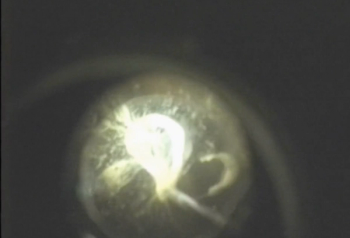
The advanced swept-source OCT technology allows visualization of the variations in the normal changes and those associated with aging in the posterior vitreous.

Fluocinolone acetonide intravitreal implant or faricimab (6.0 mg) injections versus observation will be studied for the prevention of visual acuity loss due to radiation retinopathy

Coherus BioSciences’ ranibizumab-eqrn is the first and only FDA-approved biosimilar interchangeable with ranibizumab injection for all indications, with 12 months of interchangeability exclusivity.
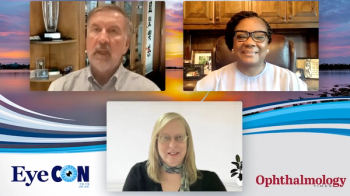
Co-chairs Peter J. McDonnell, MD, director of the Wilmer Eye Institute at Johns Hopkins University School of Medicine in Baltimore, Maryland, and Oluwatosin U. Smith, MD, of Glaucoma Associates of Texas in Dallas break down the top reasons to attend this year's Ophthalmology Times® EyeCon 2022 in a series of video segments.

The authors noted that the proportion of patients losing fewer than 15 letters from the baseline BCVA score in the study eye was comparable between the two groups.

The clinical trial is examining the efficacy of two doses of UBX1325 compared to every other month treatment with aflibercept through 24 weeks.

Roche’s treatment of faricimab is the first and only FDA-approved medicine targeting two distinct pathways, angiopoietin (Ang)-2 and vascular endothelial growth factor (VEGF)-A, that often cause retinal diseases that may cause visual loss.
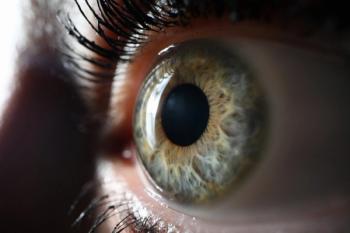
Faricimab simultaneously targets and inhibits two disease pathways involving Ang-2 and VEGF-A linked to a number of vision-threatening retinal conditions.

According to Rishi P. Singh, MD, family history and lifestyle are key in the development of geographic atrophy.
How long-term intravitreal steroid technology fits into a modern clinic.

According to the company, the NDA submission for Nyxol eye drops in first indication is on track for late 2022.

Scientist have proposed several methods for converting stem cells into RPE, but there is still a gap in our knowledge of how cells respond to these stimuli over time.

Data highlights need for educational materials and training resources in DMO and DR.

During the 22nd European Society of Retina Specialists Congress in Hamburg, Germany., investigators noted that Yusar and colleagues from the Vitreoretinal Services, Centre for Sight, Delhi, India.

12-week interim results of BEHOLD, a proof-of-concept Phase 2a study investigating the candidate UBX1325, provides a positive outlook for a novel senolytic approach for previously-treated patients with diabetic macular oedema.