












According to a news release, Akari is targeting an Investigational New Drug application submission to the FDA in the first half of 2024.
According to a news release, Akari is targeting an Investigational New Drug application submission to the FDA in the first half of 2024.

The collaboration may provide insights to help improve the treatment paradigm for retinal disorders.

The survey addressed topics that would facilitate a better understanding of the awareness of retina specialists regarding this relative new form of treatment in ophthalmology.

Sharing data between ophthalmologists, optometrists can lead to earlier diagnosis
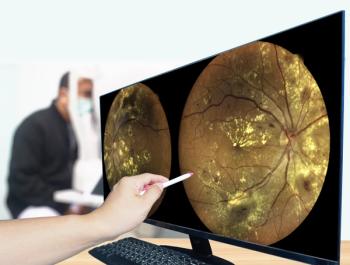
The findings from a National Institutes of Health-supported clinical trial may help guide the management of diabetic eye disease.

Bonnie An Henderson, MD, founder and program director of EnVision Summit, previews what attendees can expect at this year’s meeting - from its diverse faculty to an inclusive Youth Program, while also giving back to the community. The conference will take place February 17 to 20 at the El Conquistador Resort in Fajardo, Puerto Rico.
Carl D. Regillo, MD, highlights the Talon Phase 3b results for brolucizumab vs aflibercept in a matched treat-and-extend superiority study for neovascular AMD at the virtual 2023 Angiogenesis conference.

Rishi Singh, MD, provides an overview of the stages of diabetic retinopathy and diabetic macular edema (DR/DME) and the retinal findings associated with each stage as well as factors to consider when selecting therapy.

Carolyn Majcher, OD, FAAO, discusses when to refer patients with diabetic retinopathy and diabetic macular edema (DR/DME) to a retina specialist.

Roche announced that faricimab met its primary endpoint in two clinical trials, BALATON and COMINO, showing non-inferior visual acuity gains compared to aflibercept.

Prof Anat Loewenstein, Chair, Department of Ophthalmology, Tel Aviv Medical Center (Israel), comments on the significance of the US FDA approval of aflibercept for preterm infants with retinopathy.

The approval of aflibercept for preterm infants with retinopathy of prematurity (ROP) expands the treatment armamentarium for these patients, comments Prof Anat Loewenstein.

Mild cases of retinopathy of prematurity may improve without treatment, but some cases require treatment to keep ROP from causing significant visual impairment and even blindness.

According to Regeneron, aflibercept injection is now approved to treat five retinal conditions caused by ocular angiogenesis.

An interdisciplinary team at Duke University has developed a proof-of-concept machine learning model capable of detecting symptomatic Alzheimer disease using multimodal retinal imaging data.

According to the company, EA-2353 takes a novel, small-molecule approach and selectively activates endogenous retinal stem and progenitor cells, which differentiate into photoreceptors and can potentially preserve or restore visual function.

According to investigators, a new proposed classification for large and extra-large full-thickness macular holes is based on the surgical results achieved with different surgical techniques

Physician discusses existing advancements, innovations for treatment.

Carolyn Majcher, OD, FAAO, describes challenges primary eye care providers can experience when diagnosing diabetic retinopathy and diabetic macular edema (DR/DME).

Diabetic retinal disease experts discuss the standard diagnostic imaging tools that are available to detect diabetic retinopathy and diabetic macular edema (DR/DME).

The most promising recent interventional trials for investigational therapies in dry age-related macular degeneration are highlighted by the authors.

According to the company, the approval allows Eyenuk’s EyeArt AI eye screening system, already approved for detection of diabetic retinopathy, to aid millions of additional patients at risk for vision loss.

Specialists seek more information for use in the treatment of patients diagnosed with retinal diseases

HG004 aims to be more effective than other AAV2 products in treatment of inherited retinal diseases caused by mutations in the RPE65 gene.

The workshop is designed to bring together leading experts from academia and industry, to discuss openly, and in detail, what is known about PRPH2 disease pathology, disease models, clinical characteristics, and therapeutic approaches.